
IVF Cost, Success Rates, and Surrogacy Couriers in Mexico: The Complete Guide with Cryo Medical Logistics


TL;DR
IVF and surrogacy costs in Mexico typically range from $60,000–$90,000 depending on program type (self-gamete vs. donor-cycle, standard vs. guaranteed packages), with success rates commonly cited in the 75–85% range, higher for guaranteed/unlimited-transfer programs.
Surrogacy legality in Mexico is governed state by state, not by a single federal law — Mexico City and Tabasco are among the more permissive states, while others restrict or prohibit it.
We are the leading specialist courier for surrogacy and IVF-related shipments across Mexico — coordinating COFEPRIS permitting, cryogenic packing, hand-carry transport, and repatriation of embryos, eggs, and sperm in both directions.
Bringing your own embryos to Mexico, rather than starting a fresh donor cycle, is one of the most effective ways intended parents reduce total treatment cost.
Planning IVF or surrogacy in Mexico? Contact our team to coordinate your embryo, egg, or sperm transport.
💬 WhatsApp: +44 7585 610211
☎️ Phone: +44 20 8150 0059
📧 Email: transports@cryomedicallogistics.com
🌍 Based in London, Houston, and Lagos
What IVF and Surrogacy Actually Cost in Mexico
Cost is the single most-searched question in this space, and for good reason — it varies significantly by program type:
Program Type | Typical Cost Range |
Self-gamete ("assured") IVF/surrogacy | $0,000 – $65,000 |
Donor-cycle ("guaranteed") programs, unlimited transfers | $65,000 – $90,000 |
Costs are typically built up from clinic fees, IVF/embryo transfer, surrogate compensation, legal work, and — critically for intended parents bringing embryos from abroad — international transport and permitting. Shipping existing embryos to Mexico rather than creating new ones there is consistently one of the largest cost-reduction levers available, since it avoids repeating an IVF cycle entirely.
Cost figures reflect general market research and are not a quote. We provide a fixed transport quote before booking your shipment.
Success Rates: The Second-Most-Asked Question
After cost, "what's the success rate" is the next question almost every intended parent asks. Reported success rates across Mexican clinics commonly fall in the 75–85% range for standard programs, with guaranteed/unlimited-transfer packages structured to push effective outcomes higher by covering repeat attempts.
Success rates vary meaningfully by clinic, patient age, embryo quality, and number of transfer attempts included in a given program — a number quoted by one clinic or program isn't automatically transferable to another. We'd always recommend asking a prospective clinic directly how their number is calculated before treating it as a guarantee.
Surrogacy Legality: Why "Is It Legal in Mexico" Doesn't Have One Answer
Mexico has no single federal surrogacy law. Legal status is set state by state, which means the honest answer to "is surrogacy legal in Mexico" is: it depends entirely on which state your clinic and surrogate are in.
States such as Mexico City and Tabasco are commonly cited as more permissive, with clearer legal frameworks supporting international and LGBTQ+ intended parents
Other states restrict or do not support surrogacy arrangements at all
This is general information, not legal advice. Confirm current state-level legal status directly with your attorney before proceeding — this is an area that can and does change.
The Regulatory Reality: COFEPRIS
Every embryo, egg, or sperm shipment crossing into or out of Mexico requires a COFEPRIS import or export permit — Mexico's Federal Commission for the Protection Against Sanitary Risks. Without an approved permit, biological material cannot legally clear customs, and shipments without proper authorization risk delay, confiscation, or loss of viability while held in transit.
We manage the COFEPRIS application process directly as part of every shipment we coordinate, working with both the originating and receiving clinic to keep documentation moving in step with your treatment timeline — one of the most common causes of delay in this corridor when it isn't handled proactively.
Repatriation: Bringing Embryos, Eggs, or Sperm Home
Transport isn't only one direction. A significant share of the shipments we handle are repatriation shipments — moving embryos, eggs, or sperm created during treatment in Mexico back to a patient's home country for long-term storage or future use.
The regulatory and handling requirements mirror the inbound process: an export permit from Mexico, an import permit or equivalent authorization at the destination, and the same validated cryogenic packing, hand-carry transport, and Do Not X-Ray protocol throughout.
Need to bring your embryos, eggs, or sperm home from Mexico? Speak with our team about your repatriation shipment.
Why We're the Leading Courier for This Corridor
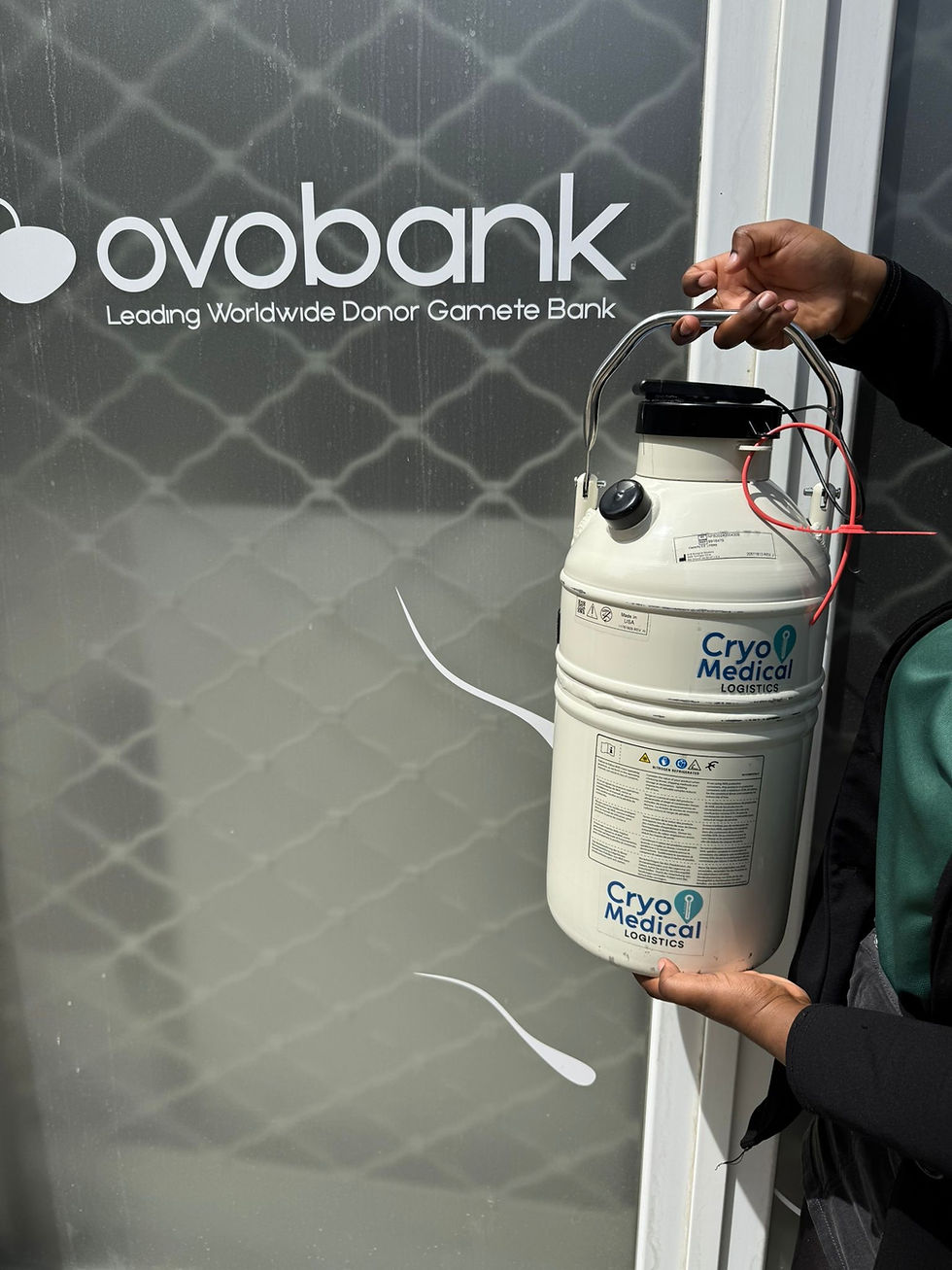
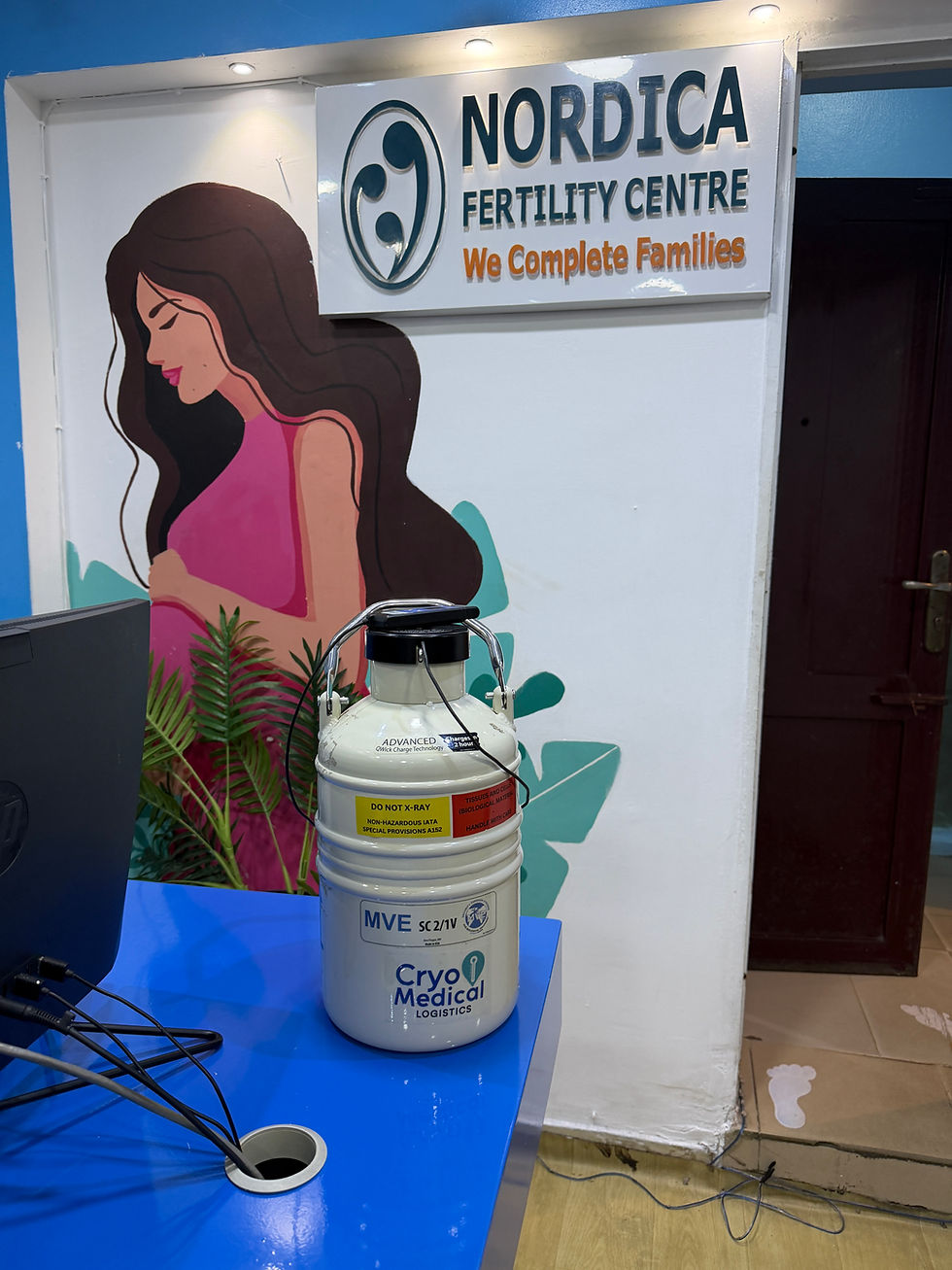
Hand-carry only — every shipment travels in the aircraft cabin under continuous supervision, never as cargo
Do Not X-Ray protocol, followed without exception at every checkpoint
ISO 9001:2015 certified process applied consistently to every shipment
FCA-regulated insurance on every shipment
COFEPRIS permit coordination handled directly, not outsourced or left to the client to navigate alone
City-specific route planning across Tijuana, Cancún, Mexico City, and Guadalajara
Ready to move forward? Get a quote from our team for your Mexico shipment.
Frequently Asked Questions
How much does IVF or surrogacy cost in Mexico? Typically $40,000–$90,000 depending on program type, with self-gamete programs at the lower end and guaranteed donor-cycle packages at the higher end. Bringing your own embryos rather than starting fresh can significantly reduce total cost.
What's the IVF success rate in Mexico? Commonly cited in the 75–85% range for standard programs, with wide variation by clinic, age, and embryo quality. Ask your specific clinic how their number is calculated.
Is surrogacy legal in Mexico? It depends on the state. There's no single federal law — some states, such as Mexico City and Tabasco, are more permissive than others. Confirm current status with an attorney before proceeding.
Can I ship my own embryos to Mexico to reduce cost? Yes. This is one of the most common and effective ways intended parents reduce total treatment cost, and it's something we coordinate directly, including the COFEPRIS permit process.
Can you bring embryos, eggs, or sperm back out of Mexico after treatment? Yes. We handle repatriation shipments in addition to inbound transport, with the same cryogenic and hand-carry standards applied in both directions.
Work With the Leading Mexico Fertility Courier
Whether you're shipping embryos to Mexico to start treatment, or bringing eggs, sperm, or embryos home after your journey there, our team manages the full process — COFEPRIS permitting, cryogenic packing, hand-carry transport, and clinic-to-clinic coordination. Contact us today for a quote.
📞 Ready to ship sperm, embryos, or oocytes?
💬 WhatsApp: +44 7585 610211
☎️ Phone: +44 20 8150 0059
📧 Email: transports@cryomedicallogistics.com
🌍 Based in London, Houston, and Lagos
A Note on Impersonators
Cryo Medical Logistics operates exclusively under the names Cryo Medical Logistics and Embryo Logistics. We are not affiliated with any similarly named company. If you are contacted by a business using a similar name claiming to represent us, please verify directly with our team before sharing any documentation or payment.



Comments