
Surrogacy for Japanese Citizens: What You Need to Know (2026-2027)


TL;DR
Surrogacy is not banned by Japanese statute, but it is effectively unavailable domestically: the Japan Society of Obstetrics and Gynecology (JSOG) has prohibited its members from facilitating it since 1983, formalized further in 2003, and virtually all JSOG-affiliated clinics comply.
A 2007 Supreme Court ruling reinforced this by recognizing only the woman who gives birth as the legal mother, regardless of genetic connection — meaning even a Japanese couple using their own embryo and a surrogate would not automatically be recognized as the child's legal parents under Japanese law.
As a result, Japanese intended parents pursuing surrogacy do so abroad, most commonly in the United States, with Canada and other countries also used.
A proposed law — the Specified Assisted Reproductive Technology Bill (February 2025) — would formally criminalize arranging or facilitating surrogacy, including for citizens going abroad, with penalties of up to two years' imprisonment. As of this writing it has not been enacted, but its introduction has already pushed some families to accelerate their plans.
Bringing a surrogate-born child back to Japan involves a separate, non-trivial legal and consular process, because Japan does not recognize surrogacy as a basis for parentage.
Cryo Medical Logistics handles the transport of your reproductive material to your destination clinic — we are not a legal, immigration, or surrogacy-matching agency, and this guide is not legal advice.
Contact us:
Line - Telegram - WeChat - WhatsApp: +44 7585 610211
Phone: +44 20 8150 0059
Why Japanese Citizens Pursue Surrogacy Abroad
Three separate barriers combine to push nearly all Japanese surrogacy arrangements overseas:
1. Professional-society prohibition, not statute. JSOG issued its ban on member-facilitated surrogacy in 1983, formalized further in 2003. This isn't a criminal law — it's a professional rule — but because JSOG accreditation and insurance billing rights are tied to compliance, it functions as an effective nationwide ban within licensed clinics.
2. Legal parentage doesn't follow genetics. A 2007 Japanese Supreme Court ruling established that the woman who gives birth to a child is recognized as the legal mother, regardless of any genetic relationship. This means Japanese law has no built-in mechanism to recognize intended parents — even genetic parents — as the legal parents of a child born via surrogate.
3. Marriage-based access restrictions. Japan is the only G7 country that does not legally recognize same-sex marriage, and JSOG guidelines limit fertility treatment access to couples in legal or common-law marriages. This effectively bars same-sex couples and single individuals from ART access within Japan's licensed clinic system, pushing many toward international surrogacy or donor arrangements as their only path to parenthood.
The Current Legal Status — What's Confirmed and What's Proposed
What's true today: Japan has no statute that directly criminalizes surrogacy or bans citizens from pursuing it abroad. The barrier is entirely the combination of professional-society guidelines and the parentage-recognition gap described above.
What's proposed but not law: The Specified Assisted Reproductive Technology Bill, introduced in February 2025, would formally criminalize the arrangement or facilitation of surrogacy — including for unmarried parents going abroad — with penalties reportedly up to two years' imprisonment. It also maintains anonymity for sperm and egg donors, a provision that has drawn criticism from donor-conceived individuals and their advocates. As of this writing, the bill has not been enacted. Its introduction alone, however, has led some prospective parents to move up their timelines out of concern the law could pass.
This section reflects the legal position as understood at the time of writing and is not legal advice. Japanese family law in this area is actively under review — confirm current status with a qualified attorney before making decisions based on this guide.
Where Japanese Intended Parents Go
The United States is the most common destination, offering the most comprehensive legal framework for surrogacy (state-dependent, but several states offer clear pre-birth parentage orders), the widest surrogate and donor availability, and access regardless of marital status or sexual orientation. It is also the highest-cost option.
Canada is a secondary destination, operating on an altruistic-only surrogacy model (compensation is restricted to reasonable expenses), generally lower cost than the US, and open to LGBTQ+ intended parents — though matching timelines tend to be longer.
Other countries have also been used by individual Japanese families depending on their specific circumstances, cost considerations, and legal requirements — the right destination depends heavily on marital status, budget, and how quickly parentage needs to be established.
Bringing Your Child Home: The Citizenship and Family Registry Reality
This is the part of the process most guides gloss over, and it matters as much as the medical and transport logistics.
Because Japan does not recognize surrogacy as a basis for parentage, a child born abroad via surrogacy does not automatically enter Japan's family register (koseki) the way a child born to the intended parents naturally would. Typically, intended parents need:
Proof of genetic connection to the child (where applicable)
Certified translations of foreign birth certificates and any court orders establishing parentage in the country of birth
Consular registration procedures to establish the child's Japanese nationality
In some cases, additional family court involvement in Japan to resolve the parent-child registration
This is a legal and consular process, separate from the medical and shipping process, and it is not something Cryo Medical Logistics manages directly. We'd strongly recommend working with a Japanese family law specialist and your destination country's surrogacy legal team well before the child is born, not after.
Where Cryo Medical Logistics Fits In
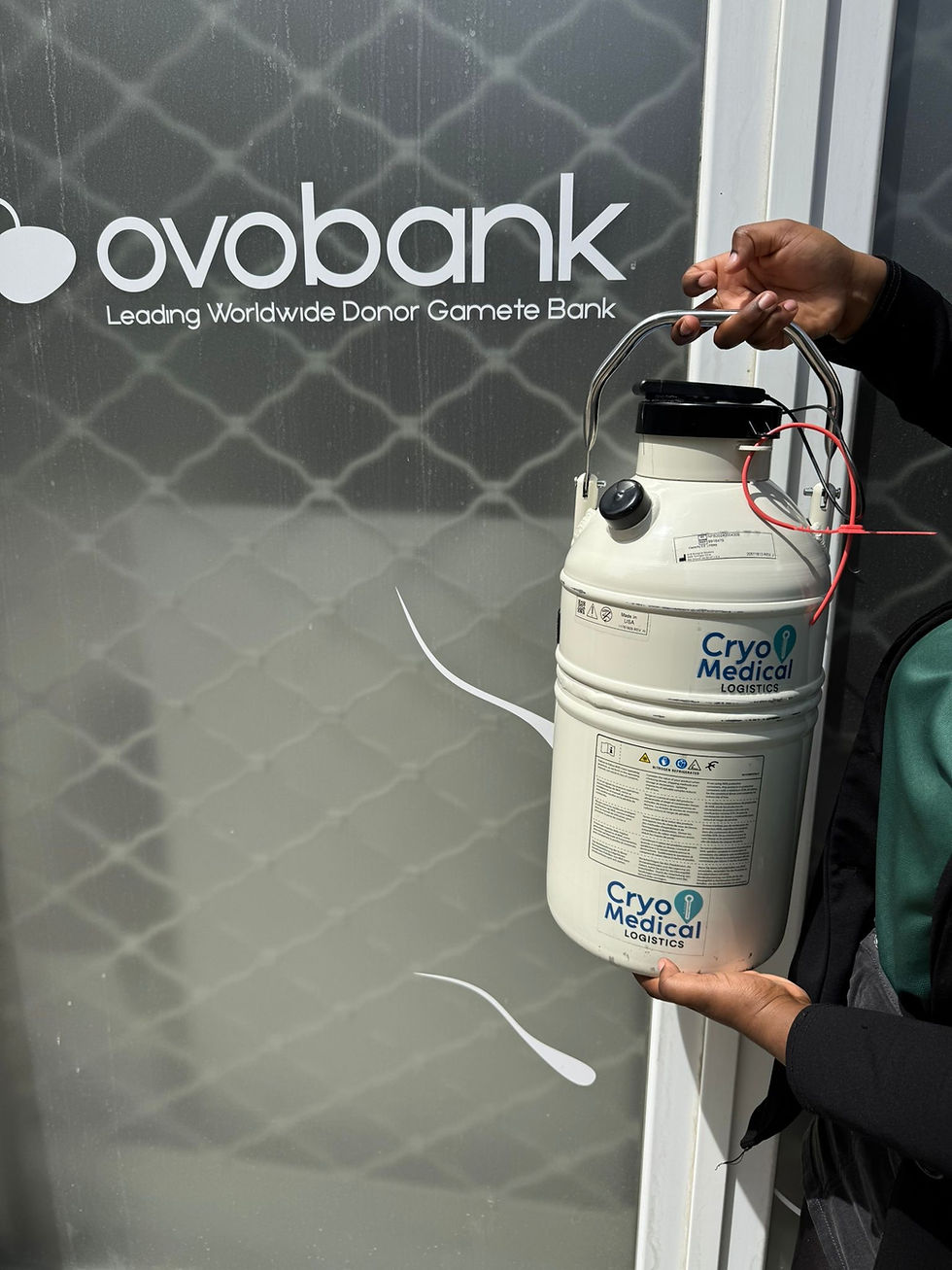
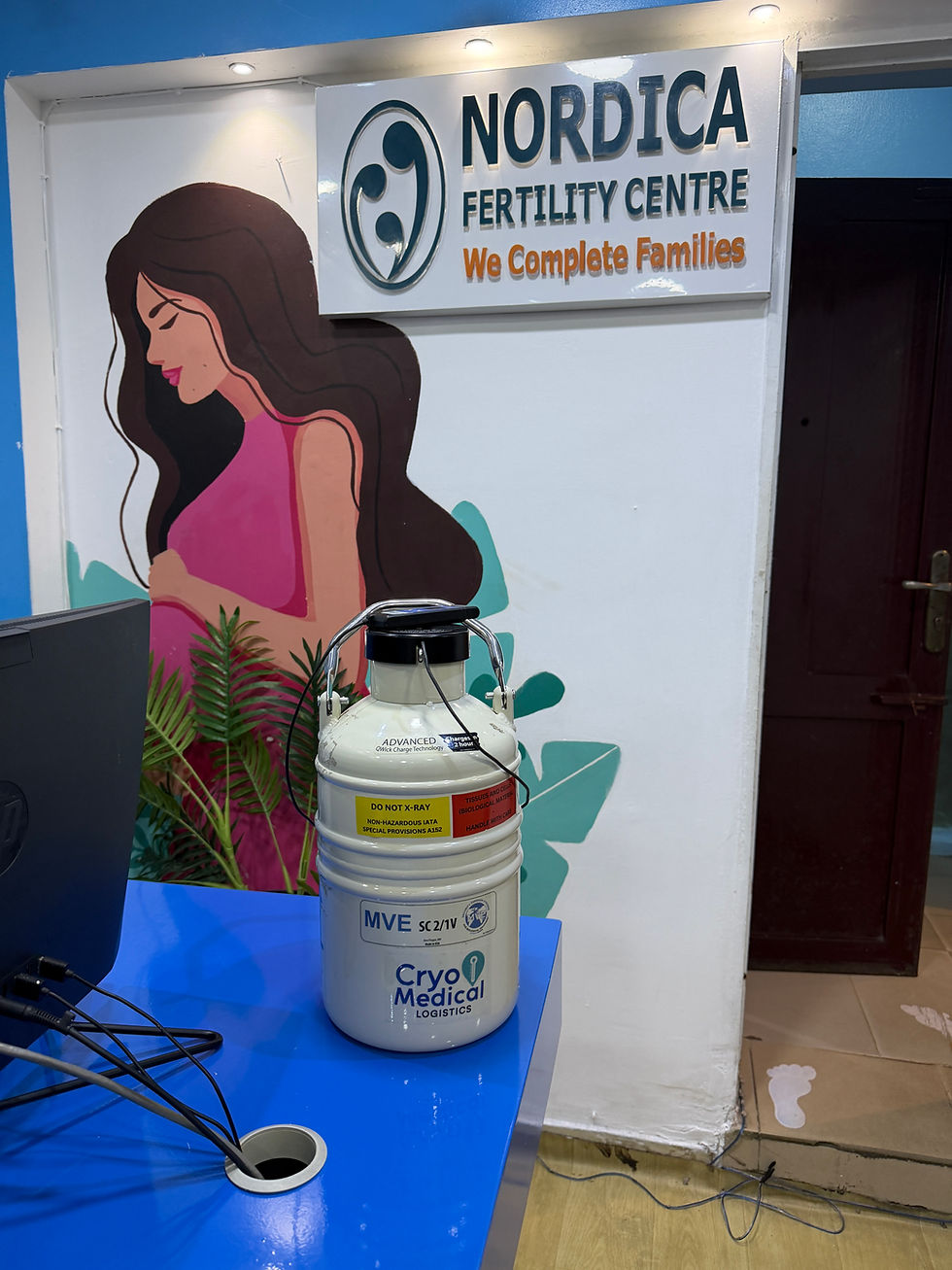
Our role is specific: transporting your embryos, sperm, or eggs from your storage clinic in Japan to your destination clinic abroad, under a hand-carry protocol that keeps your material at -196°C throughout transit and never exposes it to airport X-ray screening. We coordinate directly with both the exporting and receiving clinics on documentation and timing.
We are not a surrogacy agency, immigration consultancy, or law firm, and nothing in this guide should be read as legal advice on parentage, citizenship, or immigration matters. For those aspects of your journey, you'll want a specialist in Japanese family law and, separately, your destination country's surrogacy legal framework.

Contact us:
Line - Telegram - WeChat - WhatsApp: +44 7585 610211
Phone: +44 20 8150 0059
FAQ
Is surrogacy illegal in Japan? Not by statute. It is effectively unavailable through licensed clinics because JSOG, the medical professional society, has prohibited members from facilitating it since 1983. There is currently no criminal law against a Japanese citizen pursuing surrogacy abroad, though a bill that could change this has been proposed.
Will my child automatically be a Japanese citizen if born via surrogacy abroad? Not automatically in the way a naturally-born child would be. Japan does not recognize surrogacy as a basis for parentage, so establishing your child's Japanese nationality and family register status requires a separate consular and, in some cases, family court process.
Can same-sex couples or single people access surrogacy as Japanese citizens? Not through Japan's domestic clinic system, since JSOG guidelines restrict ART access to legally or common-law married couples. Many same-sex couples and single individuals pursue surrogacy or donor-assisted routes abroad instead, most commonly in the US or Canada.
What is the Specified Assisted Reproductive Technology Bill? A bill introduced in February 2025 that would criminalize arranging or facilitating surrogacy, including international arrangements for Japanese citizens, with reported penalties of up to two years' imprisonment. It has not been enacted as of this writing.
Does Cryo Medical Logistics arrange surrogacy or provide legal advice? No. We handle the cryogenic transport of your reproductive material between clinics. Surrogacy matching, legal parentage, and citizenship matters require separate specialists in those fields.
Contact us:
Line - Telegram - WeChat - WhatsApp: +44 7585 610211
Phone: +44 20 8150 0059



Comments