Best Countries for Surrogacy for International Clients: Expert Guide on Costs, Laws, and How to Safely Transport Your Embryos Getting There with Cryo Medical Logistics


Contact Cryo Medical Logistics today.
📧 Email: transports@cryomedicallogistics.com
📱 WhatsApp: +44 7585 610211
📞 Phone: +44 2081500059
Choosing a country for your surrogacy journey is rarely just about cost. It's about legal certainty, medical standards, and — the part almost nobody talks about — how your embryos, eggs, or sperm actually get from your home clinic to the country where your journey will happen.
We've built our operations around exactly that gap. As a specialist cryogenic courier service for reproductive biomaterials, we've supported international clients moving embryos, sperm, and eggs across more than 80 countries. So while this guide covers the costs and legal frameworks you'd expect from any surrogacy comparison, we've also included what actually happens to your biological material at every stage — because a beautifully chosen destination country means very little if your embryos don't arrive safely, at the right temperature, with the right paperwork.
Here's our honest breakdown of six destinations international clients are actively considering in 2026 -2027 : Nigeria, Ghana, Mexico, Northern Cyprus, Colombia, and Zimbabwe.
Why Logistics Matter as Much as Legal Frameworks
Before we get into individual countries, it's worth understanding why the transport question is not a footnote.
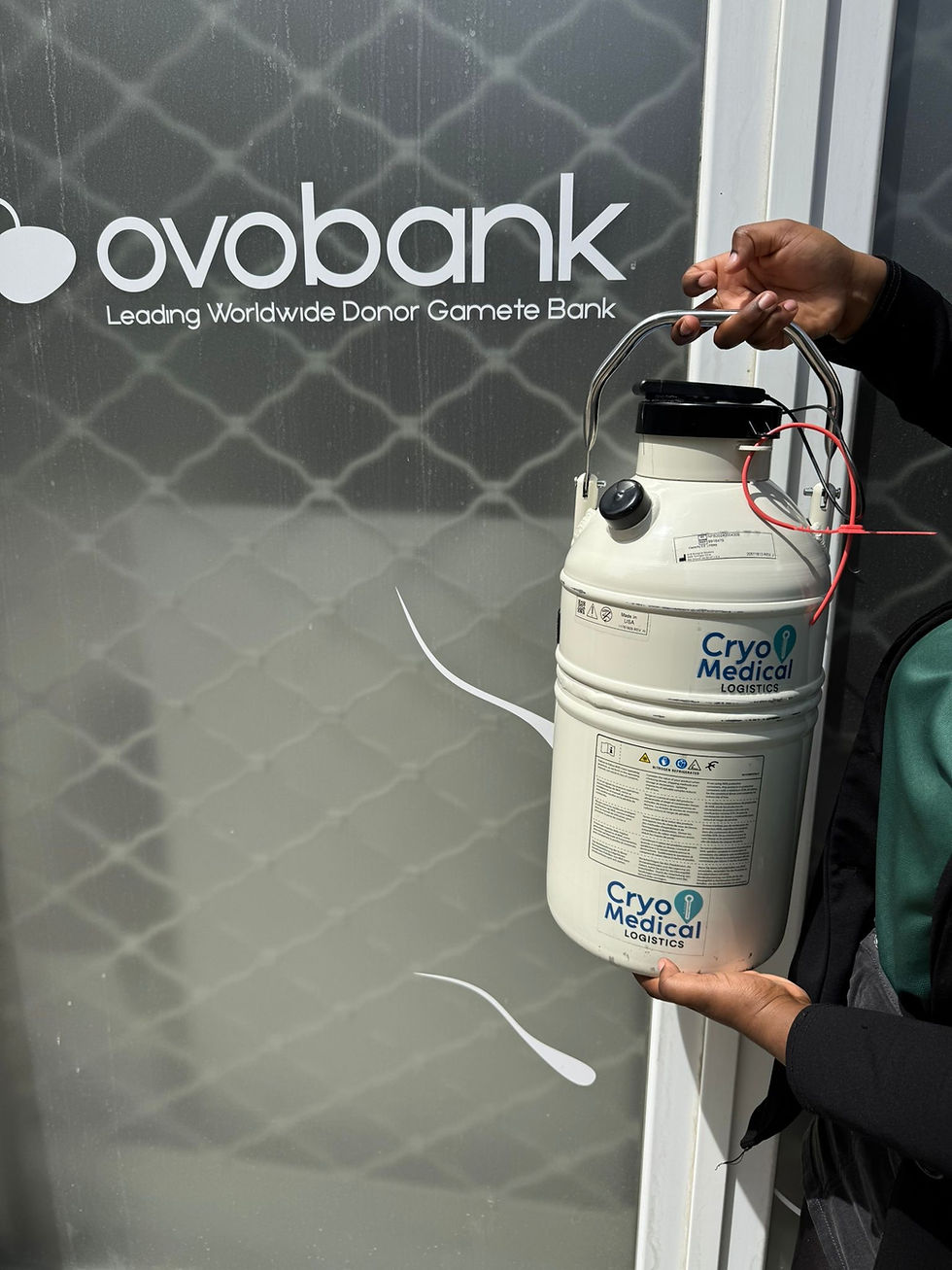
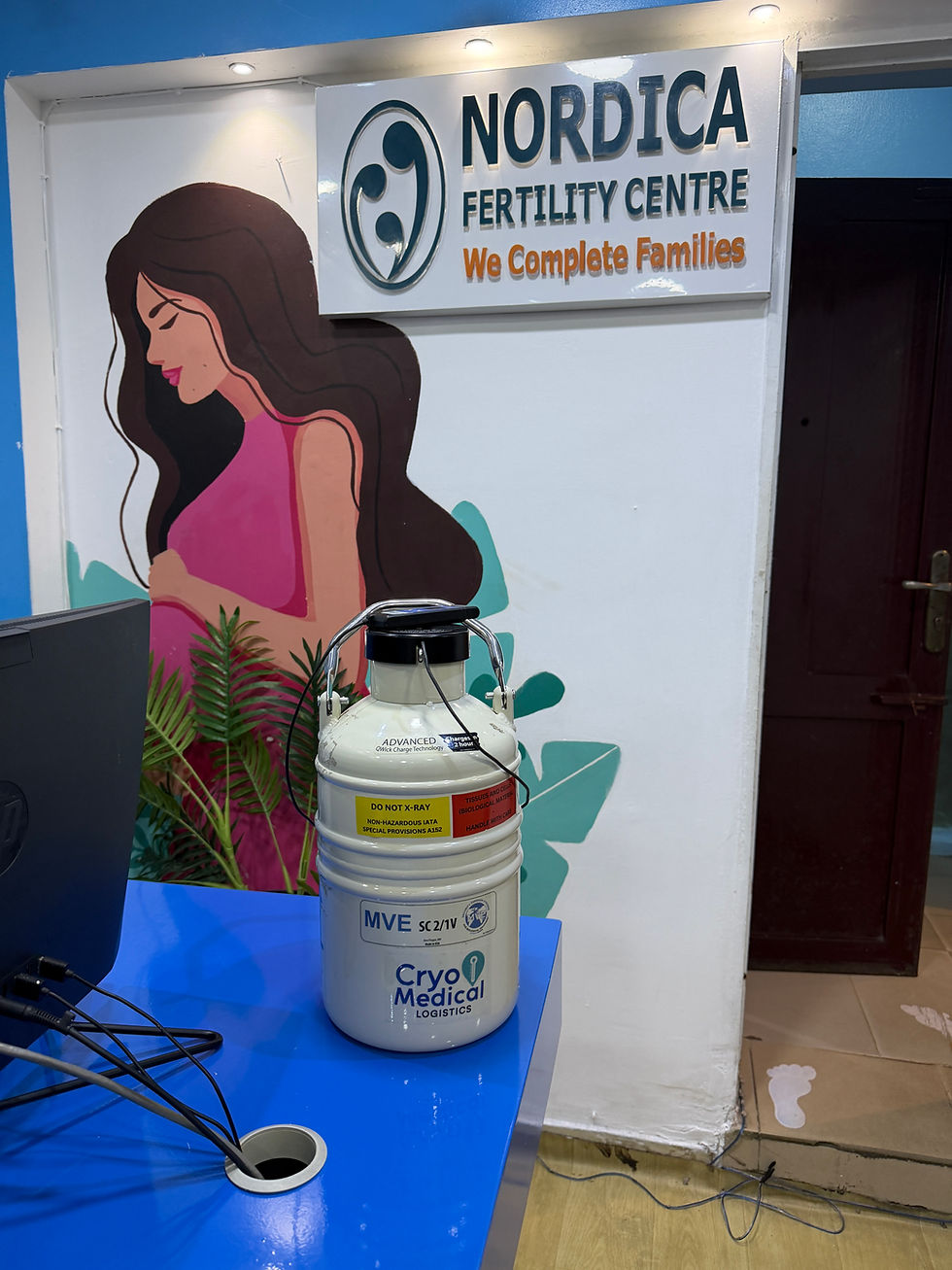
Every one of the countries below requires, at some stage, the movement of cryogenically frozen embryos, sperm, or eggs — either into the country from your home clinic, or between clinics within the destination country. That material has to be maintained at −196°C throughout transit, documented at every checkpoint, and hand-carried (never checked as cargo, never X-rayed) by someone who understands both the customs requirements and the biological sensitivity of what they're carrying.
Get this wrong, and you can lose viable embryos regardless of how sound your legal strategy was. This is the piece of the journey most surrogacy guides skip entirely.
1. Nigeria
Legal status: Surrogacy in Nigeria is not prohibited, but it is also not governed by dedicated legislation. Clinics currently operate under the practice guidelines of the Association of Fertility and Reproductive Health (AFRH) of Nigeria, and surrogacy agreements are generally treated as enforceable private contracts under existing contract law. An Assisted Reproductive Technology regulation is currently under consideration by the Nigerian Senate, which would formally permit surrogacy and allow reasonable reimbursement of the surrogate's expenses — but until that passes, Nigeria remains a "regulated by practice, not by statute" environment.
What this means practically: the absence of a dedicated law is not the same as an absence of structure. Reputable clinics in Lagos, in particular, follow well-established international protocols and have years of experience managing international intended parents. But because there's no statutory pre-birth parentage order, your legal team needs to build parentage recognition carefully, and you'll want a local legal partner experienced specifically in fertility contract law, not general family law.
Costs: Full programme costs in Nigeria are among the most accessible globally, generally starting from around $30,000, depending on whether you're using existing embryos or building a full IVF-plus-surrogacy programme from scratch.
Why intended parents are looking here: Nigeria's private fertility sector, concentrated heavily in Lagos, has expanded rapidly, and its scale as Africa's largest economy has brought a genuinely deep bench of experienced specialists and a large surrogate pool.
The transport reality: as our own headquarters city, Lagos is where we have the deepest infrastructure of any market we serve. We manage the full chain of custody for embryo, sperm, and egg shipments in and out of Nigeria, coordinating directly with clinics and legal teams so your biological material and your legal paperwork move on the same timeline.
2. Ghana
Legal status: Ghana offers the clearest statutory framework of any country on this list. Under Section 22 of the Registration of Births and Deaths Act, 2020 (Act 1027), intended parents can apply to Ghana's High Court for a Pre-Birth Parental Order — meaning your legal parenthood is established before your child is even born, and your name (not the surrogate's) appears on the birth certificate from day one.
What this means practically: this is a genuinely rare feature outside a small handful of countries worldwide, and it's the single biggest reason Ghana has become a serious contender for international intended parents rather than just a "budget option." That said, the court process requires patience — applications must typically be filed shortly after embryo transfer, and there's a defined window (commonly cited as around 12 weeks to file, with the full process wrapping within roughly 28 weeks) to complete the legal process through Ghanaian courts, working alongside a local legal advisor.
Costs: Standard programmes typically run between $35,000 and $40,000, covering surrogate compensation, medical procedures, agency fees, and legal support.
One honest caveat: fertility clinics outside Accra don't always match the laboratory standards, embryologist experience, and genetic testing access available in Europe or North America. This matters — lab quality directly affects how many viable embryos you produce. It's worth asking any provider directly about their embryology team's training and their lab's specific standards, not just their legal credentials.
The transport reality: we manage ISO-accredited cryogenic shipping into Ghana for intended parents bringing existing embryos, sperm, or eggs from clinics abroad, coordinating the full chain of custody alongside the pre-birth legal timeline so nothing stalls waiting on the other.
3. Mexico
Legal status: Mexico's 2021 Supreme Court ruling declared surrogacy a constitutionally protected medical procedure, opening access to singles, LGBTQ+ couples, and foreign nationals on equal footing. But — and this is the part many guides gloss over — that ruling did not create one uniform national law. Only Tabasco and Sinaloa have explicit surrogacy statutes; other states, including Mexico City, Cancún/Quintana Roo, and Jalisco, operate through court-based mechanisms rather than dedicated legislation.
A genuinely current development: in February 2026, the Supreme Court confirmed that in states without specific surrogacy laws, judges must use a "Voluntary Jurisdiction" pathway, ruling that intent to parent — not the act of giving birth — is the legal basis for parentage. This is a meaningful clarification, not just a legal footnote, and it's actively shifting how Mexico City cases are being handled right now.
One nuance worth knowing before you commit: an August 2025 ruling reportedly limited recognition for non-genetic parents in some states, leaving a blank instead of the intended mother's name on birth certificates in places like Jalisco — which can mean an additional stepparent adoption process for international parents. This is exactly the kind of detail that should shape which Mexican state you choose, not just the headline "surrogacy is legal in Mexico."
Costs: Full programmes typically run from $60,000 to $100,000, depending on whether you're using existing embryos (which is cheaper) or a full donor-egg-plus-IVF programme.
The transport reality: Mexico is one of the more complex logistics environments precisely because of its state-by-state legal variation — the state where your embryo transfer happens needs to align with the state handling your legal parentage process, and we coordinate shipment timing around that alignment, not just around clinic availability.
4. Northern Cyprus
We want to be direct about this one, because it's an area where honesty matters more than optimism.
Legal status: Northern Cyprus (the Turkish Republic of Northern Cyprus, or TRNC) currently has no surrogacy regulation at all — it is neither explicitly permitted nor banned, which places it in a genuine legal grey zone rather than a "flexible" one. Clinics there do accept a broad range of intended parents, including singles, LGBTQ+ individuals, and international parents, without residency requirements.
The part that matters most: the TRNC is recognised only by Turkey. That means birth certificates and court decisions issued there are not internationally recognised in most countries, which creates real complications for citizenship and travel documents. Under current local legal interpretation, the surrogate is considered the legal mother at birth, and transferring parentage to intended parents requires additional legal steps that are not clearly defined.
This is genuinely different from the Republic of Cyprus in the island's south, which operates under a comprehensive, court-supervised altruistic surrogacy framework (Family Law Amendment 69(I)/2015) — but that southern framework is currently restricted to Cypriot citizens or residents, which is why international demand has gravitated toward the unregulated north instead.
Costs: Packages in Northern Cyprus are typically marketed in the €60,000–€140,000+ range depending on the programme type, though pricing varies significantly by clinic.
Our honest recommendation: if international recognition of your child's citizenship and parentage matters to you — and for almost everyone, it does — Northern Cyprus should be approached with far more legal caution than its accessible eligibility criteria might suggest. We'd strongly encourage speaking with an immigration and nationality lawyer in your home country before committing, specifically about how a TRNC birth certificate would be treated there.
The transport reality: we can support cryogenic transport into Northern Cyprus, but we do so with the same caution we'd want any client to apply legally — meaning we're transparent with clients about the recognition risk before any shipment is arranged, not after.
5. Colombia
Legal status: The Colombian Constitution extends the same civil rights to foreigners as to citizens, including access to assisted reproduction, and this constitutional umbrella is what makes gestational surrogacy accessible in Colombia. The model is altruistic — your surrogate is reimbursed for pregnancy-related costs rather than paid a fixed compensation fee — and the arrangement must be gestational (not traditional), with at least one intended parent providing sperm or eggs used to create the embryo.
What this means practically: parentage recognition happens after birth, grounded in constitutional law rather than a pre-birth order — meaning you should plan to remain in Colombia for a period after delivery while documentation is finalised, rather than expecting an immediate exit.
Costs: Programmes are typically quoted in the $55,000–$70,000 range depending on inclusions, egg donation needs, and number of embryo transfer attempts.
Why intended parents are looking here: Colombia combines meaningful cost savings with genuine inclusivity — singles and LGBTQ+ couples are accepted without the marital-status restrictions some other countries impose — alongside an established private healthcare system and experienced fertility clinics.
The transport reality: because Colombia's process extends into the post-birth period, we build shipment and documentation timelines that account for the full stay, not just the embryo transfer stage, so clients aren't caught managing biological material logistics while also navigating post-birth paperwork.
6. Zimbabwe
Legal status: Zimbabwe currently has no dedicated surrogacy legislation. Surrogacy arrangements are neither explicitly prohibited nor formally regulated, which places the country in the same "unregulated, not criminalised" category we'd flag honestly for any emerging destination. Where disputes have reached Zimbabwean courts, rulings have generally been guided by the principle of the child's best interests rather than by a defined surrogacy statute.
What this means practically: this is genuinely an emerging market rather than an established one. The legal vacuum means there's no formal mechanism protecting either intended parents or surrogates if something goes wrong, and parentage recognition relies on private contracts and case-by-case judicial interpretation rather than statutory certainty.
Our honest take: we're including Zimbabwe here because it is increasingly discussed among intended parents exploring African destinations, and because we believe in giving you the full picture rather than only covering the more established markets. But we'd encourage anyone considering Zimbabwe to treat it with the same level of legal caution as any unregulated jurisdiction — engage a lawyer with specific fertility-contract experience before any embryo transfer takes place, and build in extra time and budget for legal uncertainty.
The transport reality: as an emerging corridor, Zimbabwe's cryogenic transport infrastructure is less established than Nigeria or Ghana's. We manage these shipments with additional planning buffer and closer coordination with receiving clinics, precisely because the surrounding infrastructure is still developing.
Cost Comparison at a Glance
Every figure below is a general market range, not a quote — your actual cost depends on whether you're using existing embryos or building a programme from scratch, how many embryo transfer attempts are included, and whether egg donation is required.
Country | Legal Model | Typical Full Programme Cost | Parentage Timing | Key Consideration | Our Cryogenic Transport |
Nigeria | Unregulated by statute; governed by AFRH practice guidelines and contract law | From ~$30,000 | Established via contract; no statutory pre-birth order yet | Deep clinical infrastructure in Lagos; ART regulation still pending in the Senate | Yes — full chain-of-custody, our own headquarters market |
Ghana | Statutory — Pre-Birth Parental Order under Act 1027 | $35,000–$60,000 | Pre-birth (rare and valuable feature) | Strongest legal clarity on this list; clinic quality varies outside Accra | Yes — ISO-accredited cryogenic shipping in and out |
Mexico | Constitutionally protected (2021 ruling); implementation varies by state | $60,000–$100,000 | Varies by state — Voluntary Jurisdiction pathway in states without specific laws | State choice matters as much as country choice; recognition gaps in some states for non-genetic parents | Yes — coordinated to match your specific state's legal timeline |
Northern Cyprus (TRNC) | Unregulated — legal grey zone | €60,000–€140,000+ (estimate; ask for itemized quote) | Post-birth; additional legal steps required to transfer parentage | TRNC recognised only by Turkey — real risk to home-country citizenship recognition | Yes — with upfront transparency on recognition risk before shipment |
Colombia | Constitutional right; altruistic model only | $55,000–$70,000 | Post-birth, grounded in constitutional law | Genuinely inclusive for singles and LGBTQ+ parents; plan to remain in-country after birth | Yes — timed around your full in-country stay, including post-birth |
Zimbabwe | Unregulated — no dedicated statute | Case-by-case; not yet an established pricing market | Determined by "best interests of the child" principle, case by case | Emerging destination; treat with the same caution as any unregulated jurisdiction | Yes — with added planning buffer for this emerging corridor |
Our Full Coordination Service: You Focus on Your Family, We Handle Everything Else
Every country above involves the same underlying challenge: multiple moving parts — a clinic, a legal team, a surrogate, sometimes an egg donor, and the physical transport of your biological material — all needing to move in sync, often across two or three countries at once.
We manage all of it, as your single point of coordination from start to finish:
Clinic matching within our vetted partner network in your chosen destination
Surrogate and egg donor coordination, including sourcing across all ethnicities where donor eggs are needed
Legal milestone management, working alongside local legal counsel to keep your parentage process on track against the timelines in the table above
Embryo, sperm, and egg transport — supervised hand-carry only, maintained at −196°C from collection to delivery, fully documented at every customs and clinical checkpoint
Travel support for your own trips to and from the destination country
Post-birth guidance, including the documentation, citizenship, and exit paperwork needed to bring your child home
The value of working with a single coordinator rather than piecing together a clinic, a lawyer, and a courier separately is simple: nothing falls into the gaps between them. Your legal timeline, your medical timeline, and your logistics timeline all run on the same calendar, managed by one team who already knows your case.
How to Choose the Right Provider
Cost and legal framework will narrow your list of countries. Choosing the right provider within that country is what actually determines whether your journey goes smoothly. A few questions worth asking any agency, clinic, or concierge service before you commit funds:
Do they manage the full journey, or just one piece of it? A provider that only handles clinic matching, only handles legal work, or only handles logistics will leave the gaps between those pieces for you to manage yourself — and those gaps are where delays and costly mistakes happen.
How do they handle the transport of your embryos, sperm, or eggs? Ask specifically about chain-of-custody documentation, temperature maintenance standards, and whether biological material is ever checked as cargo (it shouldn't be — hand-carry only is the standard you want).
Can they show you their track record with the specific country you're considering, not just general international experience?
Are they transparent about legal limitations, including the kind of nuance we've tried to include in this guide — the state-by-state variation in Mexico, the recognition risk in Northern Cyprus, the unregulated status of Zimbabwe? A provider that presents every destination as equally simple is not being straight with you.
What happens if your first embryo transfer doesn't result in a pregnancy? Understand rematching policies, additional transfer costs, and timeline implications before you start.
How We Support Your Journey
We manage the full chain of custody for embryo, sperm, and egg transport across every destination in this guide — supervised hand-carry only, maintained at −196°C from collection to delivery, fully documented at every customs and clinical checkpoint. We coordinate directly with your vetted partner clinic network and legal teams so that your biological material and your legal milestones move on the same timeline, not two separate ones.
If you're weighing these destinations against each other, we're happy to walk through what the transport and documentation side of your specific journey would look like — reach out and we'll build that picture with you.
Contact Cryo Medical Logistics today.
📧 Email: transports@cryomedicallogistics.com
📱 WhatsApp: +44 7585 610211
📞 Phone: +44 2081500059
This guide reflects our understanding of surrogacy laws and costs as of 2026. Surrogacy laws, court rulings, and provider landscapes change — always verify current information with qualified legal and medical professionals in both your destination country and your home country before making any decisions.



Comments