Everything You Need to Know About Surrogacy Management in Nigeria as an International Intended Parent

TL;DR (Quick Summary)
Surrogacy in Nigeria is legal in practice but unregulated — it operates in a legal grey area.
Costs: $20,000–$40,000 USD, depending on clinic/agency, legal support, and medical procedures
Success rates: IVF success rates in Nigeria are 60–80% per cycle (for women under 35).
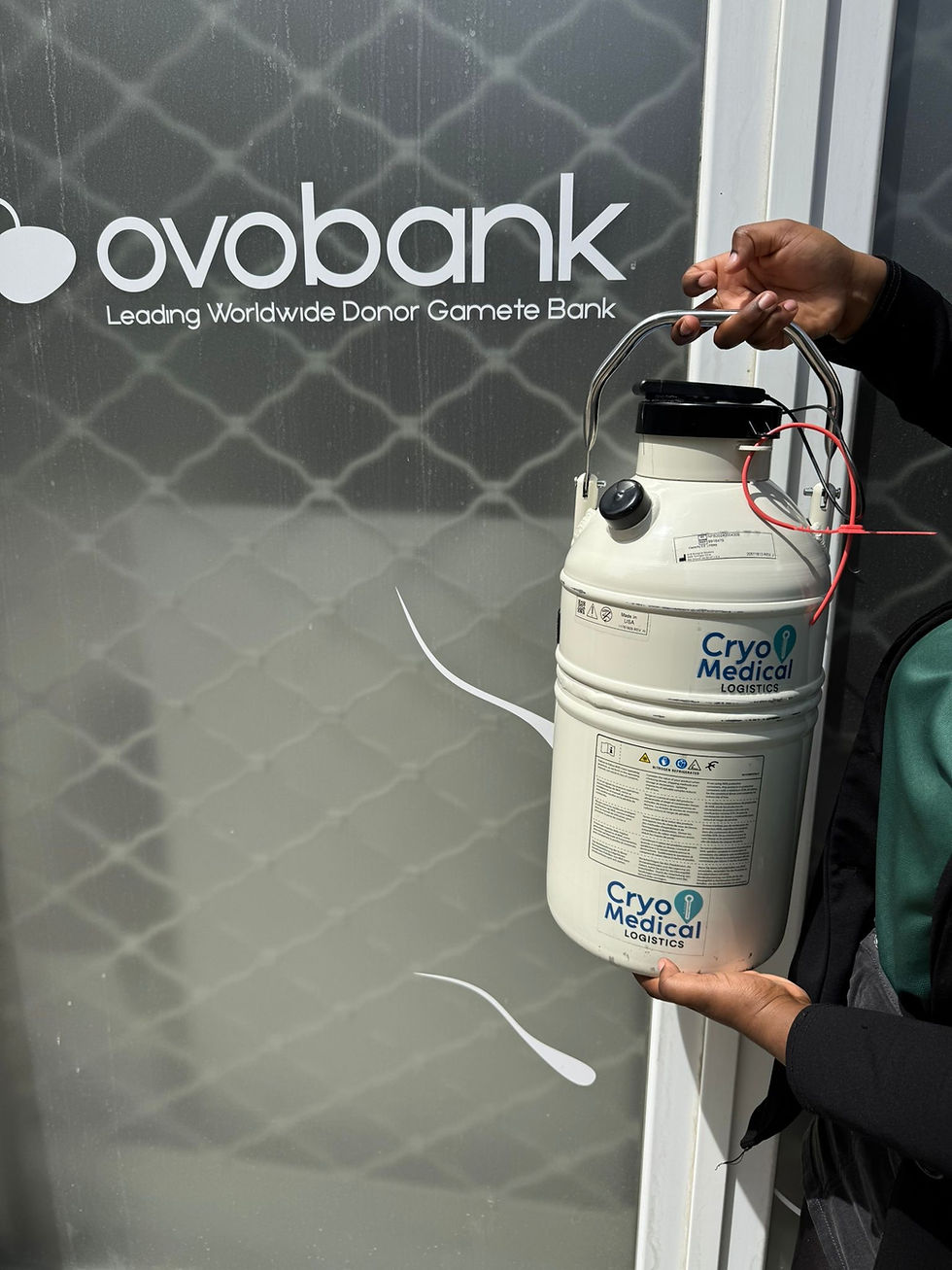
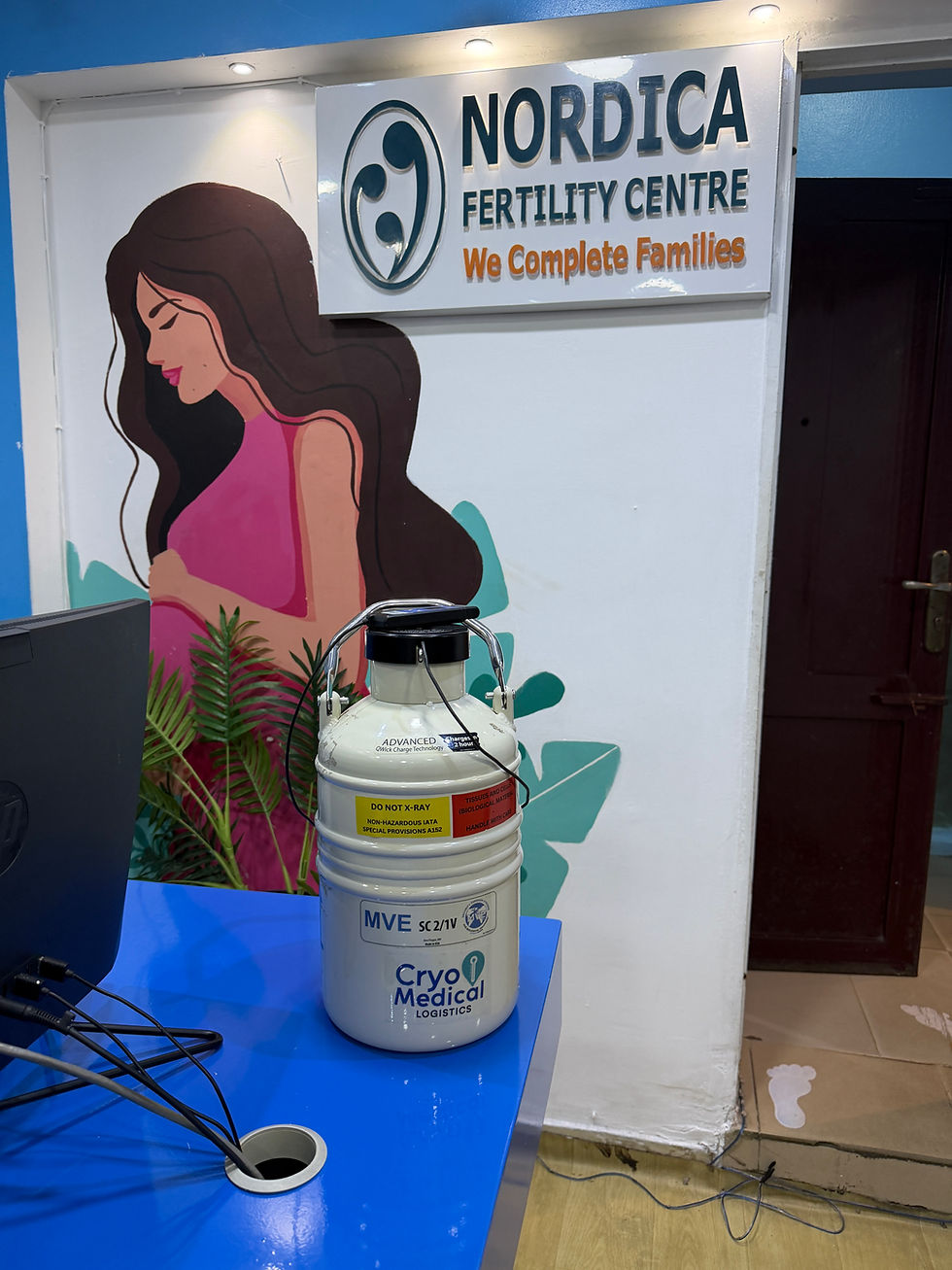
Cryo Medical Logistics Advantage: ISO-compliant cryo-shipping of sperm/eggs/embryos, DNA testing approved by the UK Home Office, and access to a world-renowned surrogacy lawyer covering Nigeria, UK & USA.
Contact us: 💬 WhatsApp/Telegram: +447585610211, (typically responds within 1 hour)
Contact Cryo Medical Logistics
If you are planning an international IVF shipment, speak to our specialist team:
WhatsApp: +44 7585610211 or Africa line +2347012629632
Phone: +44 2081500059
Website: www.cryomedicallogistics.com
Nigeria has quietly emerged as one of Africa's most active destinations for international surrogacy — offering experienced clinics, a large surrogate pool, and costs a fraction of those in the US or UK. But navigating the journey from abroad requires the right knowledge, the right partners, and careful coordination at every stage.
Why Nigeria for Surrogacy?
For international intended parents — particularly those from the UK, USA, Europe, and across Africa — Nigeria represents a compelling combination of clinical capability and cost accessibility. IVF success rates at reputable Nigerian fertility clinics run between 60–80% per cycle for women under 35, with rates often higher when donor eggs are used.
Nigeria also benefits from a large, healthy surrogate pool, established fertility centre infrastructure in cities like Lagos and Abuja, and a growing body of legal and medical professionals who specialise in international surrogacy arrangements.
The cost differential is significant. A full surrogacy journey in the United States can exceed USD 150,000. In Nigeria, comprehensive packages — including IVF, surrogate management, legal agreements, antenatal care, and delivery — are available from USD 24,000 to USD 42,000.
The Legal Landscape
Surrogacy is not prohibited in Nigeria, but it currently operates without a formal federal regulatory framework. The Nigerian Constitution does not explicitly address surrogacy, and for many years the sector has been governed largely by ethical guidelines from fertility bodies rather than statute.
This is changing. A Nigeria Surrogacy Regulatory Commission Bill was introduced in 2024 and passed its second reading in the National Assembly, alongside a Women's Health and Surrogacy Protection Bill introduced in 2025. These Bills signal a clear legislative intent to formalise the sector — introducing provisions for surrogate and intended parent eligibility, mandatory psychological assessments, and oversight of surrogacy agencies.
For international intended parents, the practical implication is this: surrogacy contracts in Nigeria are legally valid but their enforceability can vary. The surrogate is typically regarded as the legal mother at birth until parental rights are formally transferred through a court order.
Working with an experienced Nigerian surrogacy lawyer is not optional — it is essential. Your legal team will draft the surrogacy agreement, manage the parental rights transfer, and liaise with your home country's legal requirements. Your coordination service should be able to refer you to qualified legal counsel in Nigeria.
Types of Surrogacy in Nigeria
Gestational surrogacy is the only type offered by reputable Nigerian fertility clinics and agencies. An embryo is created through IVF using the eggs and sperm of the intended parents — or from donors — and transferred to the surrogate. The surrogate has no genetic connection to the child. This is the global standard and is strongly preferred from both a medical and legal standpoint.
Traditional surrogacy — where the surrogate uses her own egg — is not practised by established Nigerian providers and is strongly discouraged due to the complex legal and emotional implications it creates. Always confirm with your clinic and agency that the arrangement is gestational.
Contact Cryo Medical Logistics
If you are planning an international IVF shipment, speak to our specialist team:
WhatsApp: +44 7585610211
Phone: +44 2081500059
Website: www.cryomedicallogistics.com
The End-to-End Process
Most international intended parents should plan for a total journey of 14–18 months from initial registration to bringing their baby home.
Stage 1 — Registration and Assessment Medical and psychological evaluation of intended parents. Fertility history review. Package selection and legal agreement framework established.
Stage 2 — Surrogate Matching Surrogate recruitment, screening, full medical fitness testing, counselling, and psychological evaluation. Legal surrogacy agreement drafted and executed.
Stage 3 — IVF and Embryo Creation Ovarian stimulation, egg retrieval, semen processing, fertilisation via ICSI, and embryo development to blastocyst stage. Optional PGT-A genetic testing at this stage.
Stage 4 — Embryo Transfer (FET) Frozen embryo transfer to the surrogate. Monitoring and confirmation of gestational sac. First and second FET trials as required under guaranteed packages.
Stage 5 — Pregnancy Confirmation Confirmation of cardiac activity (heartbeat) at weeks 4–6. Routine antenatal care begins: blood tests, monthly ultrasounds, nutritional supplementation.
Stage 6 — Antenatal Monitoring NT scan at week 11, anomaly scan at week 15, ongoing Doppler ultrasounds in the third trimester. Surrogate caretaker and transport support throughout.
Stage 7 — Delivery Normal vaginal or C-section delivery. Hospital coordination. Birth registration. Post-natal care for surrogate. NICU support if required for premature birth.
Stage 8 — Legal and Travel Nigerian birth certificate, passport, parental order or court order, and home country immigration documentation. Travel preparation and departure coordination.
Understanding the Costs
Surrogacy in Nigeria is structured around two main package tiers.
Basic package covers surrogate recruitment and management, embryo transfer, full antenatal and postnatal care, legal agreements, surrogate compensation, and delivery. Payments are made in staged instalments across the pregnancy journey.
Guaranteed package bundles IVF/ICSI costs with surrogacy management fees and structures payments across eight clinical milestones — from registration through to week 23 of pregnancy — giving international intended parents a clearly defined payment schedule with no large upfront lump sum.
Additional costs to budget for:
PGT-A genetic testing — approximately USD 600 per embryo (optional but recommended for intended parents over 35 or with a history of pregnancy loss)
NICU care for premature babies — charged per day as per hospital rates
C-section hospital charges — billed at actual hospital rates
International embryo transport — if shipping frozen embryos from your home country to Nigeria
Legal fees in your home country — for a Parental Order (UK) or state-specific processes (US)
All clinical fees within the package are paid directly to the partner clinic or medical provider. CML's role is coordination and concierge facilitation.
Choosing Your Surrogate
Surrogate recruitment and vetting is one of the most consequential steps in the entire process. In Nigeria, surrogates are recruited by the partner agency or clinic and assessed against medical, psychological, and lifestyle criteria before being presented to intended parents.
A thorough surrogate screening process should include:
Full body medical examination including hormonal and infectious disease screening
Uterine assessment confirming suitability for embryo transfer and pregnancy
Psychological evaluation and informed consent assessment
Review of obstetric history — surrogates must typically have had at least one previous successful pregnancy
Lifestyle and social assessment
Legal eligibility confirmation
As an international intended parent, you will typically receive a surrogate profile for review before matching is confirmed. A legal surrogacy agreement between you, the surrogate, and the agency is then executed before treatment begins.
Establishing Legal Parentage
This is where international intended parents need to pay close attention — requirements differ significantly depending on your home country.
In Nigeria: The surrogate is typically recognised as the legal mother at birth. A court order is obtained to formally transfer parental rights to the intended parents. Your Nigerian surrogacy lawyer manages this process, which should be initiated as early in the pregnancy as possible.
For UK intended parents: UK law requires intended parents to apply for a Parental Order through the Family Court under the Human Fertilisation and Embryology Act 2008. This legally transfers parenthood from the surrogate to you and is the basis on which your child can be registered as a British citizen. The application can generally be made six weeks after the birth and must be completed within six months. Engage a UK-based surrogacy specialist solicitor before your surrogate becomes pregnant.
For US intended parents: The process varies by state. Some states allow pre-birth orders that establish parentage before delivery; others require a post-birth adoption or parentage order. Your US attorney and Nigerian legal team will need to work in tandem. The US Embassy in Nigeria will require proof of genetic parentage — typically via DNA testing — before issuing a US passport for your child.
For other international intended parents: Each country has its own requirements for recognising parentage established through surrogacy abroad. Your coordination service should be able to refer you to legal specialists familiar with your specific jurisdiction.
Bringing Your Baby Home
The documentation journey begins at birth and runs in parallel with any home-country legal parentage process. The core steps are:
Obtain the Nigerian birth certificate — registered at the local government authority
Apply for a Nigerian passport for the child (required for travel out of Nigeria)
Obtain the relevant visa or entry clearance for your home country
For UK parents — apply for a Parental Order and subsequently British citizenship for the child
For US parents — establish parentage via your state process and apply for a US passport through the US Embassy in Nigeria, supported by a DNA test
This process typically takes 6–12 weeks after birth before travel is possible. Build this timeline into your planning, particularly if you intend to be present in Nigeria for the delivery. Begin the Nigerian and home-country legal processes as early in the pregnancy as possible — waiting until after the birth significantly extends the time before you can travel home with your child.
The Role of a Fertility Concierge Coordination Service
Managing an international surrogacy journey from thousands of miles away — across different time zones, legal systems, and medical protocols — is genuinely complex. This is where a dedicated fertility concierge coordination service becomes not just convenient but essential.
A coordinator is distinct from the clinic or agency. The clinic delivers clinical services. The agency manages the surrogate. The coordinator sits above both — ensuring that every element of your journey is connected, communicated, and managed on your behalf from a single point of contact.
A fertility concierge coordinator should provide:
Initial clinic and package assessment, helping you understand what is and is not included
Partner clinic vetting and introduction, matched to your specific clinical profile and needs
Legal referral — to qualified Nigerian and home-country surrogacy lawyers
Document management — tracking all paperwork across every stage of the process
Communication liaison between you, the clinic, agency, and legal teams
Travel and accommodation coordination for your visits to Nigeria
Embryo and specimen transport — if shipping frozen embryos or samples from abroad
Ongoing case management from registration through to the child's arrival home
Contact Cryo Medical Logistics
Speak to our specialist team:
WhatsApp: +44 7585610211
Phone: +44 2081500059
Website: www.cryomedicallogistics.com
How CML Supports International Intended Parents
CML (Cryo Medical Logistics) operates as a fertility concierge coordination service for international intended parents pursuing surrogacy and IVF treatment in Africa, with Nigeria as our anchor market.
We do not provide clinical services directly. Our role is to coordinate, facilitate, and manage every aspect of your journey alongside our licensed partner clinics and agencies on the ground. All clinical fees are paid directly to our clinic partners. CML charges a transparent concierge fee only — no referral commissions, no hidden charges.
What CML coordinates for you where agreed in writeen confirmation:
Clinic selection and vetting
Package assessment and comparison
Legal referral — Nigeria and home country
IVF and embryo transfer management
Antenatal case tracking
Cryogenic embryo and specimen transport though cryo medical logistics directly
Travel and accommodation coordination
Birth registration and documentation support
Online pharmacy and prescription access
Credit facility options
Post-birth repatriation support
To speak with a CML concierge coordinator about your surrogacy journey in Nigeria, get in touch with our team.
Contact Cryo Medical Logistics
If you are planning an international IVF shipment, speak to our specialist team:
WhatsApp: +44 7585610211
Phone: +44 2081500059
Website: www.cryomedicallogistics.com
Important Notice: CML operates exclusively as a medical coordination and concierge facilitation service. We do not directly provide clinical, medical, or surgical services. All fertility treatments, clinical procedures, and healthcare services are delivered by our licensed partner clinics and medical providers in Nigeria. All clinical fees are paid directly to our clinic partners. This article is for informational purposes only and does not constitute medical, legal, or financial advice. Intended parents should seek independent legal advice in both Nigeria and their home country before entering any surrogacy arrangement.



Comments