Everything You Need to Know About IVF and Cryo Shipping of Embryos and Oocytes To and From Lebanon

Beirut has quietly become one of the most distinctive fertility destinations in the Middle East — not just for its cost advantage over Europe and the US, but because Lebanon occupies a genuinely unique legal position in the region: it's one of the only places in the Arab world where donor egg and sperm treatment is practised relatively openly, drawing patients from across the Gulf, the wider Middle East, and the diaspora.
But whether you're travelling to Beirut for treatment, sending your own frozen material there, or bringing Lebanese-created embryos back home, none of it works without one thing being handled correctly: safe, compliant, cold-chain cryogenic transport.
That's what Cryo Medical Logistics (CML) does. We're a specialist supervised hand-carry courier for reproductive biomaterials — embryos, sperm, eggs, and stem cells — not a general freight company. This guide covers the IVF landscape in Lebanon, how it compares on cost and access to other major destinations, and exactly how cryo shipping to and from Lebanon works.
Why Lebanon is different: the legal landscape
Most of the Muslim-majority world follows the Sunni position on assisted reproduction: IVF is permitted, but strictly within marriage and using only the couple's own eggs and sperm — no donor gametes, no surrogacy. Lebanon is a genuine outlier.
Lebanon is multisectarian, home to Sunni, Shia, Maronite Catholic, Greek Orthodox, and other Christian and Muslim communities. Because Shia religious authorities — following Iranian jurisprudence — have permitted third-party gamete donation under specific conditions, Lebanese clinics have been able to offer donor egg and donor sperm treatment relatively openly, something not generally available in neighbouring Sunni-majority countries or in Sunni Islamic practice more broadly.
This has made Beirut a genuine regional hub for donor-egg IVF, attracting Sunni, Shia, and Christian patients alike from Lebanon and from across the Middle East who cannot access donor treatment at home.
There is no single comprehensive national law governing ART in Lebanon. Practice has developed through a mix of religious rulings, clinical convention, and a degree of regulatory ambiguity — an amended law from 2012 exists, but comprehensive national legislation covering gamete donation has not been finalised. This means standards and practices can vary meaningfully between clinics, and it's worth asking direct questions about a clinic's specific protocols rather than assuming a single national standard applies.
Surrogacy sits in a greyer area still. It is not comprehensively regulated, and practice varies; anyone considering it should get independent legal advice specific to their situation and home country before proceeding.
The practical takeaway: Lebanon offers something genuinely differentiated in the region — real donor-gamete access — but the lack of unified national regulation means clinic due diligence matters more here than almost anywhere else covered in our country guides.
IVF cost comparison: Lebanon vs. major destinations
Costs vary by clinic and by exactly what's included, but the following gives a realistic 2026 comparison for a standard IVF/ICSI cycle using the patient's own gametes (donor cycles cost more everywhere, Lebanon included):
Destination | Typical cost per cycle (USD) | Notes |
United States | $20,000 – $40,000+ | Highest global cost; fragmented billing across clinic, lab, and medication |
United Kingdom (private) | $10,000 – $19,000 | NHS access possible but restrictive; private sector HFEA-regulated |
Western Europe (e.g. Spain) | $6,000 – $9,000 | Strong regulation, moderate cost |
Greece | $3,650 – $7,200 | Popular EU option; donor egg treatment widely available |
Lebanon (Beirut) | $3,500 – $6,000 | Comparable to Greece/Turkey; unique regional donor-gamete access |
Turkey | $1,900+ | Donor gametes and surrogacy prohibited domestically |
Iran | $1,200 – $2,500 | Lowest regional cost; full donor and surrogacy framework |
Nigeria | $1,200 – $2,500 | Lowest regional cost; |
Figures are indicative per-cycle estimates excluding travel, and can vary significantly by clinic, protocol, and whether donor gametes are used. Always request a fully itemised quote.
What Lebanon offers vs. what it doesn't: a quick comparison
Factor | Lebanon | Sunni-majority Middle East (e.g. Egypt, Jordan, UAE) | Iran |
Own-gamete IVF | ✅ Widely available | ✅ Widely available | ✅ Widely available |
Donor egg/sperm | ✅ Available (Shia-influenced practice) | ❌ Generally prohibited | ✅ Legally permitted |
Surrogacy | ⚠️ Practised, but not comprehensively regulated | ❌ Generally prohibited | ✅ Legally permitted since 2003 |
Single national ART law | ❌ No comprehensive statute | Varies by country | ⚠️ Fatwa-based, not fully codified |
Regional draw for donor treatment | ✅ Strong — attracts patients from across MENA | N/A | ✅ Strong |
Cost tier | Mid-range | Varies | Lowest |
Medical tourism to Beirut: what to know
Lebanon's fertility sector has decades of clinical experience, with several Beirut-based clinics operating for 20–30+ years and serving a large international and regional patient base. A few things worth understanding if you're considering treatment there:
English and French are widely spoken in Lebanese clinics, easing communication for international patients.
Standardised, publicly reported national success-rate data (comparable to the UK's HFEA or the US's SART registries) isn't centrally available for Lebanon, unlike in the UK or US. This makes independent clinic due diligence — asking directly for a clinic's own outcome data, by age group and by donor vs. own-egg cycles — more important than relying on generic marketing claims.
A typical IVF cycle in Beirut requires a stay of roughly two to three weeks for monitoring, retrieval, and transfer, consistent with international norms.
Political and economic instability in Lebanon has, at times, affected medical infrastructure and logistics. It's worth checking current travel advisories and confirming your clinic's continuity of operations before booking, and building some flexibility into your travel plans.
Cost savings compared to the US or UK are real and significant, particularly for donor-egg cycles, but should be weighed against the lack of centralised regulatory oversight — a trade-off patients don't face to the same degree in HFEA-regulated destinations.
Why cryo shipping to and from Lebanon needs a specialist
Whichever direction your journey runs — shipping your own frozen material to a Beirut clinic, or bringing Lebanese-created embryos home — the transport itself carries real risk if it's not handled by a specialist:
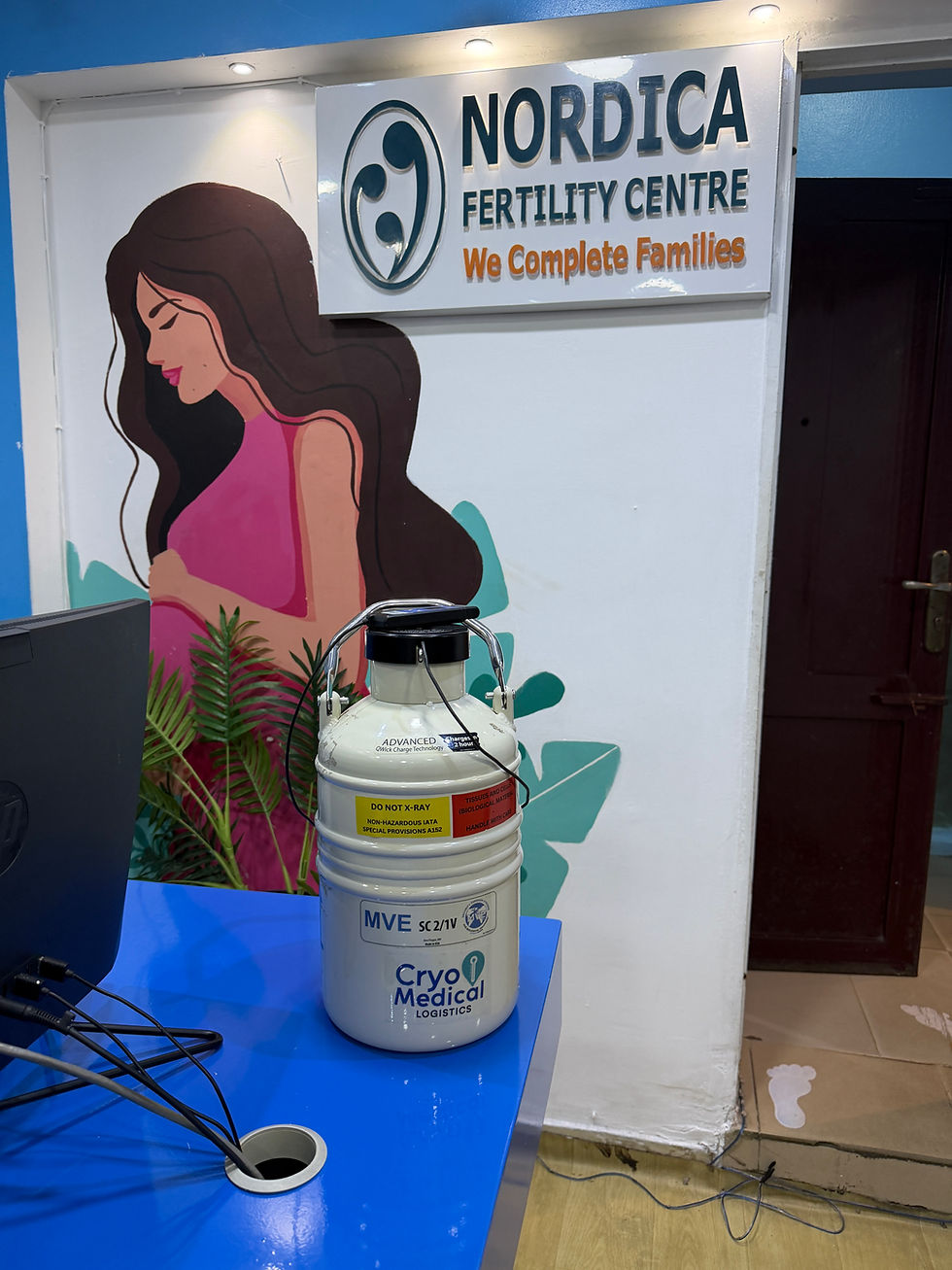
The cold chain cannot break, at any point. Embryos, eggs, and sperm are stored at approximately -196°C in a liquid nitrogen dry shipper; any lapse in temperature control risks sample viability.
X-ray exposure at security checkpoints is a genuine threat, and most clinics will not accept material that's been screened this way. A Do Not X-Ray protocol has to be actively enforced at every checkpoint on the route, not simply requested on a form.
Two regulatory systems have to align. Your shipment needs to satisfy both the exporting or importing country's requirements (an HFEA Special Direction from the UK, EU Tissue and Cells Directive compliance, FDA rules from the US) and Lebanese customs and clinic requirements, with documentation that's accurate and consistent across both.
Given Lebanon's donor-gamete practice, documentation clarity matters even more. Clear paperwork establishing ownership, consent, and the nature of the material being shipped protects everyone involved — you, the clinic, and the courier.
A shipment isn't complete until it's handed directly to the receiving clinic's embryologist — not left at a general courier desk, a hotel, or a third party.
How CML manages your Lebanon shipment
1. Consultation — you share your originating or destination clinic details, sample type, and timeline. We confirm feasibility and provide a transparent, personalised quote.
2. Direct clinic coordination — we liaise with both the releasing and receiving clinics to confirm readiness and agree exactly how and when handover will happen.
3. Full documentation management — export/import consents, transport agreements, invoices, and any translation requirements are prepared and pre-cleared ahead of transit.
4. Certified cryogenic packing — your samples are loaded into a certified, pre-chilled dry shipper by the originating clinic's embryology team, with fill level and temperature recorded before sealing.
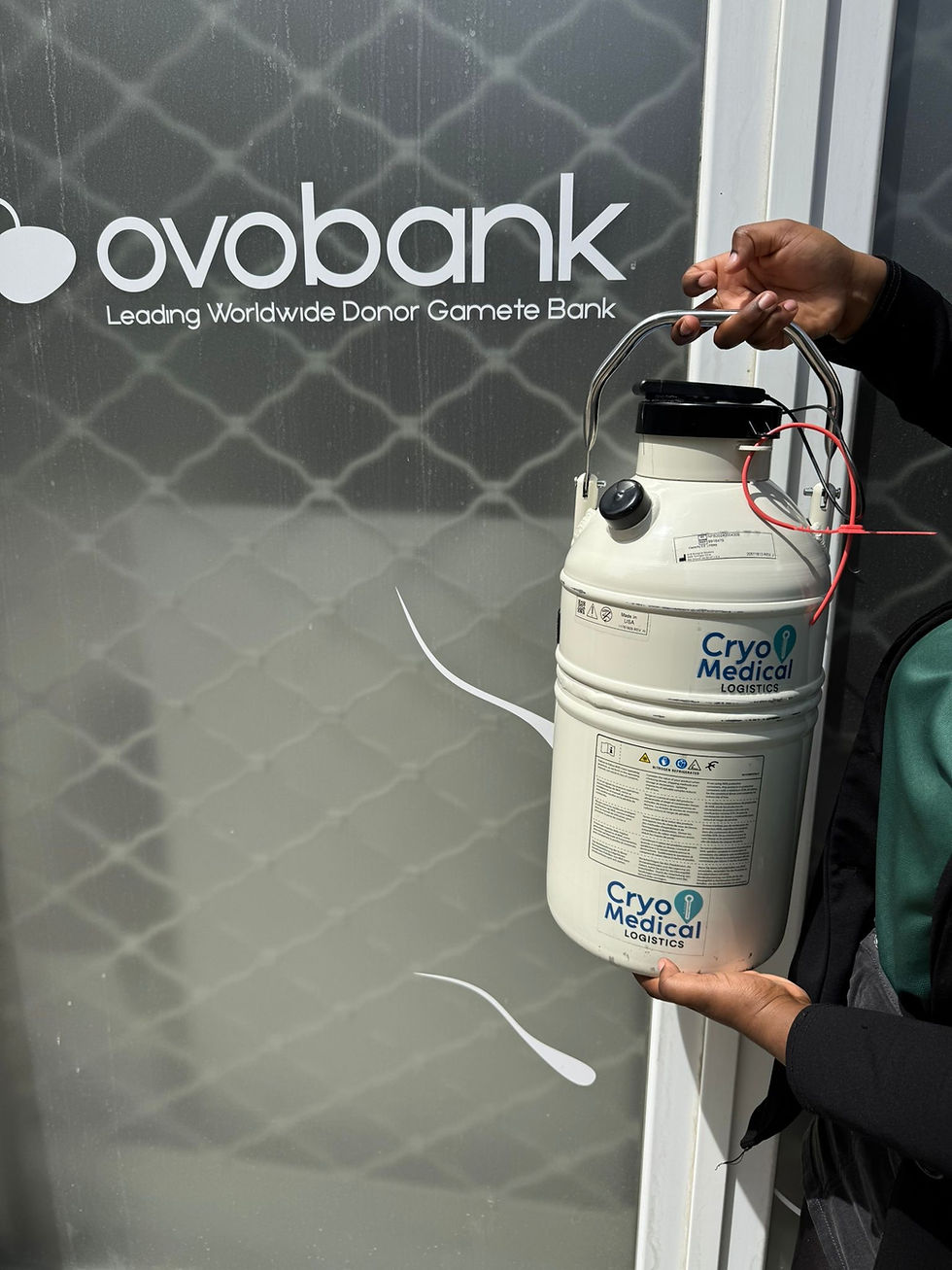
5. Supervised hand-carry transport — a trained CML courier personally escorts your shipment as hand luggage on every flight segment, never as cargo, maintaining an actively enforced Do Not X-Ray protocol and continuous temperature monitoring with data logging throughout.
6. Direct clinic handover — your shipment is placed personally into the hands of the named receiver at the destination clinic, with photo confirmation and a full chain-of-custody record provided to you.
Why intended parents and clinics choose CML
Supervised hand-carry only, never freight — continuous personal oversight from door to door.
ISO 9001:2015 complaint, reflecting an internationally recognised quality management standard.
FCA-regulated insurance cover up to $40,000 on every shipment.
A strict, actively enforced Do Not X-Ray protocol at every checkpoint.
Full chain-of-custody documentation, giving you, your clinics, and customs authorities a complete, verifiable record.
Genuine international reach across 80+ countries — so whichever direction your Lebanon journey runs, we can manage the full route, not just one leg.
One team, one point of accountability, from first consultation through to final delivery.
When your own embryos or gametes are what's being transported, the specialism of your courier is not a minor detail — it's the difference between a journey that succeeds and one that doesn't.
Common questions
Is it safe to ship embryos or eggs internationally to Lebanon? Yes, when handled by a specialist. The risk sits almost entirely in using an inexperienced or general-purpose courier unfamiliar with cold-chain protocols and Lebanese customs requirements specifically.
Can I use donor eggs or sperm in Lebanon? Yes — Lebanon is one of the few countries in the region where donor gamete treatment is practised relatively openly, though standards vary by clinic given the lack of a single national regulatory framework. Confirm your specific clinic's protocols directly.
How long does shipping to or from Beirut typically take? Transit time depends on route and customs processing; we'll confirm an estimated window as part of your personalised quote.
Do I need to travel with my samples myself? No — our trained courier hand-carries the shipment personally on every leg of the journey.
Does CML only handle Lebanon? No — we operate across 80+ countries, including major corridors across the Middle East, Africa, Europe, and the Americas.
Get in touch
If your IVF journey involves shipping into or out of Lebanon, talk to CML before you book anything. We'll give you a clear, honest picture of your route, documentation requirements, and timeline.
WhatsApp: +44 7585 610211
Phone: +44 20 8150 0059
This article is for general informational purposes and does not constitute legal or medical advice. Requirements and regulations vary by clinic and can change — always confirm current specifics directly with your clinic and with CML before shipping or travelling.



Comments