Everything You Need to Know About IVF and Cryo Shipping of Embryos to and from Egypt with Cryo Medical Logistics


Contact us:
WhatsApp: +44 7585 610211
Phone: +44 20 8150 0059
Egypt has one of the oldest and most established fertility sectors on the African continent — decades of clinical experience, some of the region's most affordable pricing, and a growing international patient base drawn from the Gulf, the Maghreb, and further afield. But an IVF journey involving Egypt raises questions that most guides skip entirely: what does Egyptian law actually allow, how does it compare to other major African fertility destinations, and — critically — how do embryos, eggs, sperm, and stem cells physically and legally move in and out of the country?
This is the most comprehensive guide available on IVF and cryogenic shipping in Egypt, built specifically to compare Egypt against five of Africa's other major fertility markets — Ghana, South Africa, Nigeria, Tunisia, and Uganda — across cost, law, eligibility, and logistics. It's written and maintained by Cryo Medical Logistics (CML), a specialist supervised hand-carry cryogenic courier for reproductive biomaterials operating across 80+ countries, including a dedicated Lagos office covering the African corridor.
IVF in Egypt: the essentials
Egypt has practised IVF since the mid-1980s and has one of the largest concentrations of fertility clinics in the Middle East and North Africa region, centred on Cairo, Giza, and Alexandria.
Treatment is restricted to married heterosexual couples, using only their own eggs and sperm. Single individuals and unmarried couples cannot access IVF treatment in Egypt.
Donor gametes are prohibited. Egyptian law does not permit egg, sperm, or embryo donation.
Surrogacy is prohibited outright. There is no legal pathway for surrogacy arrangements in Egypt.
Frozen embryo transfer is permitted — a notable exception compared to some other Sunni-majority countries — allowing couples to freeze and later transfer their own embryos.
Gender selection for family balancing is legally permitted via PGT-A, which is unusual regionally and has become a specific draw for Gulf and international patients.
A significant and often overlooked restriction: some sources indicate Egyptian regulation does not permit importing frozen sperm samples from abroad for use in IUI or IVF cycles, even where the sample belongs to the intended father. This is a critical point to verify directly with your specific Cairo or Alexandria clinic and with CML before planning any shipment into Egypt — the position can depend on the exact nature of the sample and the receiving clinic's own protocols, and getting this wrong before travel can derail a treatment cycle entirely.
Egypt IVF cost comparison
Package | Typical cost (USD) |
Standard IVF/ICSI cycle | $1,900 – $6,750 (average ~$3,500) |
IVF with PGT-A / gender selection | $3,500 – $5,000+ |
PGD (genetic screening) | from $6,750 |
Reported success rates from leading Cairo and Alexandria clinics range from roughly 50–65% live birth rate per embryo transfer for women under 35 using PGT-screened embryos — broadly in line with international benchmarks, though (as with most destinations outside the UK and US) there's no centralised, independently audited national registry, so always ask a specific clinic for its own outcome data rather than relying on marketing claims.
Six-country comparison: Egypt vs. Ghana, South Africa, Nigeria, Tunisia, and Uganda
Cost comparison
Country | Standard IVF/ICSI cycle (USD) | Notes |
Egypt | $1,900 – $6,750 | Among the most affordable in the region; PGT-A widely available |
Ghana | ~$35,000 – $60,000 for full surrogacy programmes; standalone IVF-only cycles considerably less | Pricing skews toward bundled surrogacy packages |
South Africa | Roughly $2,000 – $4,500 (R33,000–R80,000, currency-dependent) | Advanced clinical standards; full ART range including donor gametes |
Nigeria | Typically $2,000 – $5,000 | Growing private sector concentrated in Lagos and Abuja; costs vary significantly by clinic |
Tunisia | $3,200 – $5,200+ | Strong Maghreb medical tourism infrastructure; French/English-speaking clinics |
Uganda | $3,200 – $5,200+ | Higher than most peers; full ART range including donor gametes |
Figures are indicative per-cycle estimates for standard treatment using the patient's own gametes unless noted, exclude travel, and vary significantly by clinic. Always request a fully itemised quote.
Legal and eligibility comparison
Factor | Egypt | Ghana | South Africa | Nigeria | Tunisia | Uganda |
Married couples, own gametes | ✅ | ✅ | ✅ | ✅ | ✅ | ✅ |
Donor eggs/sperm | ❌ Prohibited | ✅ Available | ✅ Available | ⚠️ Practised, unregulated | ❌ Generally prohibited | ✅ Available |
Surrogacy | ❌ Prohibited | ✅ Statutory (Act 1027) | ✅ Altruistic only, court-approved | ⚠️ Practised, contract-based only | ❌ Not practically available | ⚠️ Practised, limited regulation |
Single parents | ❌ | ✅ (single heterosexual men, statutory) | ❌ (SA domicile required) | ⚠️ Varies by clinic | ⚠️ Egg freezing only for single women | ⚠️ Varies by clinic |
Foreign intended parents | ✅ (treatment only, no surrogacy) | ✅ | ⚠️ Restricted — one IP must be SA-domiciled | ✅ | ✅ (treatment only) | ✅ |
Dedicated national ART/surrogacy law | ❌ | ✅ Act 1027 (2020) | ✅ Children's Act | ❌ No federal law | ❌ | ❌ |
Gender selection (family balancing) | ✅ Legal | Varies | Varies | Varies | Not typically offered | Varies |
Where each country stands out
Country | Strongest for | Weakest for |
Egypt | Cost, gender selection, decades of clinical volume | Donor treatment, surrogacy, single/unmarried patients |
Ghana | Statutory surrogacy law, single-father pathway | Cost (for full surrogacy programmes) |
South Africa | Clinical sophistication, full ART range | Access for purely international surrogacy (domicile rule) |
Nigeria | Diaspora corridor strength, growing private sector | Regulatory clarity (no dedicated ART law) |
Tunisia | Mediterranean medical tourism infrastructure, French/EU clinical standards | Donor gametes and surrogacy access |
Uganda | Full ART range including donor and surrogacy | Cost (highest of the six); regulatory maturity |
Why cryo shipping across these corridors needs a specialist
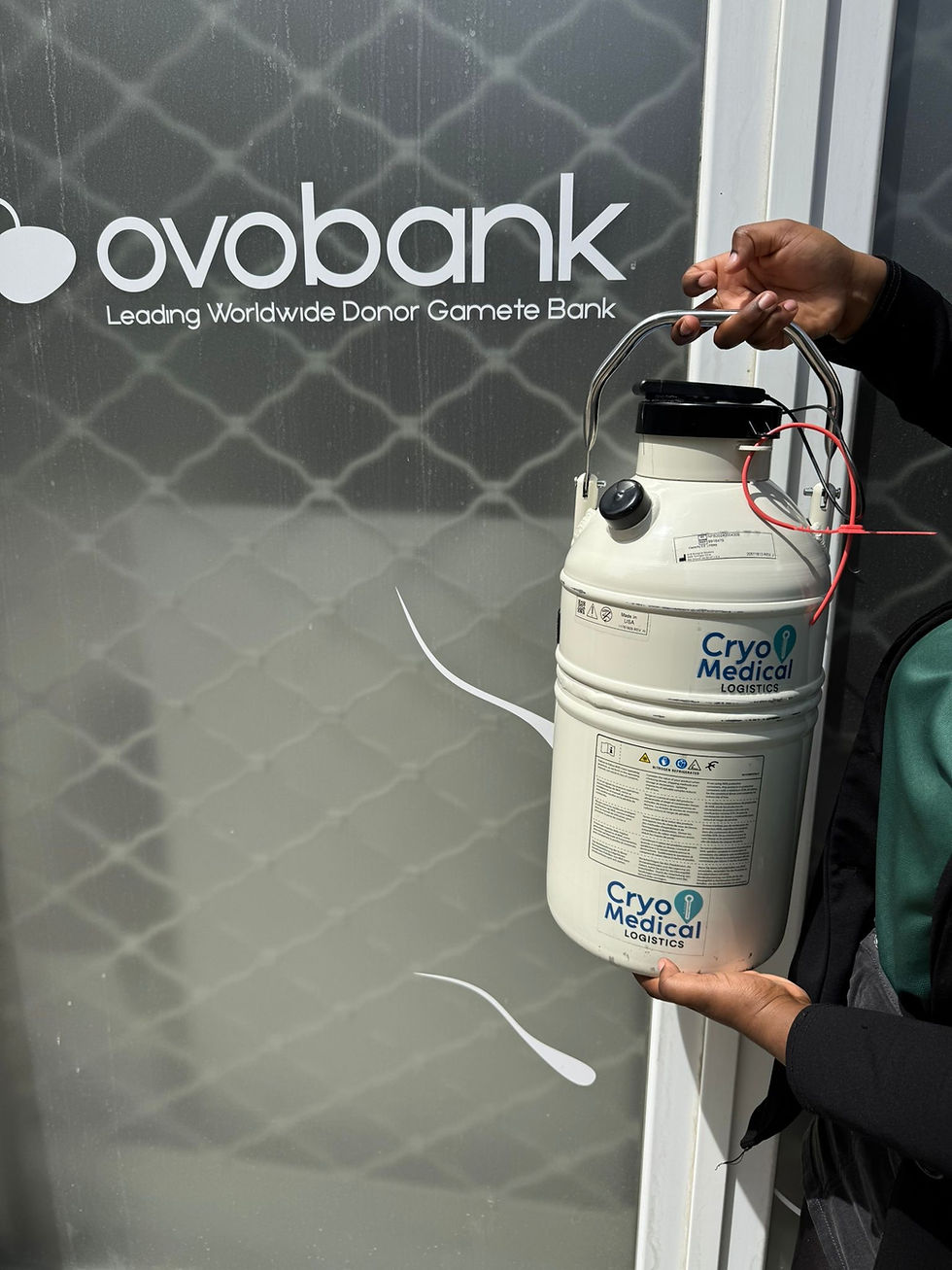
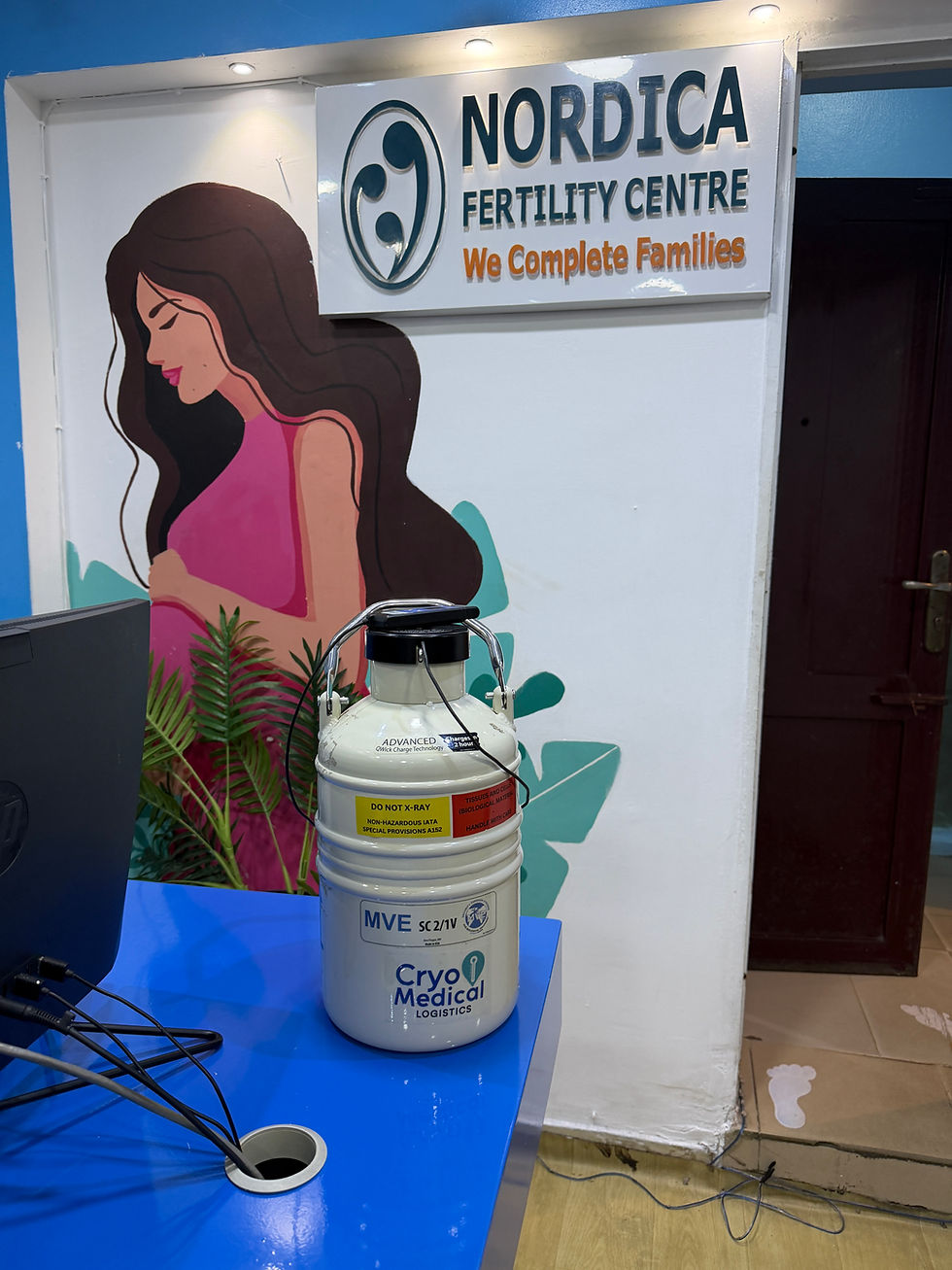
Every one of these six countries shares the same underlying transport challenge, even though their laws differ enormously: frozen embryos, eggs, sperm, and stem cells have to move at approximately -196°C in a liquid nitrogen dry shipper, with the cold chain unbroken from clinic to clinic.
X-ray exposure at security checkpoints is a real risk everywhere on this list. Most receiving clinics won't accept material screened this way. A Do Not X-Ray protocol has to be actively enforced at every single checkpoint across every leg of a multi-country route — not simply requested on paperwork.
Each country has its own customs and regulatory layer. Egypt's biological material rules, Nigeria's NAFDAC and NICIS II Single Window requirements, South Africa's stricter clinical documentation standards, Ghana's Act 1027 framework, Tunisia's EU-aligned clinic protocols, and Uganda's developing regulatory environment all require different, precisely matched paperwork — and mismatches are the most common cause of delays anywhere on this list.
Two regulatory systems always have to align simultaneously: the exporting country's rules (HFEA Special Directions, EU Tissue and Cells Directive, FDA requirements) and the receiving African country's import and clinic requirements.
Given Egypt's restrictions on donor material and imported sperm samples specifically, documentation proving ownership, marital status, and the nature of the material is especially important — this is not a corridor where generic paperwork will do.
A shipment isn't complete until it's handed directly to the receiving embryologist — not left at a courier desk, hotel, or third-party agent, in any of these six countries.
Contact us:
WhatsApp: +44 7585 610211
Phone: +44 20 8150 0059
How CML manages shipments across Egypt and the wider African corridor
1. Consultation — you share your route, sample type, and timeline. We confirm feasibility for your specific country pairing and provide a transparent, personalised quote.
2. Direct clinic coordination — we liaise with both the releasing and receiving clinics to confirm readiness and agree exactly how handover will happen, country by country.
3. Full documentation management, tailored per country — export/import consents, transport agreements, invoices, and any required translations are prepared and pre-cleared ahead of transit, built around the specific regulatory framework of your destination — whether that's Egypt's ownership documentation requirements, Nigeria's NAFDAC and Form M processes, or Ghana's Act 1027-aligned paperwork.
4. Certified cryogenic packing — your samples are loaded into a certified, pre-chilled dry shipper by the originating clinic's embryology team, with fill level and temperature recorded before sealing.
5. Supervised hand-carry transport — a trained CML courier personally escorts your shipment as hand luggage on every flight segment, maintaining an actively enforced Do Not X-Ray protocol and continuous temperature monitoring with data logging throughout.
6. Direct clinic handover — your shipment is placed personally into the hands of the named receiver at the destination clinic, with photo confirmation and a full chain-of-custody record.
Why CML is built for exactly this challenge
Supervised hand-carry only, never freight — continuous personal oversight from door to door, on every leg of every route.
ISO 9001:2015 certified.
FCA-regulated insurance cover up to $40,000 on every shipment.
A strict, actively enforced Do Not X-Ray protocol at every checkpoint, on every route.
Full chain-of-custody documentation, tailored to each destination's specific regulatory framework rather than a one-size-fits-all template.
A physical Lagos office, giving CML direct, on-the-ground presence in West Africa's busiest fertility corridor — a structural advantage most couriers quoting African routes simply don't have.
Genuine reach across 80+ countries, including every corridor covered in this guide.
One team, one point of accountability, from first consultation through to final delivery, regardless of how many countries or regulatory regimes your journey crosses.
Common questions
Is it safe to ship embryos internationally to Egypt? Yes, when handled by a specialist — but confirm directly with your clinic and with CML whether your specific shipment (particularly sperm samples from abroad) is permitted under current Egyptian regulation before booking anything.
Can I use donor eggs or sperm in Egypt? No — Egyptian law restricts treatment to married couples using their own gametes. If donor treatment is part of your plan, Ghana, South Africa, or Uganda are worth comparing instead.
Is surrogacy available in Egypt? No, surrogacy is prohibited in Egypt. Ghana and South Africa offer statutory or court-regulated surrogacy pathways; Nigeria and Uganda have surrogacy practised on a contractual basis without dedicated national legislation.
Which of these six countries is cheapest overall? Egypt generally offers the lowest cost for standard own-gamete IVF cycles among the six. For full surrogacy programmes, costs are highest in destinations requiring donor gametes and extensive legal processes, such as Ghana and Uganda.
Do I need to travel with my samples myself? No — a trained CML courier hand-carries your shipment personally on every leg of the journey, across any of these corridors.
Does CML only handle Egypt? No — we operate across 80+ countries, including all six African markets covered in this guide, plus major corridors across Europe, the Americas, and the Middle East.
Get in touch
Whether your journey involves Egypt alone or a comparison across multiple African fertility destinations, talk to CML before you book anything. We'll give you a clear, honest picture of your route, legal considerations, and timeline.
WhatsApp: +44 7585 610211
Phone: +44 20 8150 0059
This article is for general informational purposes and does not constitute legal or medical advice. Regulations vary by country and clinic, and can change — always confirm current specifics directly with your clinic and with CML before shipping or travelling.



Comments