IVF Shipping Embryos, Eggs, and Sperm to and from Houston and Dallas Texas to Nigeria: 2026–2027 Comprehensive Guide

Contact us
Cryo Medical Logistics operates across 100+ countries. Every quote is specific to your route, your clinics, your material, and your regulatory situation.
📧 Email: transports@cryomedicallogistics.com
📱 WhatsApp: +44 7585 610211
📞 Phone: +44 2081 500059
Houston and Dallas–Fort Worth are two of the busiest fertility and reproductive medicine hubs in the southern United States, home to major IVF clinics, cryobanks, and andrology labs. A growing number of patients, couples, and clinics need to move embryos, eggs, or sperm between these two Texas cities and Nigeria — whether that's an embryo created at a Houston clinic destined for transfer or storage at a partner facility in Lagos, Abuja, or Port Harcourt, or a sample collected in Nigeria shipped to Texas ahead of a US-based cycle.
Whichever direction the shipment moves, one fact holds true for every case: this is not a parcel. It is a living biological sample that must survive two full regulatory systems, a long-haul routing with at least one connection, and a chain-of-custody standard that leaves zero room for error. This guide covers exactly what that involves — the US export side, the Nigerian import side, the real-world flight routing between Texas and Lagos, what it costs, and why hand-carry transport isn't a premium add-on for this corridor, it's the only way to do it properly.
Why This Corridor Is Different From a Standard International Shipment
Most guides to international reproductive material transport treat "shipping to Nigeria" as a single problem. In practice, the Houston/Dallas–Nigeria corridor has three layers stacked on top of each other:
US federal requirements governing the export of human cells and tissue, which apply regardless of which Texas clinic or cryobank the sample originates from.
Airline and airport screening requirements, particularly around X-ray exposure of cryopreserved biological material, which differ by carrier and by airport.
Nigerian import and clearance requirements, which are the least standardised part of the journey and the point where inexperienced couriers most often run into delays.
None of these three layers is optional, and none of them can be handled at the last minute. A courier who is confident about the physical cold-chain packaging but unfamiliar with any one of these three layers is not equipped to run this corridor — however good their dry shipper is.
The US Export Side: What Governs Reproductive Material Leaving Texas
Human embryos, oocytes, and sperm are classified in the United States as Human Cells, Tissues, and Cellular and Tissue-Based Products (HCT/Ps) and fall under the framework set out in 21 CFR Part 1271. For most reproductive tissue moving between an FDA-registered fertility clinic or cryobank and a receiving facility abroad, this means the originating establishment must already be properly registered with the FDA, and donor eligibility and screening records need to be in order before the sample is ever cleared to travel. We use the term FDA-registered, not "FDA-approved," when describing US storage and clinic status — reproductive tissue itself isn't an FDA-approved product in the way a drug or device would be, and it's important that this distinction is represented accurately.
For the courier, the practical obligations that sit alongside this framework include:
Confirming the originating Texas clinic or cryobank can produce the donor eligibility and chain-of-custody documentation the receiving Nigerian facility will need on arrival.
Ensuring any required disclosures for hazardous materials (the liquid nitrogen vapour in a dry shipper) are correctly filed with the carrier ahead of travel.
Maintaining unbroken, documented chain of custody from the moment the sample leaves the clinic's storage tank in Houston or Dallas to the moment it's handed to the receiving embryologist in Nigeria.
This is where a specialist reproductive courier earns its place: not by packing the tank correctly — most competent couriers can do that — but by making sure the paperwork trail behind the tank is airtight before the sample ever leaves the clinic.
The Do Not X-Ray Question
This is one of the most common points of confusion for intended parents planning a Texas–Nigeria shipment, and it deserves a direct answer: cryopreserved embryos, eggs, and sperm should never be exposed to X-ray or CT-based security screening. Repeated or prolonged exposure carries a real risk to sample viability, and this is treated as a non-negotiable requirement industry-wide, not a precaution offered only by premium providers.
In practice, this means:
The sample must be presented for visual and manual inspection at every security checkpoint, in both the US and Nigeria, using documentation that identifies it as irreplaceable human reproductive material.
This has to be arranged in advance with the airline and, where possible, with airport security — not negotiated at the gate under time pressure.
The courier hand-carrying the sample needs to be trained specifically in how these conversations go, in both English-language US airport contexts and Nigerian airport contexts, where screening protocols and staff familiarity with this request can differ significantly.
An unaccompanied cargo shipment cannot make this request at all — the sample simply goes through the standard freight security process, X-ray included. This is the single clearest reason hand-carry is not a luxury option for this corridor: only a courier physically present with the sample can insist on manual screening at the moment it matters.
The Nigeria Import Side
On arrival, reproductive material entering Nigeria must clear the country's customs and health-authority requirements before it can be released to the receiving clinic. This is the layer of the process we manage directly for every client rather than publish as a step-by-step guide — partly because the specific procedural detail changes without much public notice, and partly because getting it right depends on active relationships with the receiving clinic and the authorities involved, not on following a generic checklist.
What we can say plainly is this: the single most common cause of delay on the Nigeria-inbound leg is incomplete or mismatched documentation between what left Texas and what Nigerian authorities expect to see on arrival — which is exactly why we coordinate both ends of the shipment as one continuous process, rather than treating the US export and the Nigeria import as two separate jobs handed off mid-air.
If you're evaluating a provider for this corridor, the right question isn't "what's the NAFDAC process?" — it's "does your team manage the Nigeria-side clearance directly, with an established relationship with the receiving clinic, or are you relying on the intended parents or the clinic to sort that out on arrival?" The second answer is the one that leads to shipments sitting in a customs holding area while people scramble to produce paperwork nobody flagged in advance.
Embryos, Eggs, and Sperm: Where the Handling Differs
All three sample types travel in the same category of dry shipper and are subject to the same US export and Nigerian import framework, but they are not identical in transit:
Embryos are typically the smallest-volume, highest-emotional-stakes shipment, often representing a couple's entire remaining reproductive material from a treatment cycle. Documentation usually needs to trace back to a specific, named cycle and a specific consent record.
Eggs (oocytes) are generally considered more vulnerable to temperature fluctuation and mechanical disturbance in transit than embryos at the same cryopreservation stage, which makes continuous monitoring and a stable, well-buffered itinerary especially important — not a detail to treat casually because "it's just eggs."
Sperm is often assumed to be the lowest-risk shipment of the three, and while it is generally more resilient than eggs, it is still subject to exactly the same export and import documentation requirements. Treating a sperm shipment as a simplified, lower-scrutiny job is a common and avoidable mistake — Nigerian import authorities don't apply a lighter standard to sperm than to embryos.
Collecting Without a Clinic Visit: The At-Home Sperm Collection and Cryostorage Option

Not every sperm shipment on this corridor starts with a visit to a Houston or Dallas fertility clinic. For men who want to freeze and ship a sample without the logistics of an in-person clinic appointment — whether due to travel schedules, distance from the nearest andrology lab, or simply a preference for privacy — we offer an at-home sperm collection and long-term cryostorage kit available nationwide across the USA.
The kit allows the sample to be collected at home, then processed and cryopreserved for long-term storage, removing the need for an initial clinic visit before the sample is ready to travel. For Texas-based patients preparing a shipment to Nigeria, this is a practical way to get a sample into proper cryogenic storage on your own schedule, ahead of the same hand-carry export process described above — the sample still travels under the same FDA-registered chain-of-custody standard, the same Do Not X-Ray handling, and the same door-to-door courier oversight once it's ready to move.
This option is particularly useful for intended parents juggling work travel between Houston and Dallas, or for men who want to bank a sample well ahead of a planned transfer date in Nigeria without building a clinic visit into an already tight schedule.
Why a Specialist Hand-Carry Courier Is the Only Sensible Choice Here
Put together, the Houston/Dallas–Nigeria corridor asks a provider to manage US federal compliance, airline-specific Do Not X-Ray coordination, a long multi-hub routing with a real cold-chain time budget, and Nigerian customs clearance — simultaneously, and without a single handoff point where responsibility becomes unclear. A specialist reproductive courier operating this corridor should be:
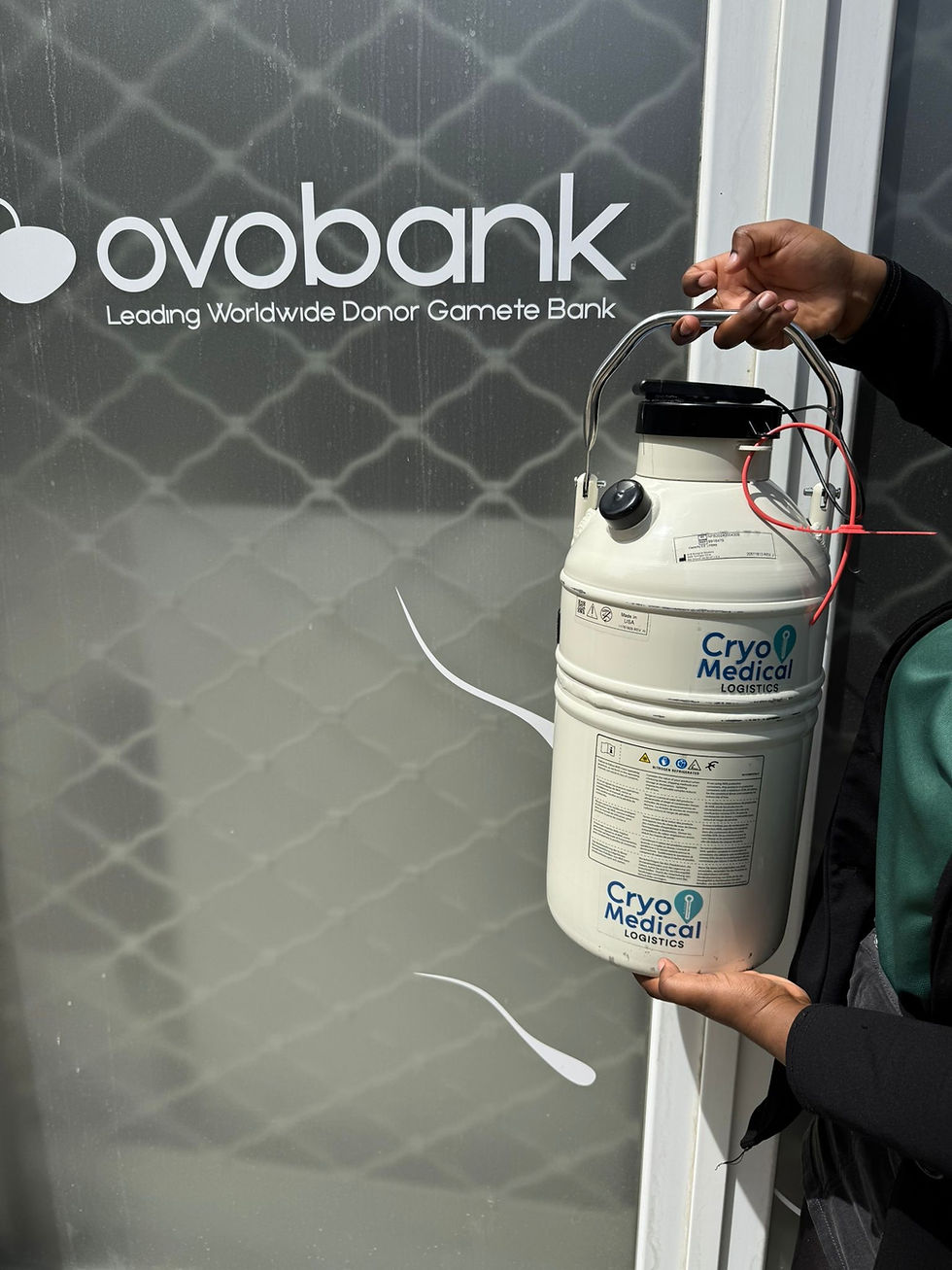
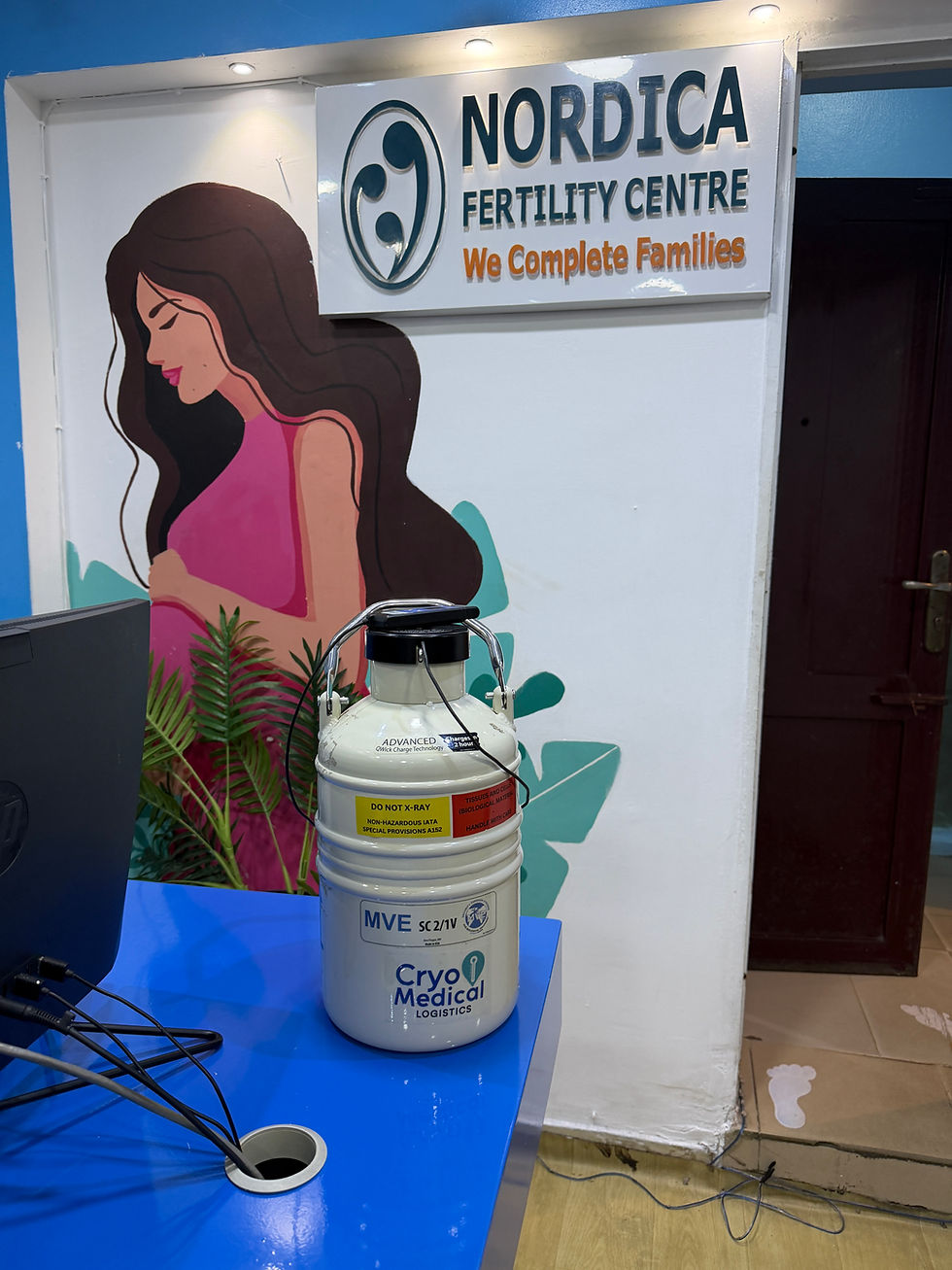
Personally hand-carrying the sample for the entire journey, door to door, rather than routing it as unaccompanied cargo at any stage.
Managing the Do Not X-Ray request proactively with the airline before departure, not reactively at the checkpoint.
Actively monitoring shipper temperature and charge status throughout every leg and connection.
Coordinating US export documentation and Nigerian import documentation as one continuous file, so nothing is discovered missing only after the flight has landed.
Maintaining a chain-of-custody record with a witnessed handover at both ends — clinic to courier in Texas, courier to embryologist in Nigeria.
This is the layer of service that separates a specialist reproductive logistics provider from a general medical courier who happens to also do fertility shipments. Packing competence solves the physical side of the journey. It does nothing for the regulatory, routing, and chain-of-custody side — and on this corridor, that's where almost every serious delay originates.
What Happens When the Process Isn't Followed
The risks here are not theoretical. Regulatory scrutiny of reproductive material moving across borders has increased in recent years, and unaccompanied or improperly documented shipments have been delayed, queried, or in the worst cases lost in transit when the paperwork didn't match what receiving authorities expected. A missed connection with a shipper running low on charge is a physical risk to viability; a documentation mismatch at Nigerian customs is a legal and logistical one.
Both are entirely preventable with proper planning, and neither is recoverable after the fact in the way a delayed treatment cycle is. A postponed embryo transfer is an inconvenience. Reproductive material lost or degraded in transit generally is not replaceable.
What Should You Budget for This Corridor?
Costs for a fully compliant, hand-carried shipment between Texas and Nigeria vary by sample type, routing, and season, and any figure quoted should be treated as a starting range rather than a fixed price — excluding the separate costs of medication, testing, cryopreservation, and ongoing storage at either end, which are billed by the treating clinic, not the courier. As a general planning range, intended parents and clinics should budget from the low thousands of US dollars upward for a complete door-to-door hand-carry service on this route, with the final figure shaped by the specific cities, the connecting routing chosen, and how much lead time is available before a scheduled transfer date.
Quotes that sit well below a reasonable range for a hand-carried, fully documented shipment on this corridor are worth questioning closely — the most common thing left out of an unusually cheap quote is the compliance and clearance work itself, which is precisely the part of the process most likely to cause a delay if it isn't done properly.
A Realistic Planning Timeline
For intended parents and clinics planning a shipment on this corridor in 2026 or 2027, a sensible sequence looks like this:
Confirm the receiving Nigerian clinic's formal acceptance of the shipment in writing, before anything else is booked.
Begin coordinating US export documentation and donor/chain-of-custody records as early as possible — ideally weeks, not days, before a target transfer date.
Select and confirm a routing that prioritises reliable connections over the cheapest fare, with buffer time built in at the connecting hub.
Finalise the transport booking only once documentation on both the US and Nigerian sides is confirmed complete.
Build in contingency time before any scheduled transfer date, rather than working backward from a fixed date that assumes every connection will run exactly on schedule.
Final Thoughts
The Houston/Dallas–Nigeria corridor is a genuinely demanding logistics problem: no direct flight, two full regulatory systems, and a sample that cannot tolerate the kind of ordinary shipping delay that would be a minor inconvenience for any other kind of cargo.
Done properly, it is entirely routine — but "properly" here means a provider who treats US export compliance, airline screening coordination, and Nigerian customs clearance as one managed process from the moment the sample leaves the Texas clinic to the moment it's handed to the receiving embryologist in Lagos, Abuja, or Port Harcourt — not three separate problems that happen to sit on either side of the same flight.
Frequently Asked Questions
Is there a direct flight from Houston or Dallas to Lagos? No — as of 2026, neither Houston (IAH) nor Dallas–Fort Worth (DFW) has a direct commercial flight to Lagos. Every shipment on this corridor connects through an international hub, which is a key reason continuous temperature monitoring and a buffered routing matter so much for this specific journey.
Can embryos, eggs, or sperm go through airport X-ray scanners? No. Cryopreserved reproductive material should always be presented for manual, visual inspection rather than X-ray or CT-based screening, at every checkpoint on both the US and Nigerian sides of the journey.
Is sperm shipping less strictly regulated than embryo shipping? No. All three sample types — embryos, eggs, and sperm — are subject to the same US export documentation and the same Nigerian import clearance requirements. Treating a sperm shipment as lower-scrutiny is a common mistake.
How long does a dry shipper keep samples at the right temperature? A fully charged dry vapour shipper can typically maintain the required cryogenic temperature for up to around 14 days, but a long multi-connection routing like Texas to Nigeria uses up a meaningful portion of that safety window, which is why routing choice and real-time monitoring matter as much as the container itself.
Who should manage the Nigerian customs clearance — us, the clinic, or the courier? The courier should. The most reliable approach is one provider managing US export documentation and Nigerian import clearance as a single coordinated process, rather than the intended parents or receiving clinic having to resolve clearance issues after the shipment has already landed.
Can I freeze a sperm sample without visiting a clinic in Houston or Dallas first? Yes. An at-home sperm collection and long-term cryostorage kit is available nationwide across the USA, allowing the sample to be collected and cryopreserved without an initial clinic visit — the sample is then hand-carried to Nigeria under the same export and chain-of-custody standards described above.
Contact us
Cryo Medical Logistics operates across 100+ countries. Every quote is specific to your route, your clinics, your material, and your regulatory situation.
📧 Email: transports@cryomedicallogistics.com
📱 WhatsApp: +44 7585 610211
📞 Phone: +44 2081 500059
This article is for general informational purposes and does not constitute legal advice.



Comments