How much is IVF in Africa? (2026 -2027 Expert Guide on Major African Fertility Destinations) by Cryo Medical Logistics


TL;DR (Quick Summary)
IVF costs vary enormously across Africa — from roughly $600 in Nigeria's public hospitals to $5,000 in South Africa's leading private clinics — depending on country, clinic tier, and whether donor material or advanced add-ons are involved.
South Africa is Africa's most developed fertility market (widest donor pool, most liberal legal framework, highest average cost). Nigeria is Africa's busiest market by cycle volume. Egypt is the most affordable major North African hub but prohibits donor gametes and surrogacy outright.
Medication is billed separately in almost every country covered here — always budget an extra $500–$2,500 on top of the quoted procedure fee.
Legal frameworks range from well-established (South Africa, Egypt) to largely unregulated (most of Sub-Saharan Africa) — a country being "cheap" doesn't tell you whether it's well-regulated, so always check both.
For diaspora patients and intended parents working across two or more of these countries — sourcing donor material in one, transferring embryos to another — how the biological material actually gets there safely is rarely covered elsewhere. This guide addresses that too.
CML Advantage: ISO 9001:2015 compliant supervised hand-carry cryo-shipping of sperm, eggs, and embryos across all 11 countries in this guide, with FCA-regulated insurance, a dedicated Lagos office, and direct coordination with customs and clinic embryologists on arrival.
Contact us:
💬 WhatsApp: +44 7585 610211 (typically responds within 1 hour)
📞 +44 20 8150 0059
Introduction
"How much is IVF in Africa" doesn't have one answer — it has eleven, at least. Africa's fertility landscape spans some of the world's most advanced private clinics (Cape Town, Johannesburg) alongside emerging but rapidly growing markets (Togo, Côte d'Ivoire, Zimbabwe), and the cost, quality, and legal protections on offer differ sharply by country.
This guide compares the 2026–2027 cost of a standard IVF cycle across Nigeria, Ghana, Kenya, Uganda, Côte d'Ivoire, Togo, Tanzania, Egypt, South Africa, Zimbabwe, and Ethiopia — the destinations we're asked about most often by diaspora patients, intended parents, and clinics themselves. We also cover what drives the price up or down in each market, what the legal picture looks like, and — because it's rarely addressed elsewhere — how frozen sperm, eggs, and embryos actually get safely into or between these countries when a patient's journey crosses borders.
Figures below are compiled from multiple clinic and industry sources, 2025–2026, and reflect the base procedure fee unless otherwise stated. Local currency conversions fluctuate — always confirm current pricing directly with your chosen clinic.
At a Glance: IVF Cost Comparison Across Africa (2026–2027)
Country | Typical Cost (excl. medication) | With Medication (approx.) | Legal Framework |
🇳🇬 Nigeria | $600 – $3,300 | up to $5,000+ | No codified ART law; legal via general medical practice standards |
🇬🇭 Ghana | $1,500 – $4,500 | up to $6,500 | No dedicated ART legislation; regulatory gaps around surrogacy |
🇰🇪 Kenya | $2,000 – $5,500 | up to $7,000 | No comprehensive ART act; clinics self-regulate to international norms |
🇺🇬 Uganda | $3,000 – $6,000 | up to $7,500 | No dedicated ART law; growing private clinic sector |
🇨🇮 Côte d'Ivoire | $3,000 – $4,500 | up to $5,500 | No specific ART statute; Francophone civil code applies generally |
🇹🇬 Togo | $1,000 – $3,500 | up to $4,500 | Emerging market; limited formal ART regulation |
🇹🇿 Tanzania | $3,000 – $6,500 | up to $10,000+ (IMSI/advanced) | No comprehensive ART law; clinics follow general medical licensing |
🇪🇬 Egypt | $1,900 – $6,000 | up to $7,500 | Regulated — but donor eggs/sperm and surrogacy are legally prohibited |
🇿🇦 South Africa | $4,500 – $8,000 | up to $9,000+ | Most developed legal framework in Africa; open to single parents and same-sex couples |
🇿🇼 Zimbabwe | $1,000 – $4,000 | up to $7,500 | No dedicated ART law; small but established private sector |
🇪🇹 Ethiopia | $1,000 – $5,000 | up to $6,000 | Emerging regulatory environment; growing number of licensed private clinics |
Clinical Advancement Comparison
Cost alone doesn't tell you how mature a country's fertility sector actually is. This table looks at infrastructure, specialist training, and regulatory maturity side by side.
Country | Fertility Sector Maturity | Specialist Training | Regulatory Maturity | Reported Success Rates (self-cycle, under 35) |
🇳🇬 Nigeria | Established since the 1980s; 170+ clinics nationally | Mix of Nigerian and internationally trained embryologists | No federal ART law; Lagos State has its own ART Law (2021) | 40–60%, up to 80% at top-tier clinics |
🇬🇭 Ghana | Established since 1995; growing steadily | UK-trained specialists at several leading clinics | No dedicated ART law; Registration of Births and Deaths Act (2020) covers surrogacy specifically | 40–70% |
🇰🇪 Kenya | Well-established East African hub | Mix of local and internationally trained specialists | No comprehensive ART act; ART Bill passed Kenya's Parliament in Nov 2025 | 60–80% |
🇺🇬 Uganda | Growing, university-linked (Makerere) | Faculty-affiliated reproductive endocrinologists | Unregulated — no specific ART law | Data still developing |
🇨🇮 Côte d'Ivoire | Established regional leader in Francophone West Africa (15+ years) | ISO 9001:2015 certified leading clinic | No specific ART statute; general civil code applies | Not widely published |
🇹🇬 Togo | Emerging, smaller sector | Limited published data | Limited formal ART regulation | Not widely published |
🇹🇿 Tanzania | Established in Dar es Salaam; growing | Mix of local and internationally trained specialists | No comprehensive ART law | 65–70% at leading centers |
🇪🇬 Egypt | Long-established, one of the most mature programs in the MENA region | Many specialists trained in Europe/N. America | Regulated — but donor gametes and surrogacy prohibited by law | 40–70%, up to 70% with PGD |
🇿🇦 South Africa | Most developed on the continent; internationally comparable | Widely trained in Europe and North America | Most comprehensive framework in Africa (Children's Act) | 40–65%, up to 65% with donor eggs |
🇿🇼 Zimbabwe | Pioneered in the 1980s–90s; reopened 2017; small but growing | Locally trained, ANARA-network affiliated | No dedicated ART law | 50–60% |
🇪🇹 Ethiopia | Newest program of the eleven; rapid recent growth | ESOG-supported training standards | Emerging regulatory environment | Up to 50–90% reported at individual clinics (verify independently) |
Technology & Treatment Availability
Not every clinic in every country offers the same range of assisted reproductive technologies. Here's what's typically available at leading clinics in each destination — always confirm with your specific clinic, since availability varies significantly even within the same country.
Country | ICSI | PGT/PGD | Blastocyst Culture / Time-Lapse Incubation | Egg Freezing | Donor Egg/Sperm Programs | Surrogacy (own-country legal pathway) |
🇳🇬 Nigeria | ✅ Widely available | ✅ At leading clinics | ✅ At leading clinics | ✅ | ✅ | Contract-law basis (Lagos State ART Law) |
🇬🇭 Ghana | ✅ Widely available | ✅ At leading clinics | Selected clinics | ✅ | ✅ | ✅ Formally recognised (Act 1027) |
🇰🇪 Kenya | ✅ Widely available | Selected clinics | Selected clinics | ✅ | ✅ | Contract-law basis; ART Bill pending enactment |
🇺🇬 Uganda | ✅ Widely available | Selected clinics | Limited | Selected clinics | ✅ | Unregulated, contract-law basis only |
🇨🇮 Côte d'Ivoire | ✅ | Selected clinics | ✅ At leading clinic (MIRI incubators) | Selected clinics | Selected clinics | No established international pathway |
🇹🇬 Togo | ✅ | Limited | Limited | Limited | Limited | No established international pathway |
🇹🇿 Tanzania | ✅ | Selected clinics | Selected clinics | Selected clinics | ✅ | No established international pathway |
🇪🇬 Egypt | ✅ Widely available | ✅ Widely available (incl. gender selection) | ✅ At leading clinics | ✅ | ❌ Prohibited by law | ❌ Prohibited by law |
🇿🇦 South Africa | ✅ Widely available | ✅ Widely available | ✅ Widely available | ✅ | ✅ Deepest donor pool in Africa | ✅ Formally regulated (domicile required) |
🇿🇼 Zimbabwe | ✅ | Limited | Limited | Limited | Selected clinics | Contract-law basis (Lagos State ART Law) |
🇪🇹 Ethiopia | ✅ | Selected clinics | Selected clinics | Limited | Selected clinics | No established international pathway |
"No established international pathway" means we are not aware of a structured, tested route for international intended parents in that country at time of writing — not that surrogacy never occurs domestically. If you're considering any destination outside our five recommended surrogacy markets below, get country-specific legal advice before proceeding.
Country-by-Country Breakdown
🇳🇬 Nigeria — Africa's Busiest Fertility Market
Cost: $600–$3,300 per cycle (₦900,000–₦5,000,000), excluding medication (budget an extra ₦400,000–₦1,000,000).
Nigeria performs an estimated 18,850+ IVF cycles a year across more than 170 clinics — more volume than any other market on this list. Public/teaching hospitals sit at the low end (₦600,000–₦900,000); high-end Lagos and Abuja centers run ₦3M–₦7M. IVF has been practiced legally since the 1980s, but there's no single federal ART statute — clinics operate under general medical practice standards, so protocols and donor screening vary meaningfully by provider.
(For the full breakdown, see our dedicated guide: How Much Is IVF in Nigeria? 2026–2027 Expert Guide.)
🇬🇭 Ghana — The Region's Rising FERSOG Hub
Cost: $1,500–$4,500 per cycle (GHS 12,000–GHS 40,000), with donor-egg cycles running $6,000–$8,000.
Ghana's IVF sector has grown substantially since its first IVF baby in 1995, with most clinics concentrated in Accra, Tema, and Kumasi. Success rates are commonly cited at 40–70%. There's currently no dedicated legal framework for ART in Ghana — informed consent, donor anonymity, and embryo storage rules are handled clinic-by-clinic rather than under a single national standard, so it's worth asking directly about a clinic's specific protocols.
🇰🇪 Kenya — East Africa's Established Fertility Base
Cost: $2,000–$5,500 per cycle (KES 250,000–700,000), with reported ranges up to $7,000 for donor cycles.
Nairobi hosts the majority of Kenya's fertility centers, with success rates commonly cited around 65–70%. Kenyatta National Hospital offers a lower-cost public-sector pathway (roughly $3,700) alongside a growing private sector. As with most Sub-Saharan markets, there's no single comprehensive ART act — clinics largely self-regulate to international clinical standards.
🇺🇬 Uganda — A Fast-Growing Private Sector
Cost: $3,000–$6,000 per cycle, with ICSI and donor-egg cycles running $7,400–$9,250.
Kampala is home to Uganda's main fertility centers, most linked to Makerere University's obstetrics and gynaecology programme. Uganda doesn't yet have a dedicated ART law, and the private clinic sector has expanded quickly in the last several years as awareness of infertility treatment has grown.
🇨🇮 Côte d'Ivoire — A Quietly Well-Established Francophone Market
Cost: $3,000–$4,500 per cycle.
Abidjan's Clinique Procréa — ISO 9001:2015 certified and operating for over 15 years — is the region's most established fertility center, and one of the few in West Africa outside Nigeria with that specific accreditation. Francophone West Africa more broadly still lacks a dedicated ART statute, so the civil code and general medical licensing standards apply.
🇹🇬 Togo — An Emerging, More Affordable Option
Cost: $1,000–$3,500 per cycle, up to $4,500 for more complex treatment plans.
Togo's fertility sector is smaller and newer than its neighbours', centered around Lomé. It's one of the more affordable destinations on this list, though the smaller number of clinics means less choice, and formal ART regulation remains limited.
🇹🇿 Tanzania — Dar es Salaam's Growing Reputation
Cost: $3,000–$6,500 per cycle, with advanced procedures like IMSI running up to $10,260.
Tanzania's IVF sector is concentrated in Dar es Salaam, with clinics reporting success rates as high as 65–70% for self-cycle treatment. As elsewhere in the region, there's no comprehensive ART law — clinics operate under general medical licensing.
🇪🇬 Egypt — Affordable, Regulated, But Restrictive on Donor Material
Cost: $1,900–$6,000 per cycle, with gender-selection/PGD packages running $3,500–$7,500.
Egypt is one of Africa's most established fertility destinations, with accredited clinics in Cairo (several JCI-accredited) offering costs roughly 60–75% lower than US or UK equivalents. The critical point for international patients: by law, third-party surrogacy and donor eggs/sperm are strictly prohibited in Egypt. This makes Egypt an excellent option for patients using their own gametes, but not a viable destination for donor-dependent or surrogacy cases — plan accordingly before booking.
🇿🇦 South Africa — Africa's Most Developed Fertility Market
Cost: $4,500–$8,000 per cycle (R60,000–R100,000+), with donor-egg cycles running $4,000–$6,400.
South Africa has the continent's most internationally comparable fertility infrastructure — Cape Town and Johannesburg clinics operate to protocols equivalent to European standards, staffed by specialists trained in Europe and North America. It's also Africa's most legally liberal destination: single parents and same-sex couples can access IVF (not the case in several other jurisdictions worldwide), donor eggs, sperm, and embryos are readily available across a genuinely diverse donor pool, and a handful of public hospitals offer subsidised access for South African citizens. This combination of infrastructure and legal openness is why South Africa carries the highest average price on this list — patients are generally paying for the continent's most comprehensive fertility ecosystem.
🇿🇼 Zimbabwe — Small, Personal, and Improving
Cost: $1,000–$4,000 per cycle, with reported real-world clinic costs closer to $3,800–$4,000.
IVF Zimbabwe in Harare — reopened in 2017 after a hiatus, and now part of the Africa Network and Registry for Assisted Reproductive Technology (ANARA) — has recorded well over 100 live births since reopening. Zimbabwe's sector is smaller than its regional peers but has a track record dating back to the 1980s and 90s. As with most of the region, there's no dedicated ART law in place.
🇪🇹 Ethiopia — Government Investment Meets a New Private Sector
Cost: $1,000–$5,000 per cycle.
Addis Ababa now hosts several fertility centers — including St. Paul's Hospital's IVF Center, Ethiopia's first public IVF unit, which has performed 150+ cycles at roughly 50% pregnancy rates. The Ethiopian Society of Obstetricians and Gynecologists (ESOG) provides training and standards support for the country's growing number of reproductive specialists, though a comprehensive national ART law is still developing.
Public Hospital vs. Private Clinic: Which Should You Choose?
This pattern repeats across nearly every country in this guide — where a public-sector option exists (Nigeria, South Africa, Ethiopia), it's dramatically cheaper than private care, but comes with real trade-offs.
Feature / Benefit | Public/Teaching Hospital | Private Clinic |
Cost | Lowest across every market surveyed | Meaningfully higher, but varies widely by country |
Wait times | Often longer | Typically shorter |
Technology/lab standards | Variable | Generally more advanced |
International patient support | Limited | Often available, English-speaking staff common |
Payment flexibility | Limited | Installments/bank partnerships increasingly common |
Diaspora shipping coordination | Rarely offered | Increasingly common at larger private centers |
South Africa, Nigeria, and Ethiopia currently offer the clearest public-sector pathways among the 11 countries covered here, though waiting lists apply and eligibility is usually restricted to citizens or residents.
Success Rates Across African Fertility Markets
Success rates are reported inconsistently across this region — few countries maintain a centralised national ART registry, so figures below reflect individual clinic reporting rather than audited national averages. With that caveat:
South Africa, Kenya, Tanzania, and Ghana clinics commonly cite 65–85% success rates for donor-egg cycles and 40–50% for self-cycle IVF in women under 35 — broadly in line with international benchmarks.
Nigeria clinics typically report 40–60% per cycle for women under 35, with some centers citing up to 60–80% under optimal conditions.
Across every market, success depends heavily on the clinic's lab quality, the patient's age and ovarian reserve, and whether donor eggs are used.
Most clinics across the region recommend budgeting for 2–3 cycles to maximise overall chances of success, and several offer discounted multi-cycle packages (typically 10–15% off if paid upfront).
Male-factor infertility is a significant and often under-discussed contributor to cases across the region — commonly cited at 40–50% of infertility cases where a male factor is involved, alongside or instead of a female-factor diagnosis.
What Actually Drives the Cost Differences?
Across all 11 countries, the same handful of factors explain most of the variation you'll see between quotes:
Clinic tier and city. Public/teaching hospitals are consistently the cheapest option where available (Nigeria, South Africa, Ethiopia all have public-sector pathways); capital-city private clinics carry the highest overheads and prices.
Medication. Almost universally billed separately from the "headline" procedure fee — and since many fertility drugs are imported, currency fluctuations directly affect local pricing.
ICSI, PGT/PGD, and donor material. Each adds meaningfully to the base cost — donor eggs typically add at least 50% to the total, reflecting donor screening and compensation.
Number of cycles. Most clinics across the region recommend budgeting for 2–3 cycles to maximise overall success, and several offer multi-cycle package discounts of 10–15%.
Regulatory maturity. South Africa and Egypt have the clearest legal frameworks on this list; most other markets operate under general medical practice standards rather than dedicated ART legislation — this affects consent processes and donor protocols more than price, but it's worth understanding before you commit to a clinic.
Choosing a Destination: A Few Honest Questions to Ask First
Are you using your own gametes, or do you need donor eggs/sperm? If donor material is required, Egypt is not an option regardless of price — South Africa currently offers the deepest donor pool on the continent.
Do you need a surrogacy pathway? Regulatory clarity here varies sharply by country and changes over time; this is worth confirming directly with a clinic or legal advisor before booking travel, not after.
Are you bringing frozen material with you, or starting fresh locally? If you're a diaspora patient or intended parent shipping your own sperm, eggs, or embryos into (or between) any of these countries, the shipping and customs side needs planning as early as the clinical side — see below.
What's actually included in the quoted price? Ask for an itemised breakdown before committing. Across every country in this guide, "headline" prices routinely exclude medication, and often exclude diagnostics, freezing, and storage too.
Cryo-Shipping Across African Borders: The Part Nobody Else Covers
One of the most overlooked parts of a multi-country fertility journey — sourcing donor eggs in one country, transferring an embryo to a surrogacy destination in another, or bringing your own frozen sperm from the UK or US into any of the 11 countries above — is how the biological material actually gets there safely.
Standard freight shipping into and across Africa typically involves multiple handovers, warehouse delays, temperature fluctuations, and customs complications at each border crossed. For material that took months (or years) to create, that's not an acceptable level of risk.

Cryo Medical Logistics provides:
ISO 9001:2015 accredited cryogenic shipping
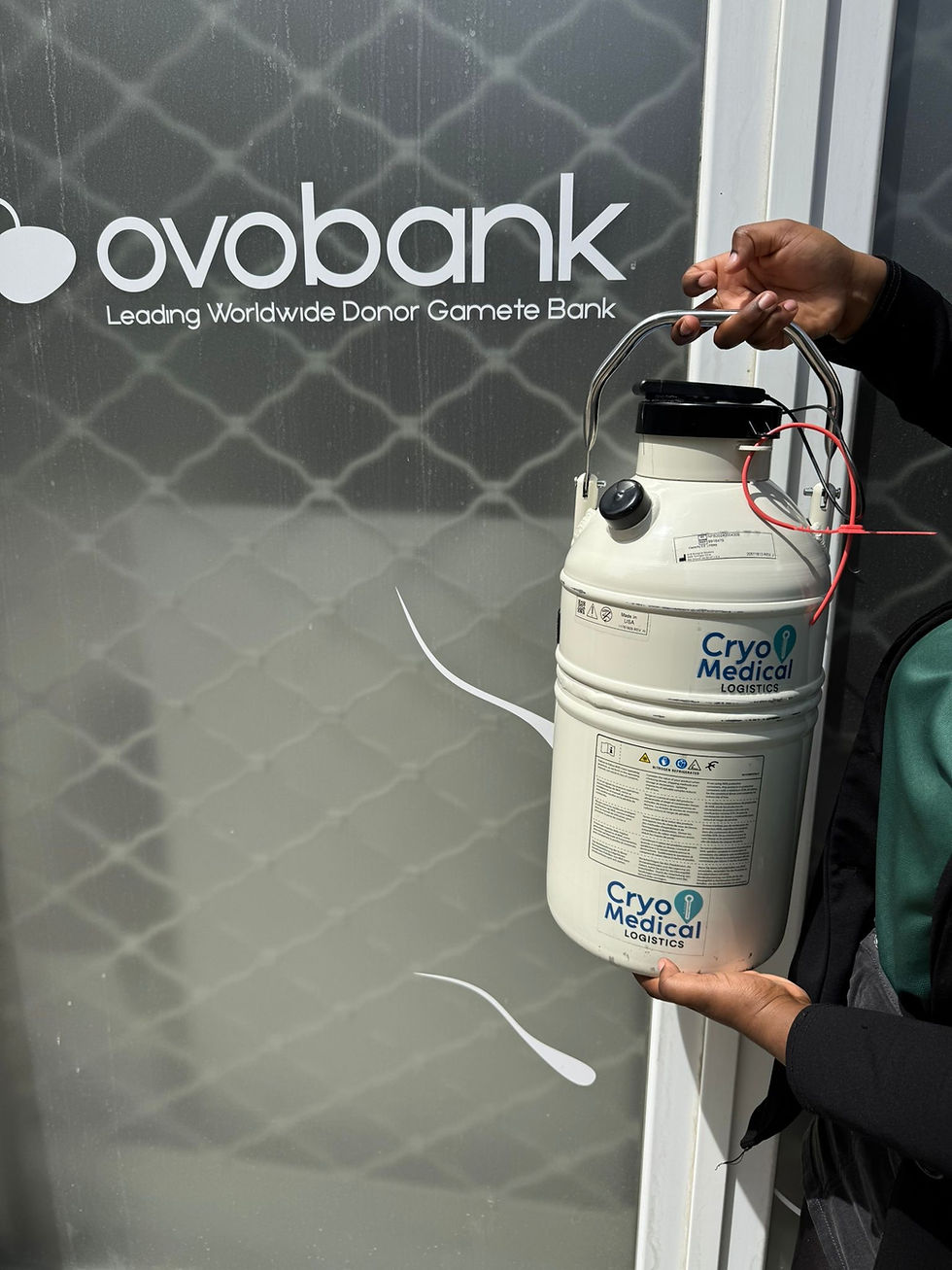
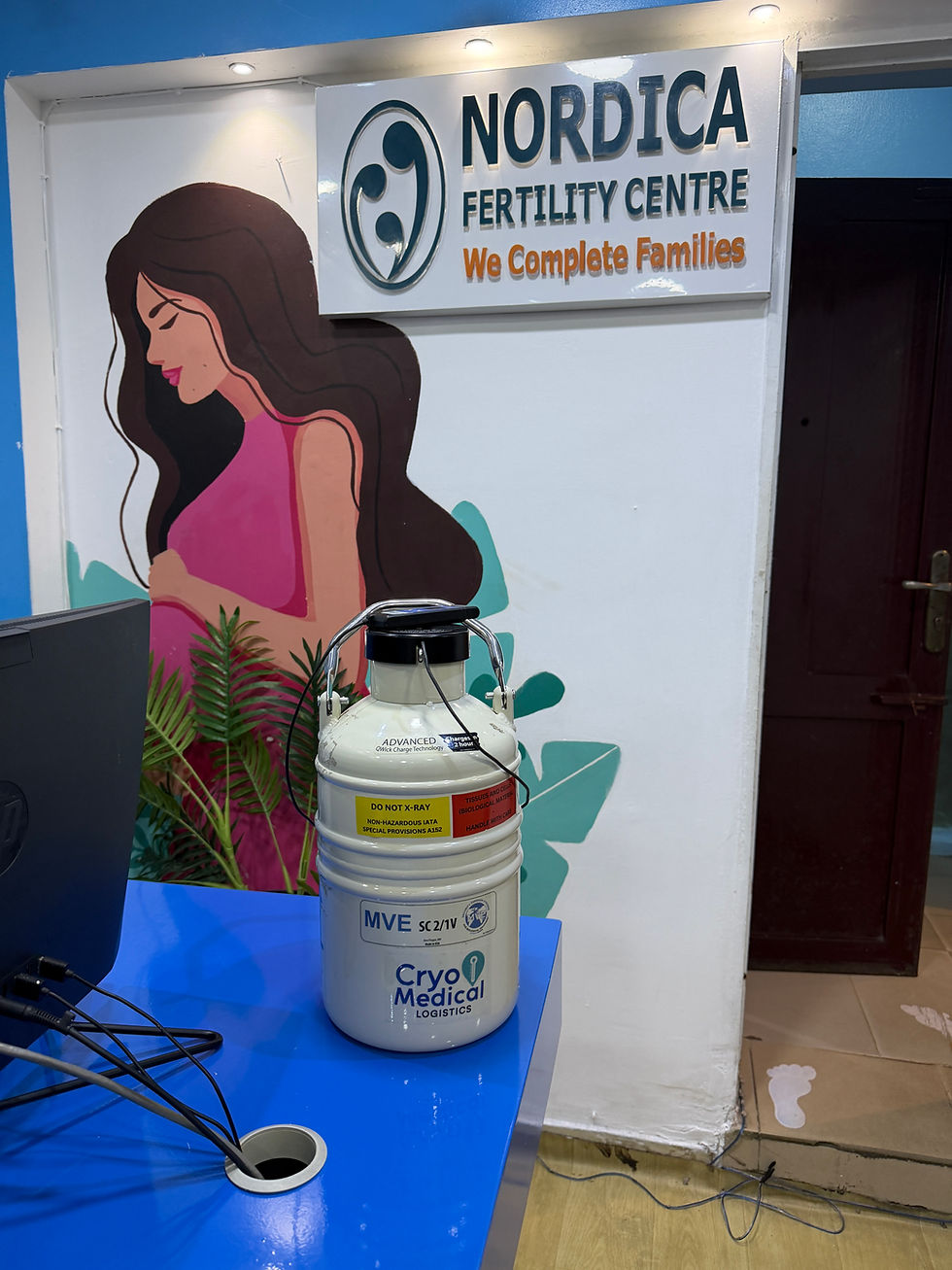
Secure hand-carry transport at approximately −196°C, with continuous temperature monitoring and full chain-of-custody documentation
FCA-regulated insurance cover on every shipment
A strict Do Not X-Ray protocol, actively enforced at every checkpoint
Direct coordination with customs and regulatory bodies specific to each destination (including NAFDAC in Nigeria) through our Lagos, London, and Houston offices
Direct handover to your clinic's embryologist — never left at a courier desk or depot
This applies whether you're moving material within one country, between two of the destinations in this guide, or from your originating country (UK, US, or elsewhere) into Africa for the first time.
Contact us:
👉 Email us: transports@cryomedicallogistics.com
📞 +44 20 8150 0059 💬
WhatsApp: +44 7585 610211
🇺🇸 Introducing Our U.S. At-Home Sperm Collection & Long-Term Storage Program
Order your kit today: 📧 contact@cryomedicallogistics.com |
📱 WhatsApp: +44 7585 610211
For diaspora patients planning treatment at any of the 11 clinics covered in this guide, Cryo Medical Logistics offers nationwide at-home sperm collection, laboratory analysis, cryopreservation, and specialist transport services across the United States — a fully integrated fertility preservation and logistics solution from home, before you ever need to travel.
How it works:
Your kit is shipped discreetly to your home anywhere in the U.S.
You collect your sample using our proprietary preservation medium, designed to protect sperm integrity during transit.
Follow the enclosed step-by-step clinical instructions.
Use the prepaid return shipping label provided.
Your sample is received at our laboratory for full analysis: motility, morphology, concentration, and clinical reporting.
Following analysis, your sample is professionally cryopreserved and stored in a state-of-the-art, FDA-registered U.S. facility.
You may store your sample for as long as needed — for future IVF cycles, fertility planning, or international transport to your chosen clinic when you're ready.
A Specialist Supervised Hand-Carry Integration
Unlike standard at-home sperm testing kits, this programme doesn't stop at analysis. It includes at-home collection, clinical lab analysis, FDA-registered cryopreservation, long-term U.S. storage, and specialist supervised international hand-carry transport — a complete fertility preservation and global mobility solution under one coordinated service.
Our Fertility Coordination Service Across Nigeria, Ghana and Kenya
Nigeria, Ghana, and Kenya are the busiest fertility market covered in this guide, and it's also where Cryo Medical Logistics has built its deepest on-the-ground presence in Africa. We run this as a dedicated service rather than a bolt-on, because of combination of high patient volume, diaspora demand, and fragmented regulation means patients genuinely benefit from a coordinated partner — not just a courier.
What our fertility coordination covers:
Direct clinic coordination. We work with Nigerian fertility clinics' embryology teams to schedule hand-carry delivery around your actual treatment timeline — egg retrieval, ICSI, and embryo transfer dates — rather than a generic shipping slot.
Cryo shipping. Cryogenic biomaterial crossing has to clear specific regulatory checkpoints. We manage this directly so your shipment isn't held up at the point you can least afford delay.
Diaspora-specific support. For UK, US, and European-based disaporas pursuing treatment at home, we offer nationwide U.S. at-home sperm collection and freezing kits (see above), plus UK collection coordination, so the collection step can be completed before travel is even booked — followed by supervised hand-carry transport into Lagos, Abuja, Port Harcourt, or wherever your clinic is based.
Chain-of-custody documentation built for customs and clinic requirements specifically, rather than a generic international template retrofitted for local use.
If you're a diaspora patient or a clinic coordinator trying to get a patient's material into the country safely and on schedule.
👉 Email us: transports@cryomedicallogistics.com
📞 Africa line: +234 701 262 9632
📞 UK/USA line: +44 20 8150 0059
💬 WhatsApp: +44 7585 610211
Best Countries for IVF vs. Best Countries for Surrogacy
This is the single most important distinction in this guide, and the one people most often get wrong: a country being a good, affordable place to do IVF with your own eggs and sperm does not mean it's a viable — or legally safe — place to pursue surrogacy. These are two different questions with two different answers.
Best for IVF (own gametes) — cost, infrastructure, and treatment range:
All eleven countries in this guide are viable IVF destinations for patients using their own eggs and sperm (or a locally sourced donor, where legally permitted). Based on infrastructure, technology, and track record, the strongest all-round options are South Africa (most advanced infrastructure and widest treatment range), Egypt (excellent value and clinical maturity for own-gamete cycles specifically), Nigeria and Kenya (highest patient volumes and most established diaspora pathways), and Côte d'Ivoire (a genuinely strong, ISO-certified option in Francophone West Africa that's often overlooked).
Best for surrogacy — legal structure and international accessibility:
Surrogacy is a fundamentally different undertaking from IVF: it requires a workable legal pathway to parentage, not just a clinic that can perform an embryo transfer. Of the eleven countries in this guide, we currently recommend and actively support international surrogacy journeys in only five: Nigeria, Ghana, Kenya, Uganda, and South Africa.
Nigeria | Ghana | Kenya | Uganda | South Africa | |
Legal framework | Contract law (grey area) | Act 1027 — formal recognition | Contract law (grey area); ART Bill 2025 pending | Unregulated | Children's Act — fully regulated |
Parentage process | Post-birth court order | Pre-Birth Parental Order available | Post-birth court order | Post-birth, contractual | Pre-conception court approval |
Open to international parents | Yes | Yes | Yes | Yes | Limited — domicile required |
Typical cost | $20,000–$40,000 | $30,000–$58,000 | $30,000–$52,000 | $25,000–$40,000 | $40,000–$70,000 |
Best suited to | Cost-conscious parents, African diaspora | Parents who prioritise legal certainty | Established East African route | Cost-conscious, East Africa | Parents with genuine SA domicile |
Why the other six countries in this guide aren't on the surrogacy list:
Egypt legally prohibits both donor gametes and surrogacy outright — it's a strong own-gamete IVF destination and nothing more.
Côte d'Ivoire, Togo, Tanzania, Zimbabwe, and Ethiopia currently have no established, tested legal pathway for international surrogacy that we're aware of. That doesn't necessarily mean surrogacy never happens domestically — it means there's no structured route we can currently stand behind for international intended parents, and pursuing one without country-specific legal advice carries real risk to your parentage rights.
The practical takeaway: if you're pursuing IVF with your own material, this guide's full 11-country comparison applies. If you need a surrogate, narrow your search to the five countries above from the start — and see our companion guide, Best African Countries for Surrogacy in 2026/2027, for the full legal and logistical breakdown of each, including who can access surrogacy in each country, typical timelines, and how parentage is established.
FAQs: IVF Costs Across Africa (2026–2027)
❓ Which African country has the cheapest IVF? On headline price, Togo, Ethiopia, and Zimbabwe often quote the lowest figures ($1,000+ per cycle), though the number of clinics — and therefore the range of expertise and technology on offer — is smaller than in more established markets.
❓ Which African country has the most developed fertility sector? South Africa, by most measures — widest donor pool, most internationally comparable clinical infrastructure, and the most liberal legal framework on the continent (including access for single parents and same-sex couples).
❓ Is donor-egg IVF available everywhere in this guide? No. Egypt legally prohibits donor eggs, donor sperm, and surrogacy. All ten other countries covered here permit donor material at private clinics, though screening standards and availability vary.
❓ Why is medication almost always billed separately? Because dosage needs vary significantly by patient (age, ovarian reserve, prior response to stimulation), and because many fertility drugs are imported and therefore exposed to currency fluctuation, clinics across nearly every market in this guide quote medication as a separate line item rather than folding it into the headline price.
❓ How many cycles should I budget for? Most clinics across these 11 countries recommend planning for 2–3 cycles to maximise overall chances of a successful pregnancy, with several offering discounted multi-cycle packages.
❓ Can I bring my own frozen sperm, eggs, or embryos into these countries? Yes, in all 11 — Cryo Medical Logistics manages this end to end, from documentation and customs coordination through to hand-carry delivery directly to your clinic's embryologist.
❓ Do I need to travel to the treatment country myself? Typically yes, for egg retrieval and embryo transfer specifically, though initial testing and medication management can sometimes be handled remotely with your chosen clinic's guidance.
❓ What's the difference between public and private IVF options across these countries? Where a public-sector pathway exists (Nigeria, South Africa, Ethiopia), it's considerably cheaper but usually comes with longer wait times and less consistent international patient support. Private clinics cost more but generally offer faster access, more advanced labs, and better support for diaspora patients.
❓ Is fertility medication ever covered by insurance in these countries? Rarely. Across nearly all 11 countries, most private health insurance and medical aid plans exclude infertility treatment specifically, treating it as elective rather than medically necessary — always confirm directly with your provider rather than assuming coverage.
❓ If a country is good for IVF, is it automatically a safe option for surrogacy too? No — this is one of the most common misconceptions. IVF and surrogacy require completely different things from a country: IVF needs a competent clinic; surrogacy needs a workable legal pathway to parentage. Of the 11 countries in this guide, we only currently recommend and support international surrogacy in five: Nigeria, Ghana, Kenya, Uganda, and South Africa. See the dedicated section above for why the other six aren't on that list.
Get in Touch
If you're comparing IVF destinations across Africa — or you're a diaspora patient, intended parent, or clinic coordinating a cross-border shipment of sperm, eggs, or embryos — talk to Cryo Medical Logistics before you book anything.
📧 Email: contact@cryomedicallogistics.com
📞 Phone: +44 20 8150 0059
💬 WhatsApp: +44 7585 610211 (typically responds within 1 hour)
This article was written by Cryo Medical Logistics for general informational purposes and does not constitute medical, financial, or legal advice. Costs, laws, and clinic availability vary and can change — always request a current, itemised quote directly from your chosen clinic and confirm shipping and legal requirements with the relevant authorities before proceeding.



Comments