Surrogacy and IVF treatment in West Africa: Everything You Need to Know


TL;DR
West Africa's fertility sector has grown significantly, led by Nigeria and Ghana, with an expanding base of IVF clinics serving both domestic and diaspora patients.
Legal frameworks vary sharply by country: Ghana has a formal statutory pathway for surrogacy (Act 1027, 2020); Nigeria's surrogacy arrangements operate primarily through private contract law rather than a dedicated surrogacy statute; other West African countries have little to no dedicated legal framework at all.
LGBTQ+ intended parents face significant legal risk across most of the region — this is an area of real and active legal change, and requires specific, current legal guidance before proceeding.
Whichever country you're working with, shipping embryos, eggs, or sperm into or within West Africa requires country-specific import permitting and compliant hand-carry cryogenic transport.
Considering fertility treatment or surrogacy in West Africa? Contact our team to discuss your transport and logistics needs.
💬 WhatsApp: +44 7585 610211
☎️ Phone: +44 20 8150 0059
📧 Email: transports@cryomedicallogistics.com
🌍 Based in London, Houston, and Lagos
Why West Africa Has Become a Fertility Destination
West Africa — anchored by Nigeria's large, established IVF clinic network and Ghana's growing reputation for structured legal handling — has become an increasingly common destination for both diaspora families returning for treatment and international intended parents drawn by cost and clinical capacity.
The reasons patients choose the region are fairly consistent across the countries we work in:
Cost. Treatment and surrogacy costs in West Africa are typically significantly lower than in the US, UK, or Western Europe.
Diaspora connection. A large share of patients are West African diaspora returning home for treatment, or bringing embryos, eggs, or sperm home after treatment abroad.
Growing clinical infrastructure. Nigeria in particular has a large and growing network of IVF clinics, and Ghana has built out clinical capacity alongside its legal framework.
That said, "West Africa" is not one legal or clinical environment — the differences between countries in this region are significant, and treating it as a single market is one of the most common mistakes intended parents make.
Country-by-Country Legal Snapshot
Country | Surrogacy Legal Status | Key Notes |
Ghana | Formally recognised under the Registration of Births and Deaths Act, 2020 (Act 1027); Pre-Birth Parental Order available through the High Court | Considered one of West Africa's more structured legal environments for surrogacy — though see the LGBTQ+ note below, as this is currently in significant flux |
Nigeria | No dedicated surrogacy statute; arrangements operate through private contract law | Large, established IVF clinic network; open to heterosexual couples and single parents — same-sex couples face significant legal and cultural barriers |
Senegal | No dedicated surrogacy framework; commercial surrogacy is not a viable or legally supported path | IVF treatment is available, but surrogacy specifically should be approached with direct legal caution |
Côte d'Ivoire | No dedicated surrogacy statute currently in place | Fertility treatment capacity is developing; surrogacy arrangements here carry meaningfully more legal uncertainty than in Ghana or Nigeria |
Legal status can and does change. This table reflects general research at the time of writing and should be verified directly before making any decisions.
A Note on LGBTQ+ Intended Parents
This is an area where we want to be direct rather than glossing over real risk. Same-sex couples face significant legal and cultural barriers to surrogacy across most of West Africa, and in several countries, same-sex conduct itself is criminalized.
Ghana's situation is a useful — and important — illustration of how quickly this can shift. Ghana's Parliament passed the Human Sexual Rights and Family Values Bill, 2025 in May 2026, which would extend criminal penalties related to LGBTQ+ identity and conduct. As of this article's publication, the bill has not yet received presidential signature and is not yet in force — but its status could change at any time. Regardless of where this particular bill lands, it reflects a legal environment that is genuinely unsettled for LGBTQ+ intended parents in the region.
If you're an LGBTQ+ intended parent considering West Africa, we'd strongly encourage speaking with a specialist attorney about current, real-time legal status before making any commitments — not relying on historical reputation or general guides, including this one.
Fertility Treatment: What's Actually Available
IVF, ICSI, egg donation, and related fertility treatments are available through private clinics in Nigeria and Ghana in particular, with growing capacity in other parts of the region. Treatment quality varies by clinic, as it does anywhere, so due diligence on the specific clinic — not just the country — matters.
For diaspora patients and international intended parents, treatment in West Africa commonly follows one of a few patterns:
Full treatment locally — egg retrieval, fertilisation, and transfer all completed at a West African clinic
Split treatment — embryos created abroad (often in the US, UK, or Europe), then shipped to a West African clinic for transfer, frequently as part of a surrogacy arrangement
Return shipment — eggs, sperm, or embryos created during treatment in West Africa shipped onward to a patient's home country for storage or future use
Moving Reproductive Material Into and Within West Africa

Whichever treatment path you're on, moving embryos, eggs, or sperm across a West African border requires country-specific import permitting and compliant handling — this is where general fertility guidance and the logistics reality diverge, and it's the part of the process we manage directly.
Country-specific import permitting. Nigeria requires NAFDAC documentation for biological material entering the country; other countries in the region have their own — often less formalised — customs and health authority processes that require direct coordination with local officials.
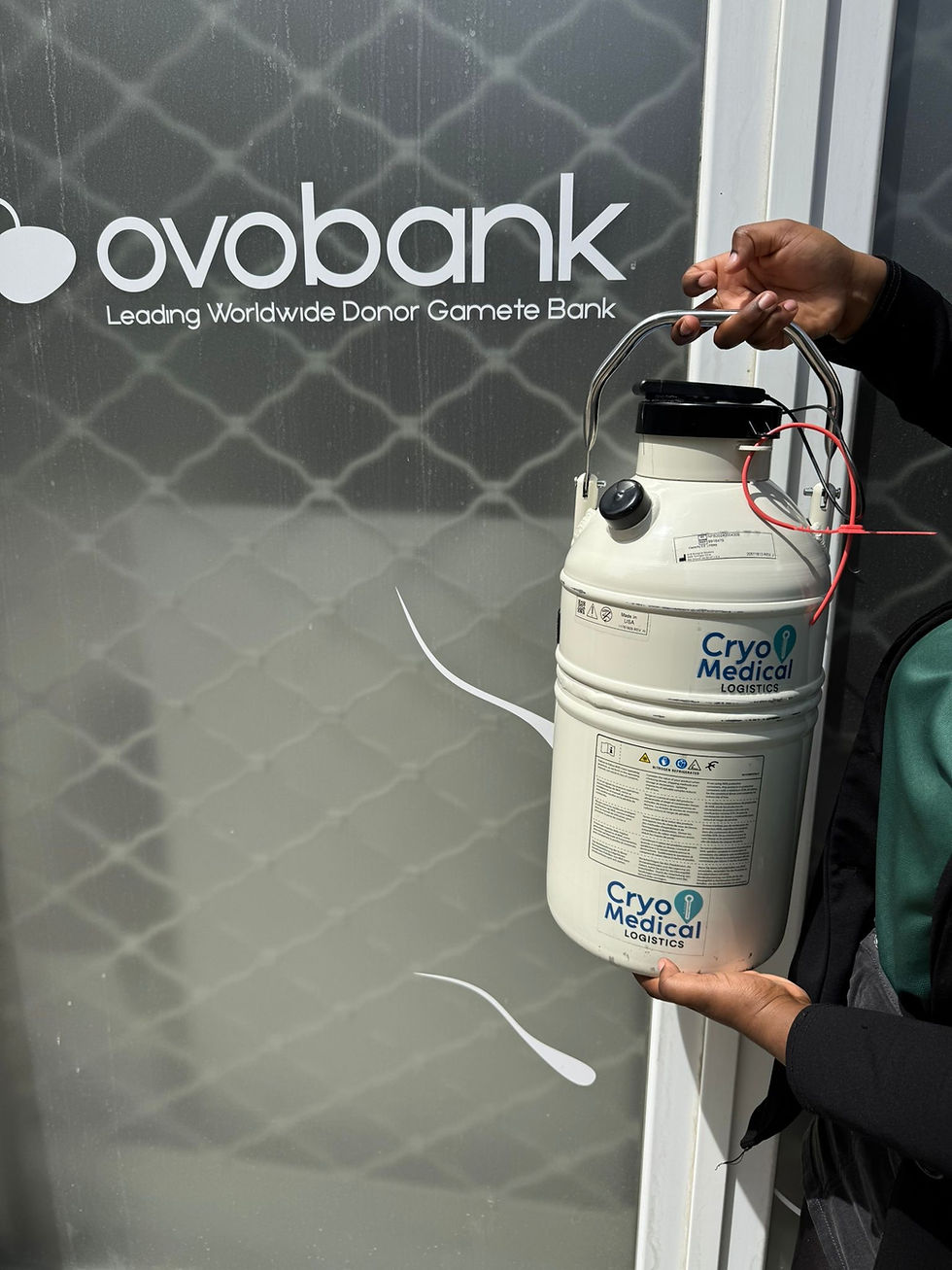
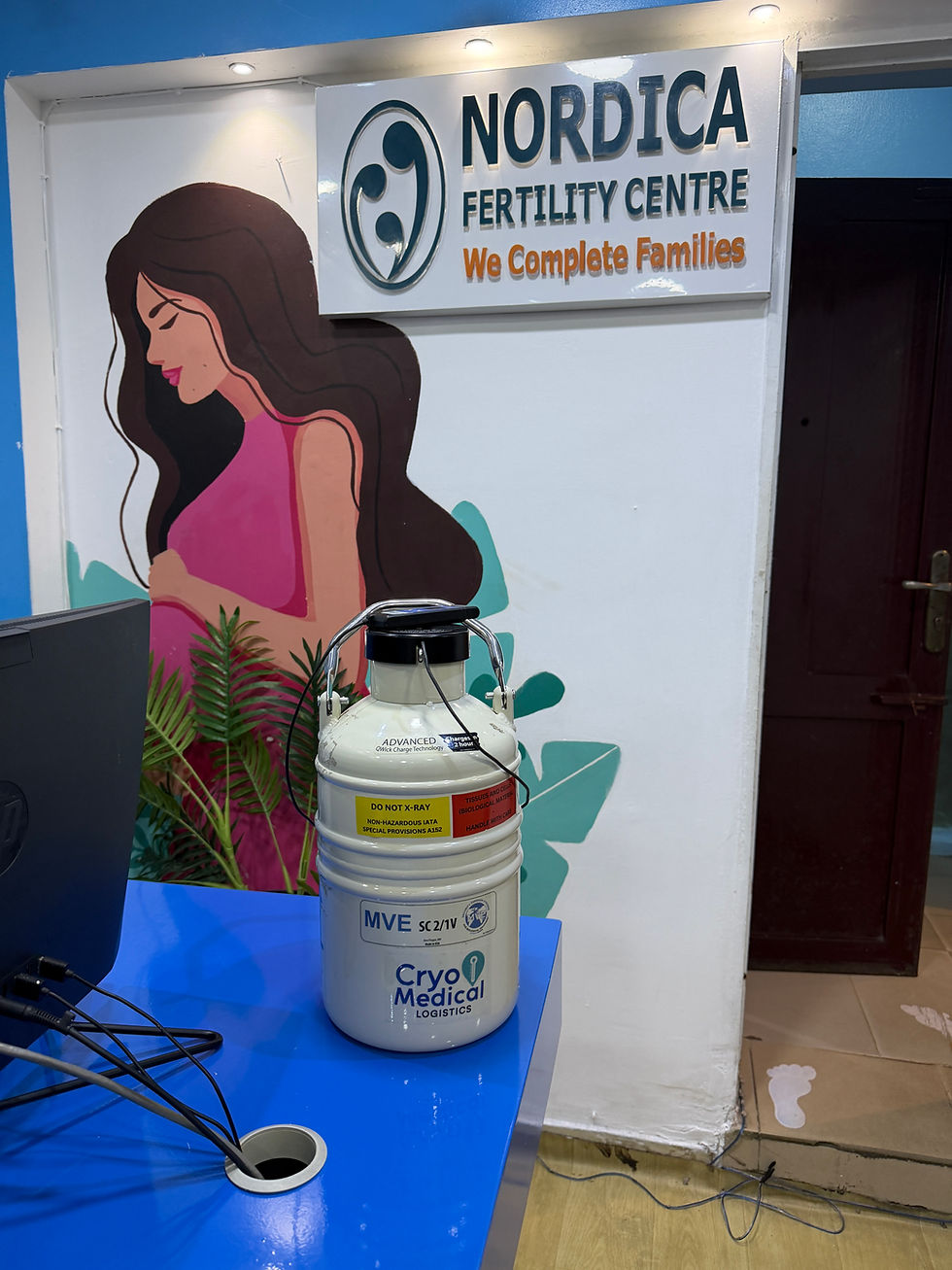
Hand-carry transport, not cargo. Every shipment we handle travels with a dedicated courier in the aircraft cabin, under continuous supervision from clinic to clinic.
Do Not X-Ray protocol. We use approved alternative screening methods at every checkpoint to protect sample viability.
Validated cryogenic packing, maintaining approximately -196°C with full temperature logging for the duration of transit.
Need to coordinate a shipment to or from West Africa? Speak with our team about your specific route.
Frequently Asked Questions
Is surrogacy legal in West Africa? It depends entirely on the country. Ghana has a formal statutory framework; Nigeria operates through private contract law without a dedicated surrogacy statute; other countries in the region have little to no formal legal framework at all. Always confirm current status with a qualified attorney before proceeding.
Is West Africa a safe option for LGBTQ+ intended parents? This requires direct, current legal guidance rather than general research. Same-sex couples face significant legal and cultural barriers across most of the region, and the legal environment — particularly in Ghana — is actively changing.
Can I ship embryos created abroad to a West African clinic for surrogacy? Yes, this is a common pattern we coordinate. It requires country-specific import permitting, clinic-to-clinic authorization, and compliant hand-carry cryogenic transport.
Which West African country has the strongest legal framework for surrogacy? Of the countries covered here, Ghana currently has the most formalised statutory pathway. That said, legal status can change quickly, so this should be verified at the time you're planning treatment, not assumed from general guides.
How do I get started? We coordinate the transport and permitting side of a West Africa fertility journey. We recommend pairing that with a specialist fertility or surrogacy attorney for the legal and parentage side specific to your chosen country.
Plan Your West Africa Fertility Journey
Whether you're shipping embryos into Nigeria, Ghana, or elsewhere in West Africa — or bringing material home after treatment — our team manages the permitting, cryogenic packing, and hand-carry transport every step of the way. Contact us today to get started.
💬 WhatsApp: +44 7585 610211
☎️ Phone: +44 20 8150 0059
📧 Email: transports@cryomedicallogistics.com
🌍 Based in London, Houston, and Lagos



Comments