Surrogacy in Kenya: Costs, Laws, and Why End-to-End Concierge Coordination Changes Everything (2026 Guide


TL;DR (Quick Summary)
Costs: $30,000–$40,000 USD, depending on clinic/agency, legal support, and medical procedures.
Success rates: IVF success rates in Nigeria are 60–70% per cycle (for women under 35).
Contact us: 💬 WhatsApp/Telegram: +447585610211 (typically responds within 1 hour)
Download our free: Africa Ultimate Surrogacy Journey Checklist
For intended parents from the UK, USA, Europe, Australia and beyond — a complete guide to surrogacy in Kenya, and how Cryo Medical Logistics manages every step so you don't have to.
Contact 📧 Email: contact@cryomedicallogistics.com
📱 WhatsApp: +44 7585 610211
📞 Phone: +44 2081500059
Introduction
Surrogacy in Kenya is growing rapidly in 2026, offering real hope to intended parents from across the world who are ready to take the next step in building their family.
Kenya offers a compelling combination of affordability, experienced fertility clinics concentrated in Nairobi, and a growing network of reputable surrogacy professionals.
The country has long been one of East Africa's most active surrogacy destinations — particularly as routes through Asia have closed — and for international parents seeking a viable, cost-effective path to parenthood, it remains a serious option.
But the path is not without complexity. Kenya's legal landscape for surrogacy is in active transition, and the difference between a journey that succeeds and one that stalls almost always comes down to one thing: who is managing it for you.
This guide covers everything you need to know — the costs, the legal realities, the medical process, and what it truly means to work with a team that coordinates everything end to end.
1. What Is Surrogacy — and Which Type Is Used in Kenya?
Surrogacy is an arrangement where a woman (the surrogate) carries a pregnancy on behalf of intended parents who are unable to conceive or carry a pregnancy themselves.
Gestational surrogacy is the most widely used method in Kenya. The surrogate has no genetic connection to the baby. The embryo is created through IVF using the eggs and sperm of the intended parents (or donors) and transferred into the surrogate's womb. She carries the pregnancy and hands the child to the intended parents at birth.
Traditional surrogacy, where the surrogate contributes her own egg, is far less common and carries significantly greater legal and emotional complexity. We do not coordinate traditional surrogacy arrangements.
For most intended parents — whether using their own genetic material or working with egg or sperm donors — gestational surrogacy via IVF is the route we recommend and coordinate.
2. Is Surrogacy Legal in Kenya?
This is the question almost every intended parent asks first — and it deserves a straight, honest answer.
Kenya has no specific law regulating surrogacy. The practice is neither explicitly permitted nor explicitly prohibited, placing it in a legal grey area. Surrogacy agreements are currently treated as private contracts under Kenya's Law of Contract Act — valid in principle, but without the force of dedicated legislation behind them.
A critical legal point for international parents: under current Kenyan law, the surrogate is the legal mother at birth. Intended parents must go through an adoption process or obtain a court order to establish legal parenthood. The surrogate's name appears on the initial birth certificate; intended parents' names are added only after this legal process is completed.
Important recent development: Kenya's Parliament passed the Assisted Reproductive Technology (ART) Bill in November 2025, which — when enacted — will introduce a formal regulatory framework. Key provisions include:
Surrogacy restricted to altruistic arrangements only (no commercial surrogacy)
Surrogate mothers must be at least 25 years old and have previously given birth to at least one child
Automatic transfer of parental responsibility to commissioning parents at birth (under the new framework)
Licensing requirements for clinics offering ART services
Written surrogacy agreements witnessed by a minimum of two individuals
This Bill is a significant development — but it also underscores why experienced legal coordination is not optional. The landscape is changing, and the quality of your legal protection depends entirely on the expertise of your legal team.
For UK intended parents: you will need to apply for a Parental Order in UK courts after your child is born. Kenya also banned inter-country adoptions in 2019, which creates additional complexity for foreign nationals. Specialist legal support covering both Kenyan and UK law is essential.
For US intended parents: the process for establishing legal parenthood varies by state, and our legal partners cover both Kenyan and US-side requirements.
For same-sex couples: Kenya's legal and cultural environment does not support same-sex relationships, and homosexuality is criminalised under Kenyan law. This significantly affects how surrogacy arrangements can be structured. We advise all same-sex prospective clients to discuss their specific circumstances with us confidentially and in detail before making any decisions.
3. How Much Does Surrogacy Cost in Kenya?
Kenya is one of the more affordable surrogacy destinations available to international parents, though costs have risen compared to previous years as demand has grown.
Total surrogacy costs in Kenya typically range from $40,000 to $50,000 USD, depending on the clinic, specific medical requirements, legal complexity, and the services included in your package.
Cost Component | Typical Range |
Agency / Coordination fees | $3,000+ |
Surrogate compensation | $3,000 – $10,000 |
IVF & medical procedures | $3,000 – $6,500 |
Embryo / sperm cryo-shipping | $4,500+ |
Legal fees | $2,000 – $5,000 |
Miscellaneous (travel, accommodation, insurance, etc.) | $2,000 – $5,000 |
IVF success rates in Kenya are reported at 60–80% per cycle for women under 35, with some clinics reporting around 70% as a working average. When using donor eggs, rates can be higher. Many intended parents budget for 2–3 cycles to maximise their chances.
4. Doing It Yourself vs. Working With a Concierge Service
This is the question that shapes your entire experience — and it is worth thinking through carefully.
Many intended parents begin their surrogacy journey believing they can manage the process independently: contacting Nairobi clinics directly, sourcing a surrogate through informal networks, and navigating the legal steps themselves. Some attempt this. But
Kenya's specific legal complexity — particularly for international parents — makes the gaps in uncoordinated journeys more consequential than almost anywhere else.
Here is an honest comparison:
Going It Alone | Cryo Medical Logistics Concierge | |
Clinic selection | Research independently; no way to verify lab standards or IVF protocols | Matched to accredited, vetted Nairobi clinics suited to your specific case |
Surrogate matching | Informal networks; no screening guarantees | Full medical, psychological & background screening; you meet your surrogate first |
Legal support — Kenya side | Source your own lawyer; risk of gaps in parental rights and contract enforceability | Specialist fertility lawyers covering Kenyan contract law and the evolving ART framework |
Legal support — home country | Navigate UK Parental Orders or US state law yourself | Our legal partners manage your home-country legal process in parallel — included |
Inter-country adoption ban | Navigate Kenya's 2019 ban on inter-country adoptions independently | We coordinate through legal partners |
IVF coordination | Manage appointments, transfers, and updates yourself from abroad | We coordinate everything and keep you informed in real time |
Cryo-shipping | Navigate international bio-transport regulations and customs alone | ISO 9001:2015 compliant cryo-shipping at –196°C with GPS tracking and full compliance |
Travel & accommodation | Arrange independently around your own schedule | Planned and booked around your medical timeline — Nairobi logistics handled for you |
Post-birth paperwork | DNA testing, birth registration, court processes, and travel documents — managed alone | We coordinate through legal partners |
Ongoing support | None, unless you pay separately for each service | A real person who knows your case, reachable throughout the entire 12–18 month journey |
Overall risk | High — Kenya's legal complexity means gaps create serious delays or legal complications | Significantly mitigated |
The honest truth: Kenya is not the simplest surrogacy destination to navigate independently. The combination of an evolving legal framework, the inter-country adoption ban, the surrogate-as-legal-mother rule, and the additional complexity for international parents means that uncoordinated journeys carry real risk. In a journey that takes 12–18 months and involves your future family, those risks are not worth taking.
Working with a concierge service like Cryo Medical Logistics means one team is accountable for every element — from your first conversation to the day you travel home with your child.
5. How Our Concierge Coordination Works — Start to Finish
Most agencies match you with a surrogate and leave you to navigate the rest. We do not work that way.
Our concierge model means one team manages every element of your journey — medical, legal, logistical, emotional — from your first enquiry to your child's first journey home.
Here is exactly what we handle:
1. Your first conversation A genuine, unhurried conversation about where you are, what you've already tried, and what you're hoping for. No forms, no sales pitch. We need to understand your situation before we can advise you properly.
2. Clinic matching in Kenya We work with accredited fertility clinics in Nairobi and beyond. We match you to the right specialist for your specific case — your medical history, budget, and timeline — not simply whoever has availability.
3. Surrogate matching and screening Every surrogate in our network is fully medically and psychologically screened. You will meet your surrogate before any commitment is made. We believe this relationship matters enormously — and we treat it that way.
4. Legal coordination Our specialist fertility law partners handle your surrogacy agreement under Kenyan contract law, advise on parental rights under the current and evolving ART framework, and — for UK and US clients — manage the home-country legal process in parallel. You will never be in legal limbo.
5. IVF oversight We coordinate your clinic appointments, embryo transfer scheduling, and ongoing pregnancy monitoring. For international clients not based in Kenya, we keep you connected to every development in real time.
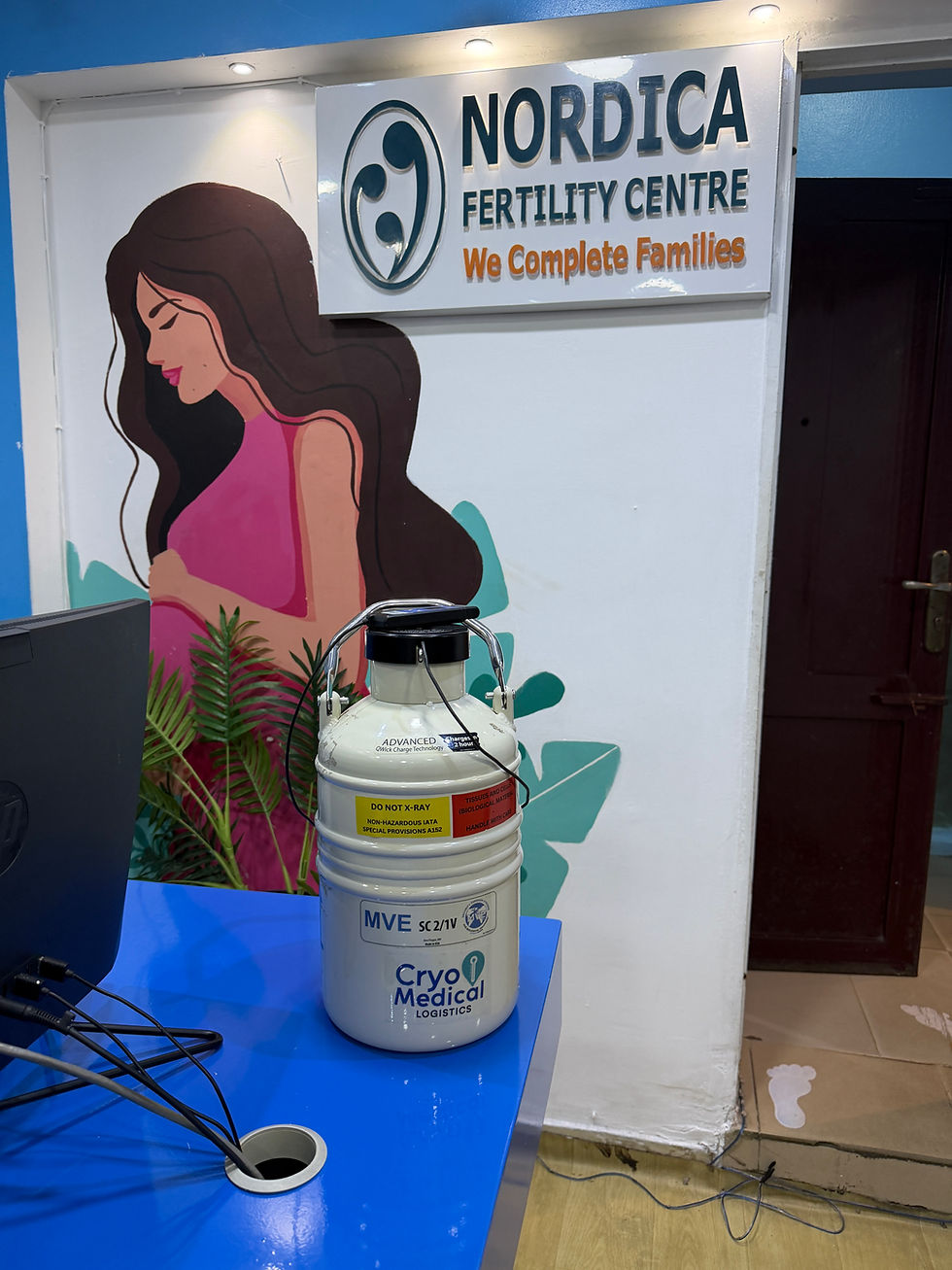
6. Cryo-shipping of genetic material Through our ISO 9001:2015 compliant cryo-shipping service, your embryos, sperm, or eggs are transported securely at –196°C with GPS tracking, full insurance, and compliance with UK and international bio-transport regulations.
7. Travel and accommodation We plan and book your travel to Kenya around your medical timeline — flights, airport transfers, and accommodation suited to your needs and budget.
8. Ongoing support during pregnancy Regular updates, honest communication, and a team that is reachable throughout the waiting period — the hardest part of any surrogacy journey.
9. Birth, registration, and going home We coordinate through legal partners
6. How Long Does the Process Take?
The full surrogacy journey in Kenya typically takes 12 to 18 months from initial consultation to bringing your baby home.
Stage | Typical Duration |
Initial consultations & medical assessments | 4–8 weeks |
Surrogate matching | 2–6 weeks |
Legal agreements | 4–6 weeks |
IVF and embryo transfer | 6–10 weeks |
Pregnancy | 9 months |
Post-birth legal processes & travel documentation | 4–10 weeks |
We give every client a realistic, personalised timeline at the outset — because false expectations help no one. Post-birth documentation in Kenya can take longer for international parents given the legal steps involved, and we factor this into your planning from day one.
7. Can International Parents Pursue Surrogacy in Kenya?
Yes — Kenya is an established destination for international intended parents, particularly from the UK, USA, Ireland, Europe, Australia and the Middle East. However, international surrogacy in Kenya requires more careful legal management than in some other destinations, particularly given the 2019 ban on inter-country adoptions and the evolving ART regulatory framework.
The correct legal route for establishing parenthood varies significantly depending on your nationality, and it is essential to have partners who understand both Kenyan law and your home country's requirements. This is precisely what our legal coordination covers.
Important note for same-sex couples: Kenya criminalises same-sex relationships, and this significantly affects both your safety while in Kenya and how any surrogacy arrangement must be structured. We advise all same-sex prospective clients to speak with us confidentially before making any decisions.
Frequently Asked Questions
Is Kenya safe for surrogacy? With the right legal and coordination support, it can be. The primary risks in Kenya come from the legal complexity — an unregulated environment that is now transitioning to formal regulation, a surrogate-as-legal-mother rule, and the inter-country adoption ban for foreigners. A reputable concierge coordination service with strong legal partners mitigates these risks significantly.
Do I need to travel to Kenya? Most intended parents travel to Kenya at least twice — once for initial consultations and medical assessments, and once for the birth. We plan all travel around your schedule and ensure your time in Kenya is productive, comfortable, and supported.
What if the IVF cycle is unsuccessful? We discuss this honestly at the outset. Many clients budget for two cycles. We support you through every outcome — including the ones that require a change of plan.
Can single parents pursue surrogacy in Kenya? Yes. Single intended parents — both men and women — can pursue surrogacy in Kenya. The legal steps for establishing sole parenthood require careful management, which we coordinate fully.
What is the ART Bill and how does it affect my journey? Kenya's Assisted Reproductive Technology Bill was passed by Parliament in November 2025 and is moving toward enactment. It introduces formal regulation including altruistic-only surrogacy, minimum age requirements for surrogates, and automatic transfer of parental responsibility at birth. It is a positive development for the industry, but navigating the transition period requires experienced legal guidance — which is exactly what we provide.
What is a Parental Order and do UK parents need one? If you are a UK-based intended parent, a Parental Order is the legal process by which you are recognised as your child's legal parents in UK law. It must be applied for within six months of your child's birth. We work with specialist lawyers who manage this process as part of our service.
Ready to Start?
You do not need to have everything figured out before you speak to us. Most of our clients come to that first conversation with questions, uncertainty, and a great deal of hope. That is exactly the right place to start.
We will tell you honestly what is possible, what it will cost, how long it will take, and what we will do — every step of the way — to get you there.
Contact Cryo Medical Logistics
📧 Email: contact@cryomedicallogistics.com
📱 WhatsApp: +44 7585 610211
📞 Phone: +44 2081500059




Comments