How to Choose the Right Egg Donor: What Good Egg Quality Actually Means


Contact Cryo Medical Logistics:
Phone: +44 2081 500059
WhatsApp: +44 7585 610211
If you are looking at egg donors for the first time, the information can feel overwhelming. Profiles full of medical numbers, test results, and terms you have never heard before. It is easy to either ignore all of it and just pick based on photos — or feel so confused that you do not know where to start.
This guide strips it all back. No complicated science. No medical jargon. Just a clear explanation of what makes a good egg, what makes a good egg donor, and what to actually look for when you are choosing.
By the end, you will know exactly what questions to ask and what to look out for — whether you are working with a clinic down the road or one on the other side of the world.
First: What Is an Egg and Why Does Quality Matter?
Think of an egg like a seed. A healthy seed planted in good soil can grow into a strong plant. A damaged or weak seed may not grow at all — no matter how good the soil is.
In IVF, the egg and the sperm come together to create an embryo. That embryo then needs to grow strong enough to be placed in the womb and develop into a baby. If the egg is not good quality, the embryo may not form properly, may stop developing early, or may not lead to a pregnancy even after transfer.
This is why egg quality is everything. You can have the best clinic, the best doctors, and the best sperm in the world — but if the egg is poor quality, the chances of success drop dramatically.
Part One: What Makes a Good Egg?
Here are the things that tell you whether an egg is likely to be healthy.
1. The Donor's Age — The Most Important Thing of All
This is the single biggest factor. Full stop.
As women get older, their eggs get older too — and older eggs are more likely to have faults in them that stop them from developing into a healthy baby. This is simply biology. It happens to every woman.
The sweet spot for egg donation is roughly between 21 and 30 years old. Donors in this age range produce more eggs, and those eggs are more likely to be healthy and lead to a successful pregnancy.
Most reputable clinics and egg banks will not accept donors older than 35.
What to check: Always confirm the donor's age at the time she donated — not her age now. If her eggs are frozen in a bank, there may be a gap of months or even years between when she donated and when you are reading her profile.
2. How Many Eggs Does She Have? (The Egg Supply Test)
Think of this like a fuel tank. Some women have a full tank. Others have less. A blood test called an AMH test checks how many eggs a woman has left in reserve. The higher the number, the more eggs she is likely to produce during the donation process.
Why does this matter to you? Because more eggs retrieved means more embryos created, and more embryos means more chances to find a healthy one to transfer.
A doctor can also count the eggs directly using an ultrasound scan. This is called an antral follicle count — basically, a doctor looks at the ovaries on a screen and counts how many egg-containing follicles they can see. Again, more is better.
What to check: Ask the clinic for the donor's AMH result and her antral follicle count. A good clinic will have these on file and will share them with you.
3. Has She Been Checked for Inherited Conditions?
This is the genetic side of things — and it matters a lot.
All of us carry genes. Some genes, if passed on in the wrong combination, can cause serious conditions in a child — things like cystic fibrosis, sickle cell disease, or muscular dystrophy. Most of us carry these genes without knowing it and are completely healthy. The risk only becomes real when both the egg donor and the sperm provider carry the same faulty gene.
A good donor programme will test the donor for a wide range of these inherited conditions. This is called genetic screening or carrier screening. The best programmes test for hundreds of conditions.
The clinic or bank should also check that the donor has a normal set of chromosomes — 46 in total, arranged correctly. This is called a karyotype test. Think of chromosomes like the instruction manual for building a human being. You want that manual to be complete and correct.
What to check: Ask whether the donor has had expanded carrier screening and a karyotype test. If the answer is no, or you cannot get a clear answer, that is a red flag.
4. Has She Donated Before — and What Happened?
If a donor has donated eggs before, that is very useful information. You can find out:
How many eggs were collected from her
How many of those fertilised successfully
Whether any pregnancies or live births resulted
This is real-world proof of how her eggs perform — not just predictions based on tests. A donor who has a strong track record is lower risk than someone donating for the first time, even if their test results look similar.
What to check: Ask the clinic if the donor has donated before and request any available outcome data.
5. Has She Been Tested for Infections?
Before donating, every egg donor must be tested for a range of infections — including HIV, hepatitis B and C, and others. This is standard practice in any regulated programme and protects both you and any child born as a result.
What to check: Confirm that infectious disease screening has been completed and that the results are clear. Also confirm when the tests were done — they should be recent.
6. Is She Healthy in Her Everyday Life?
This is simpler than it sounds. A donor who smokes, has a very high or very low body weight, or uses recreational drugs is more likely to produce lower quality eggs. Good donor programmes screen for all of this.
What to check: Confirm that the donor is a non-smoker, within a healthy weight range, and has been screened for drug use.
Part Two: What Makes a Good Egg Donation Programme?
Even if you find a donor who looks perfect on paper, the programme running the donation matters enormously. Here is what to look for.
7. Is the Programme Properly Regulated?
Egg donation is legal in many countries but regulated very differently. In some places, clinics must follow strict government rules and are inspected regularly. In others, almost anything goes.
Some examples:
United Kingdom: Very tightly regulated. Donors know their donation could lead to a child who may contact them at age 18. High standards across the board.
Spain, Greece, Ukraine: Well regulated, popular destinations for international patients, high clinical standards.
USA: Regulated for safety, with strong clinical guidelines. Both anonymous and identifiable donation options exist.
South Africa: Regulated for safety, with strong clinical guidelines. Both anonymous and identifiable donation options exist.
What to check: Find out which country's laws govern the donation programme and what regulatory body oversees it. A reputable clinic will answer this question clearly and confidently.
8. Has the Donor Been Properly Supported?
Donating eggs is not a small thing. A good programme will make sure the donor has spoken to a counsellor or psychologist before going ahead — someone independent who can make sure she fully understands what she is agreeing to and is doing so freely.
This matters for ethical reasons — but it also matters practically. A donor who is fully informed and supported is less likely to encounter problems that could affect the donation process.
What to check: Ask whether the donor had a psychological evaluation and whether it was conducted by an independent professional.
Part Three: What About the Eggs Once They Leave the Clinic?
Here is something most egg donor guides never mention — but it is critical.
Once an egg has passed every quality check above, it still has to get from the donor to you. If your treatment involves frozen eggs being transported between clinics or between countries, the journey matters just as much as the donor.
Frozen eggs are incredibly delicate. They must be kept at very low temperatures — colder than anywhere on Earth — every single second of the transit. If the temperature rises even slightly, the eggs can be damaged beyond repair. All that careful donor selection, all those tests and screenings — undone in transit by a courier who did not know what they were doing.
This is where specialist cryogenic transport comes in.
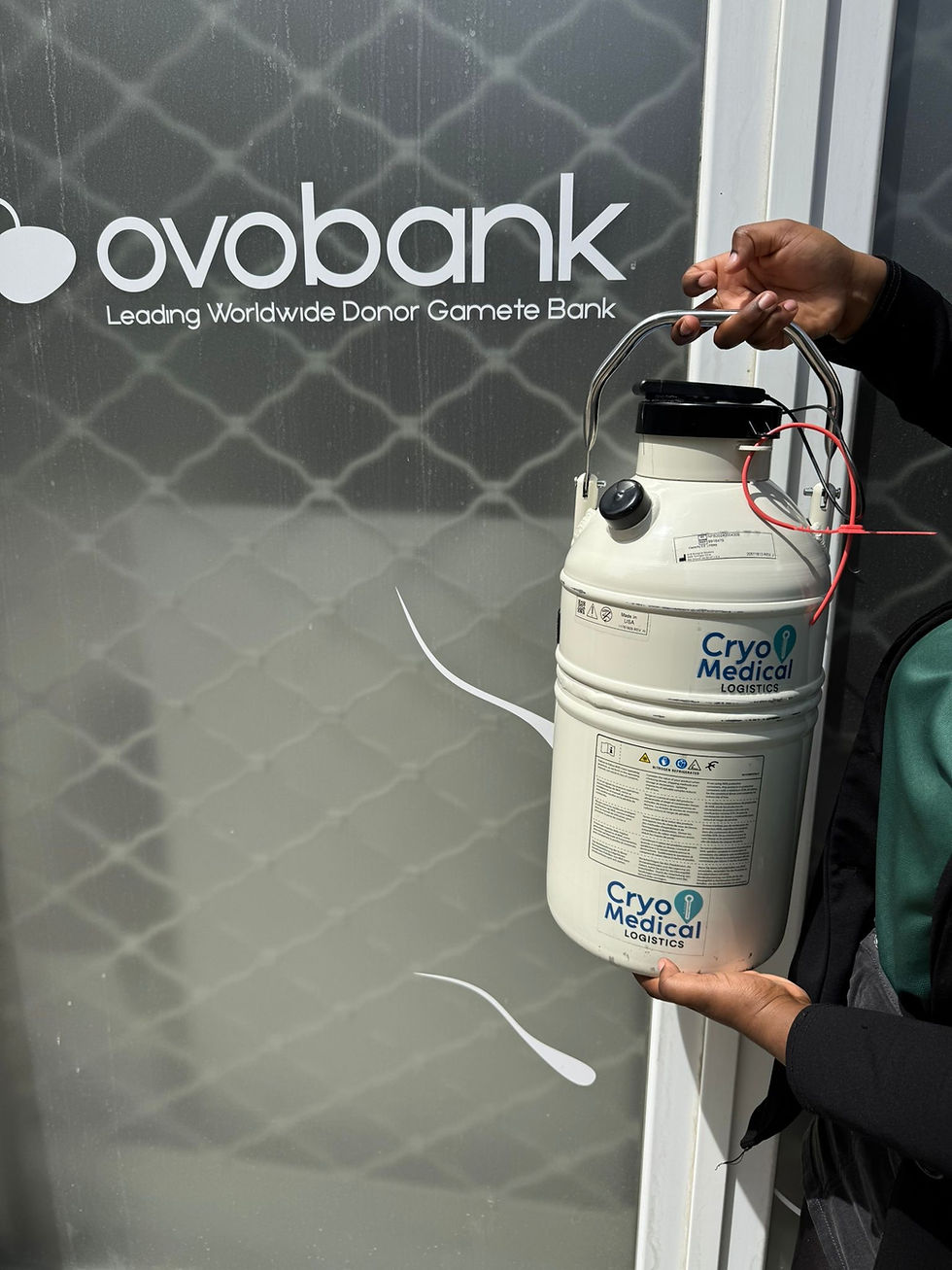
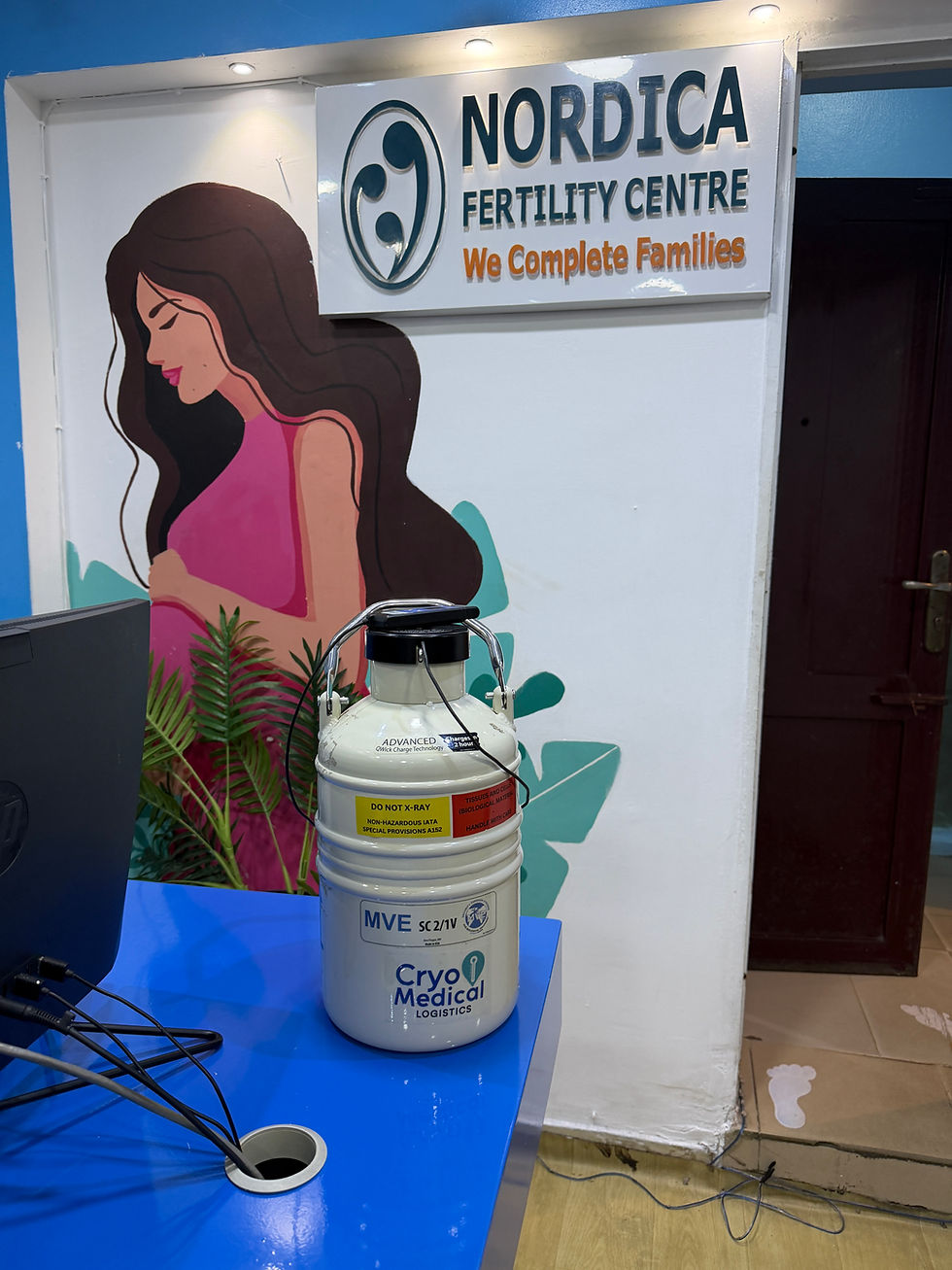
Cryo Medical Logistics specialises in the hand-carry transport of frozen eggs, embryos, and sperm across more than 80 countries. Our couriers personally escort your reproductive materials — on the plane, through the airport, door to door — using containers that maintain the correct temperature without any power source or mechanical parts. Nothing goes through an X-ray scanner. Nothing is handed to a third party. You receive real-time updates throughout.
If your egg donor cycle involves any kind of international transport, this step is not one to cut corners on.

A Simple Checklist: What to Ask Before You Choose a Donor
How old is the donor, and how old was she when she donated?
What are her AMH result and antral follicle count?
Has she had expanded carrier screening and a karyotype test?
Has she donated before, and what were the outcomes?
Has she been tested for infections, and when?
Is she a non-smoker and in good general health?
Has she had an independent psychological evaluation?
Is the programme regulated, and by whom?
If a clinic or egg bank cannot answer these questions clearly, that tells you something important.
To Sum It All Up
Choosing an egg donor does not have to be complicated. Age is the most important factor. After that, it comes down to her egg supply, her genetic screening results, her health, and the quality of the programme she donated through.
Get those things right, and you give yourself the strongest possible foundation for a successful IVF journey.
And if frozen eggs need to travel to reach you — make sure the transport is in the right hands.
Contact Cryo Medical Logistics:
Phone: +44 2081 500059
WhatsApp: +44 7585 610211



Comments