Surrogacy in Ghana: A Practical Guide for International Intended Parents by Cryo Medical Logistics

Contact us today.
📧 Email: transports@cryomedicallogistics.com
📱 WhatsApp: +44 7585 610211
📞 Phone: +44 2081500059
This guide covers everything intended parents need to know about surrogacy in Africa — the legal landscape, the costs, the process, and why Ghana has emerged as the standout destination — and explains exactly how we manage the journey from your first enquiry to bringing your child home.
Why Intended Parents Are Choosing Africa for Surrogacy
The question most intended parents ask first is whether surrogacy in Africa is safe and credible. The answer, for the right countries and the right clinics, is unequivocally yes.
Africa's leading fertility markets — Ghana, South Africa, Kenya, and Nigeria — now host internationally trained fertility specialists, modern embryology laboratories with internationally recognised quality standards, and surrogacy programmes that have produced thousands of successful outcomes for both local and international patients. The clinical infrastructure that matters — laboratory quality, embryologist experience, IVF success rates — exists at the level international patients require.
What draws international patients specifically is the combination of factors that no single Western destination offers simultaneously. Costs are dramatically lower than in the USA, UK, or Western Europe. Waiting times for surrogate matching are shorter — typically two to four weeks in Ghana compared to months or years in the UK or USA. Donor availability, particularly for ethnically matched donors for African diaspora patients, is significantly better than in Western fertility markets. And the surrogacy legal frameworks in Ghana and South Africa in particular offer protections that compare favourably with many other international surrogacy destinations.
Recent US legislation including the 2024 Alabama state ruling that embryos should be considered children brought IVF care across several states to a standstill, causing couples to explore fertility care in other countries and contributing to a measurable uptick in fertility tourism to Africa. That trend has continued into 2026 and is reflected in the enquiries we receive daily from US-based intended parents exploring African surrogacy for the first time.
The African Surrogacy Landscape: Country by Country
Country | Legal Status | Eligible Parents | Pre-Birth Order | Approx. Total Cost (USD) | CML Fertility Coordination Service |
Ghana | Legal — strong framework | Married couples, singles, international | Yes — from birth | $30,000 – $55,000 | Yes — primary recommendation |
South Africa | Legal — Children's Act | Married couples, singles, international | Yes — court approval pre-IVF | $40,000 – $65,000 | Yes |
Kenya | No formal law — contract-based | Married couples, singles | No | $33,000 – $45,000 | Yes |
Nigeria | No formal law — contract-based | Married couples, singles, international | No | $25,000 – $45,000 | Yes — active operations |
Egypt / Tunisia | Restricted | N/A | N/A | Not viable | No |
Cost ranges include surrogate compensation, IVF and embryo transfer, agency and legal fees, pregnancy monitoring, and accommodation support. They exclude travel, embryo transport from the origin country, and post-birth citizenship documentation.
Ghana: The Standout Destination for International Surrogacy in Africa
Of all African surrogacy destinations, Ghana is the one of the best most consistently to international intended parents.
Here is why.
Legal clarity. Ghana offers pre-birth parental orders — legal recognition of the intended parents' rights from the point of birth, before the child leaves the hospital. This is the gold standard in international surrogacy law and is available in only a small number of countries globally. It means intended parents have legal certainty from day one rather than navigating a post-birth court process that can take months and carries uncertainty. For international patients bringing a child home across borders, this legal clarity is not just reassuring — it is practically essential for obtaining citizenship and travel documentation.
Surrogate matching. Surrogate matching in Ghana typically takes two to four weeks. In the UK, intended parents can wait two years or more. In the USA, matching through an agency typically takes three to six months and costs significantly more. Ghana's surrogate matching timelines are among the fastest of any legally recognised surrogacy destination in the world.
Clinical quality. Ghana's leading fertility clinics in Accra operate with modern IVF laboratory infrastructure, embryologists trained internationally, and IVF success rates that compare favourably with European benchmarks. The country's growing fertility sector has attracted significant investment in clinical standards over the past five years.
Cost. A complete surrogacy package in Ghana ranges from $33,000 to $55,000 USD, covering surrogate compensation, IVF, legal fees, agency coordination, pregnancy monitoring, accommodation support, and birth registration. The equivalent package in the USA starts at $130,000 and can reach $200,000 or more. Even compared to other African destinations, Ghana's combination of legal clarity and cost is compelling.
Accessibility. Accra is well connected internationally with direct flights from London, New York, Washington DC, Atlanta, Amsterdam, and Frankfurt. For UK and US-based intended parents, Ghana is an operationally practical destination — not a remote or difficult journey.
Eligibility. Ghana's surrogacy framework is accessible to married couples, single intended parents, and in many cases international patients regardless of relationship status. LGBTQ+ intended parents should seek specific legal advice on their eligibility given that Ghanaian law does not formally recognise same-sex relationships, though some international programmes operate within this landscape with experienced legal guidance.
South Africa: The Most Regulated Option
South Africa operates under the most formally regulated surrogacy framework in Africa, governed by the Children's Act. Surrogacy is legal and court approval is required before IVF treatment begins — the High Court must approve the surrogacy agreement, confirm the surrogate's eligibility, and confirm the intended parents' rights before any medical procedure takes place. This pre-treatment court approval provides significant legal certainty but adds time and cost to the process.
South Africa is the right choice for intended parents who prioritise legal formality above all else and are prepared to pay a premium for it. Costs are higher than Ghana — typically $40,000 to $65,000 USD — and the timeline from initial consultation to embryo transfer is longer due to the court approval stage. The clinical quality at South African fertility clinics is excellent, with internationally accredited laboratories and high IVF success rates.
Kenya: Contract-Based, Growing Fast
Kenya does not yet have a formal surrogacy law. Surrogacy operates through private contracts between the surrogate, the intended parents, and the clinic, supported by clinical guidance from Kenya's fertility sector. The absence of a formal legal framework introduces a degree of uncertainty for international patients — particularly around post-birth parental rights and citizenship documentation — that Ghana and South Africa do not have.
Kenya is a reasonable option for intended parents who have done thorough due diligence on the specific clinic and legal team they are working with, who understand the contract-based framework and its limitations, and who are working with experienced local legal counsel. It is not our first recommendation for international patients who are new to African surrogacy and want maximum legal security.
Costs in Kenya typically range from $33,000 to $45,000 USD. We have active clinic relationships in Nairobi and can coordinate Kenya-based surrogacy journeys including embryo transport as part of our service.
Nigeria: Contract-Based, Growing Fast
Nigeria does not have a federal ART law governing surrogacy. The framework is contract-based. For international patients, Nigeria's surrogacy landscape is good provided you have the right coordination team to manage it for you.
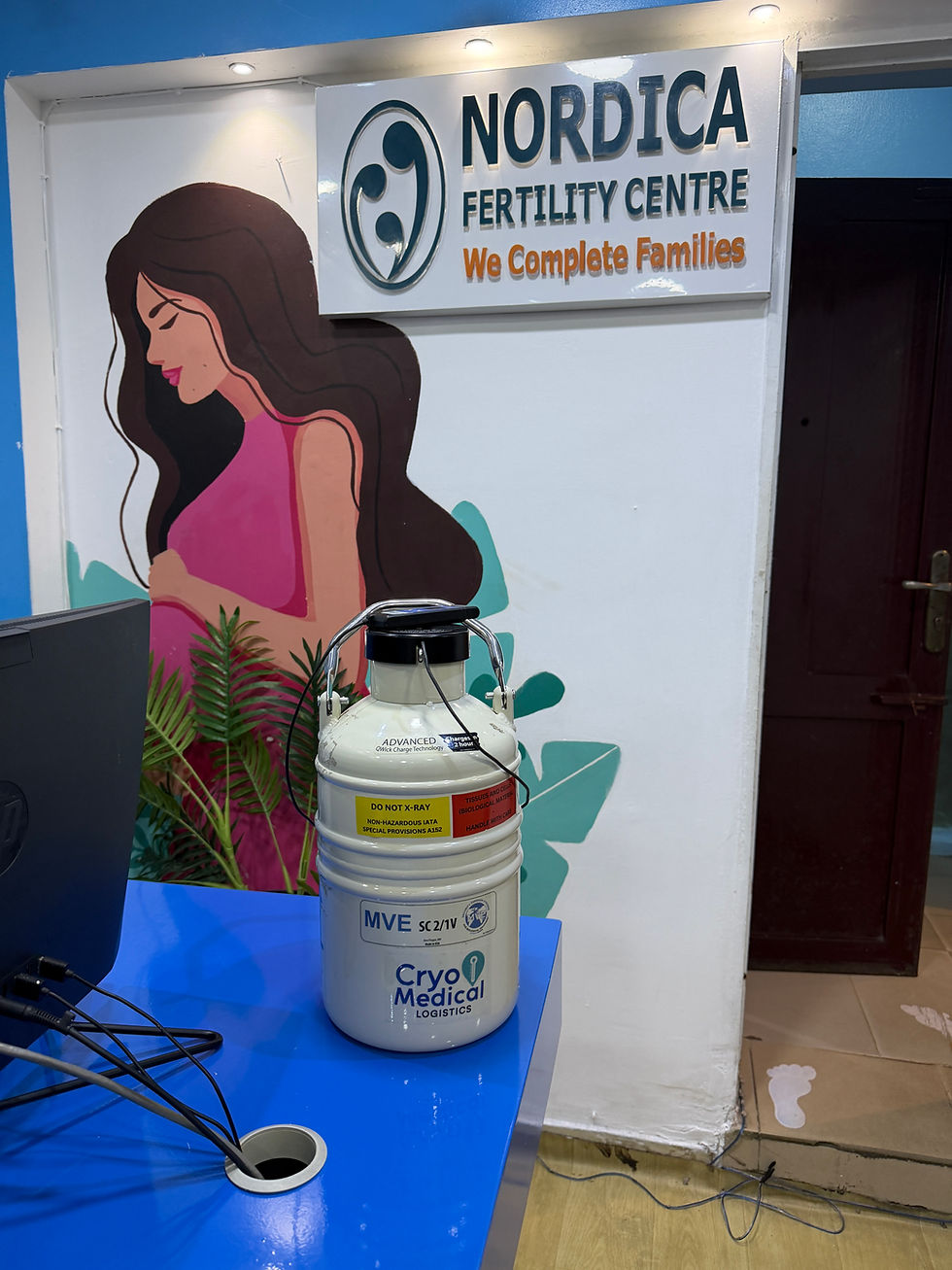
That said, Nigeria is an active surrogacy destination — particularly for Nigerian diaspora patients who want their child born in Nigeria and are comfortable navigating the Nigerian legal system with the right support. Cryo Medical Logistics has deep operational roots in Nigeria with our own diagnostic presence in Lagos, active relationships with leading fertility clinics including Nordica and Bridge Clinic, and a team that understands the Nigerian system at a practical level that international agencies rarely match.
For Nigerian diaspora patients specifically, Nigeria can be the right choice. For non-Nigerian international patients, we typically recommend Ghana or South Africa as a starting point.
The Embryo Transport Question Nobody Addresses
Every intended parent pursuing surrogacy in Africa faces a logistical challenge that most surrogacy guides — including those produced by agencies — completely ignore: how do your embryos get to Africa?
If your embryos are currently stored at a clinic in the UK, USA, Spain, Greece, Australia, or anywhere else, they need to be transported to your chosen clinic in Ghana, South Africa, Kenya, or Nigeria before the surrogacy cycle can begin. This is not a standard courier booking. It requires validated cryogenic transport equipment, export authorisation from the sending clinic, import compliance at the African destination, and a specialist courier who understands the regulatory framework in both countries.
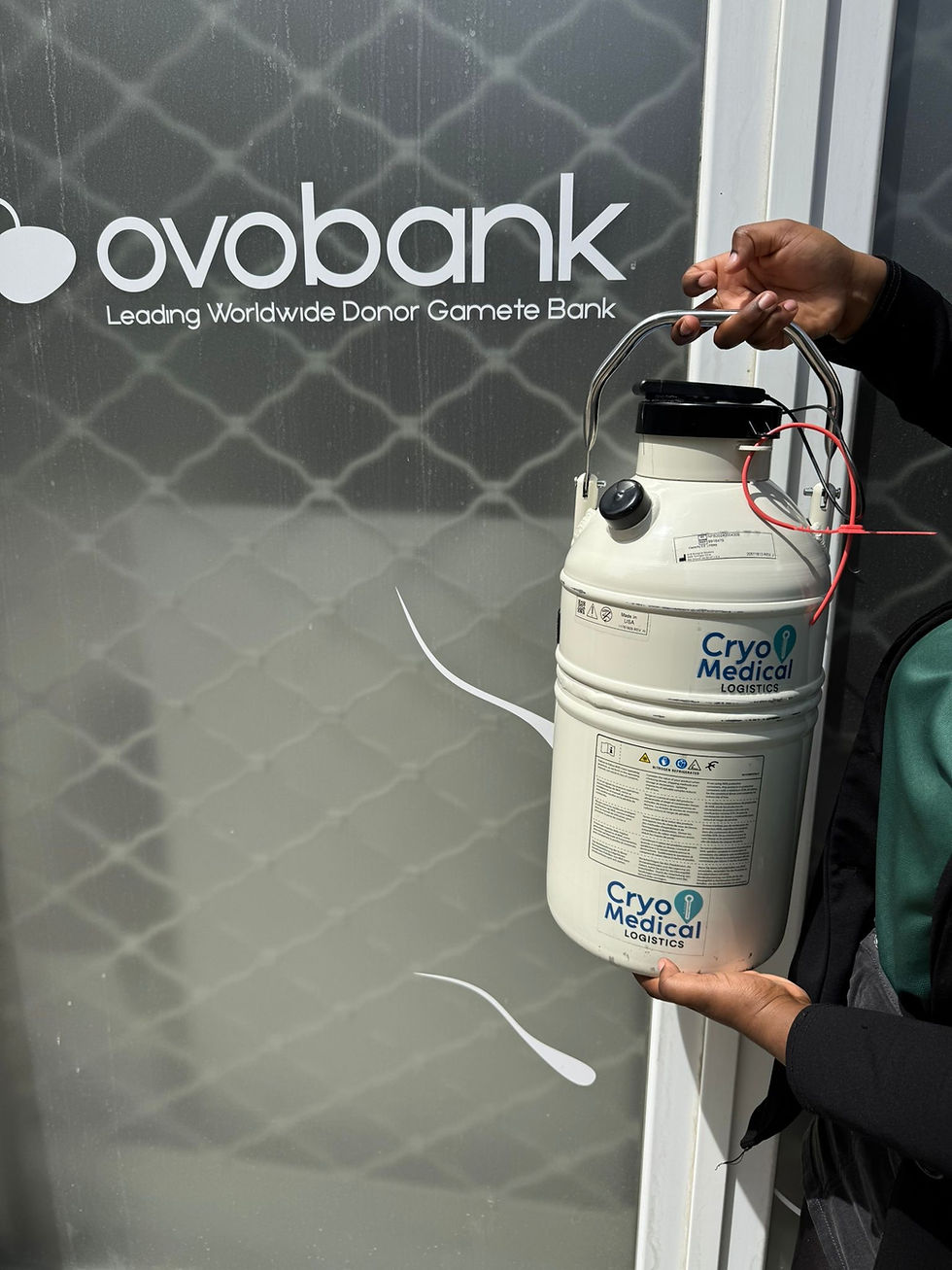
Cryo Medical Logistics manages this for every patient. We handle the full embryo transport process — export documentation from your UK, US, or European clinic, hand-carry transport by a trained biomedical specialist, and import coordination at the African destination clinic — as part of our integrated concierge service.
You do not need to find a separate transport provider. We are already there.
For patients who need to create embryos from scratch — through IVF with their own eggs and sperm, or using donor eggs — we coordinate the full IVF cycle at the African clinic as part of the journey management.
End-to-End Africa Surrogacy Coordination
The fertility concierge division of Cryo Medical Logistics, built specifically for patients choosing Africa for their surrogacy or IVF journey. We exist because the logistics, regulatory, and coordination demands of an international Africa surrogacy journey are genuinely complex — and because most intended parents should not have to manage them alone while simultaneously preparing emotionally for one of the most significant experiences of their lives.
When you engage us for your Africa surrogacy journey, here is what we manage on your behalf:
Clinic selection and vetting. We identify the accredited fertility clinics in your chosen African destination that are the right fit for your specific situation — your diagnosis, your embryo status, your legal requirements, and your timeline. Our recommendations are based on clinical standards and patient outcomes, not financial relationships with clinics.
Embryo transport. If your genetic material is stored abroad, Cryo Medical Logistics manages the complete transport from your home country clinic to the receiving clinic in Africa — export documentation, hand-carry transport, import compliance, and chain of custody from collection to delivery.
Legal coordination. We introduce you to experienced fertility law specialists in your chosen destination country — lawyers with specific expertise in international surrogacy, pre-birth orders, and citizenship documentation for the child. In Ghana, this includes the pre-birth order process that secures your parental rights from birth.
Surrogate matching support. We work with vetted clinic partners to support the surrogate matching process, ensuring the screening and matching protocols meet the standards international patients should expect.
Travel and accommodation. We arrange suitable accommodation near your clinic for required visits, coordinate airport transfers, and provide practical in-country orientation for patients travelling to Ghana, Nigeria, Kenya, or South Africa for the first time in a medical context.
Clinical liaison. We act as your point of contact with the clinic throughout the surrogacy journey — managing appointment scheduling, result communication, protocol updates, and any clinical queries that arise. You do not need to manage clinic communication across time zones yourself.
DNA testing. For patients whose home country embassy or consulate requires DNA testing to confirm biological parentage as part of the citizenship application for the child, we coordinate this directly.
Citizenship and documentation pathway. We support the full documentation process for bringing your child home — birth registration, parental rights confirmation, home country passport and citizenship application, and travel clearance. This is where many intended parents encounter unexpected delays and where experienced coordination makes the most practical difference.
Post-birth follow-up. We remain your point of contact through the post-birth period until your child is home and the documentation process is complete.
The Surrogacy Process: Step by Step
For intended parents new to surrogacy in Africa, here is the end-to-end process from first contact to bringing your child home:
Initial consultation with us. We assess your situation — embryo status, origin country, preferred African destination, legal requirements, and timeline. We provide a clear picture of what the journey involves and what it costs.
Embryo transport or IVF coordination. If you have embryos stored abroad, we manage the transport to your chosen African clinic. If you need to create embryos, we coordinate the IVF cycle at the clinic.
Legal preparation. Our legal partners in the destination country prepare the surrogacy agreement and initiate any required court approval processes — in South Africa this precedes IVF; in Ghana it runs concurrently.
Surrogate matching. Through our clinic partners, a surrogate is identified, screened medically and psychologically, and matched to you. In Ghana this typically takes two to four weeks.
Embryo transfer. The embryo transfer is performed at the clinic under specialist supervision. Pregnancy monitoring follows through the full gestational period.
Birth and legal handover. On birth, the pre-birth order in Ghana secures your parental rights immediately. Post-birth documentation begins — birth certificate, DNA testing if required, home country citizenship and passport application.
Travel home. Once documentation is complete and travel clearance is confirmed, you travel home with your child.
What Does Africa Surrogacy Cost? A Full Breakdown
Component | Ghana | South Africa | Kenya | Nigeria |
IVF and embryo transfer | $5,000 – $8,000 | $6,000 – $10,000 | $4,500 – $7,500 | $3,500 – $6,000 |
Surrogate compensation | $8,000 – $15,000 | $12,000 – $20,000 | $8,000 – $14,000 | $5,000 – $12,000 |
Legal fees | $4,000 – $8,000 | $6,000 – $12,000 | $3,000 – $6,000 | $2,500 – $5,000 |
Agency / coordination | $5,000 – $10,000 | $7,000 – $12,000 | $5,000 – $9,000 | $4,000 – $8,000 |
Pregnancy monitoring | $3,000 – $5,000 | $4,000 – $7,000 | $3,000 – $5,000 | $2,000 – $4,000 |
Accommodation support | $2,000 – $4,000 | $3,000 – $6,000 | $2,000 – $4,000 | $1,500 – $3,500 |
Post-birth documentation | $2,000 – $4,000 | $3,000 – $6,000 | $2,000 – $4,000 | $1,500 – $3,000 |
Total range | $35,000 – $55,000 | $40,000 – $65,000 | $35,000 – $45,000 | $28,000 – $45,000 |
Embryo transport from your origin country is separate and ranges from $4,500 to $6,000 USD depending on the corridor. Travel costs for required visits are not included. Contact Contact us for a detailed cost estimate for your specific situation.
Documents You Will Need
Document | Ghana | South Africa | Kenya | Nigeria |
Passport / ID | Yes | Yes | Yes | Yes |
Marriage certificate (if applicable) | Yes | Yes | Yes | Yes |
Medical history and fertility records | Yes | Yes | no | no |
Surrogacy agreement | Yes | Yes — court approved | Yes | Yes |
Pre-birth order | Yes | Yes — pre-IVF | No | No |
DNA test results | Yes | Yes | Yes | Yes |
Child birth certificate | Yes | Yes | Yes | Yes |
Home country passport for child | Yes | Yes | Yes | Yes |
Ready to Begin Your Africa Surrogacy Journey?
We will give you an honest assessment of which African destination suits your specific situation — based on your legal requirements, your embryo status, your budget, and your timeline.
Contact us today.
📧 Email: transports@cryomedicallogistics.com
📱 WhatsApp: +44 7585 610211
📞 Phone: +44 2081500059



Comments